

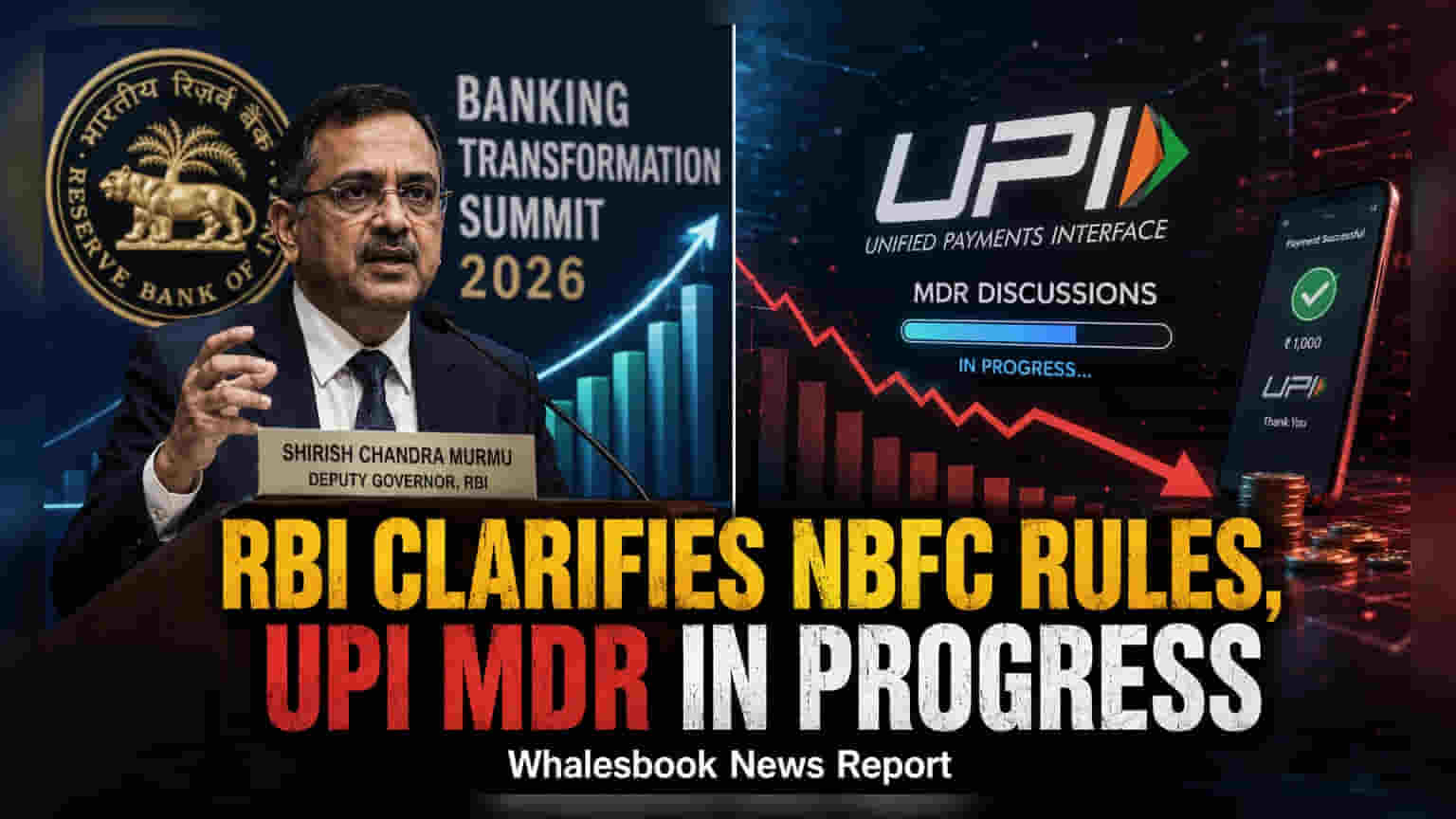
The Reserve Bank of India has signaled that its draft regulations for NBFC revolving credit are focused on risk management rather than disrupting current operations. Meanwhile, the central bank confirmed that discussions for a UPI Merchant Discount Rate framework are still a work in progress. These updates provide critical context for investors watching regulatory changes affecting non-bank lenders and digital payment ecosystems.
The Reserve Bank of India (RBI) has provided fresh clarity on its regulatory stance regarding the proposed rules for Non-Banking Financial Companies (NBFCs) and the ongoing discussions around a UPI Merchant Discount Rate (MDR) framework. These updates come as the financial sector assesses the potential impact of new regulatory guidelines on lending business models and digital payment operations.
NBFC Credit Rules Update
Deputy Governor Shirish Chandra Murmu addressed industry concerns following the release of the draft 'Non-Banking Financial Companies (NBFC – Credit Facilities) Amendment Directions, 2026' on August 6, 2026. The draft had caused concern among some lenders as it proposes restricting NBFCs to offering only term loans, effectively moving to discontinue revolving credit products for entities not authorized to issue credit cards.
In his recent comments, the Deputy Governor emphasized that the central bank’s goal is to ensure business is conducted with proper risk oversight, rather than to shut down existing lending practices. The RBI has invited feedback from regulated entities and stakeholders until August 28, 2026. For investors, this is a critical period to monitor, as the final version of these guidelines could impact the operational flexibility and product range of non-bank lenders that rely on revolving credit facilities for customer engagement.
UPI Merchant Discount Rate Status
Regarding the UPI payment system, the RBI confirmed that the development of a Merchant Discount Rate (MDR) framework remains a work in progress. While recent legislation—the Taxation and Other Laws (Amendment) Bill, 2026—has created an enabling legal framework for the potential introduction of an MDR on certain UPI transactions, no specific rates, merchant categories, or implementation timelines have been finalized.
The central bank and the government are currently engaged in discussions with the National Payments Corporation of India (NPCI) to determine the structure of this framework. Investors in digital payment service providers and fintech platforms should track these discussions, as the introduction of an MDR—or the lack thereof—carries significant implications for the revenue models of payment processors and the cost structure for large merchants.
What Investors Should Monitor
The immediate focus for stakeholders will be the finalization of the NBFC guidelines post-August 28, 2026. If the draft regulations are implemented as proposed, NBFCs without credit card licenses may need to restructure their product offerings, which could affect their loan books and margins in the medium term. On the payment front, the market continues to look for concrete details on the UPI MDR framework. Any clarity on transaction fees or merchant categories will be a key signal for the profitability outlook of the broader digital payments sector.