

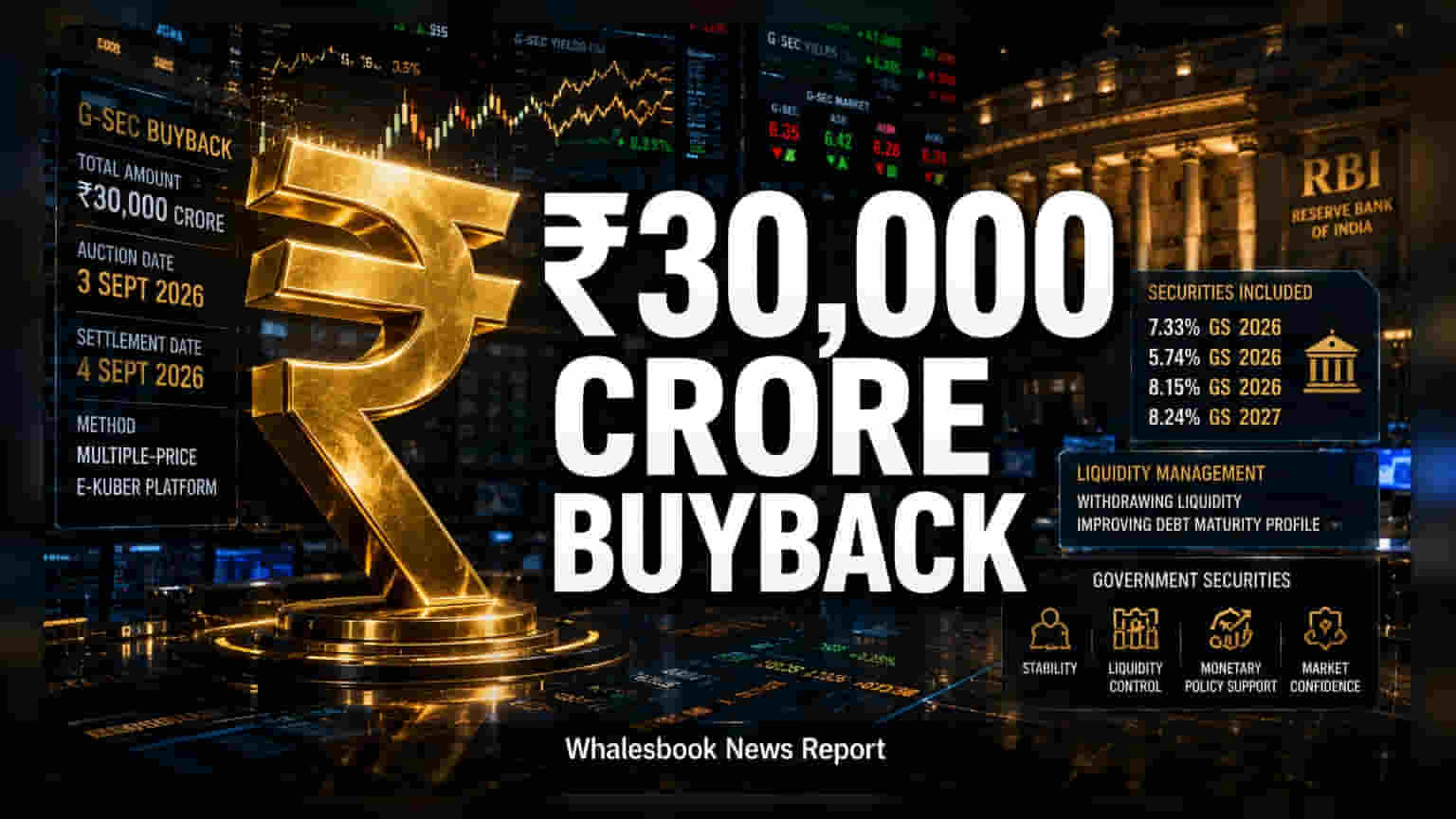
The Reserve Bank of India (RBI) will conduct a ₹30,000 crore buyback of four government securities on September 3, 2026. This operation aims to manage surplus liquidity in the banking system and streamline short-term debt maturity profiles.
The Reserve Bank of India (RBI) has announced a buyback of government securities (G-Secs) worth a total of ₹30,000 crore. This action, scheduled for September 3, 2026, is part of the government's strategy to manage liquidity conditions within the banking system and improve its debt maturity profile.
The auction will be conducted through the RBI’s E-Kuber platform using the multiple-price method. In this method, the government accepts bids at different price levels rather than a single price for all participants. The settlement for the successful bids is scheduled for September 4, 2026.
Securities Included in the Buyback
The government has identified four specific securities for this buyback program: the 7.33% GS 2026, the 5.74% GS 2026, the 8.15% GS 2026, and the 8.24% GS 2027. While the total buyback amount is capped at ₹30,000 crore, the government has not set individual quotas for each security. This approach allows the authorities the flexibility to adjust the acquisition amount for each instrument based on the response received from the market.
Why This Matters for Investors
For the bond market and investors, this buyback serves as a tool for liquidity management. By buying back debt, the government essentially withdraws liquidity from the banking system. This is a regular exercise used by the central bank to ensure that the amount of money circulating in the system aligns with its monetary policy objectives.
Market participants will track the auction results to gauge the appetite for government debt in the current interest rate environment. The government retains the discretion to accept or reject any of the offers made in the auction without providing specific reasons. This means that if the yields demanded by the market are higher than what the government finds acceptable, the total amount bought back could be less than the ₹30,000 crore limit.
The next important update for investors will be the auction result on September 3, which will provide insight into the demand for these short-term instruments and the government's stance on current debt yields.