

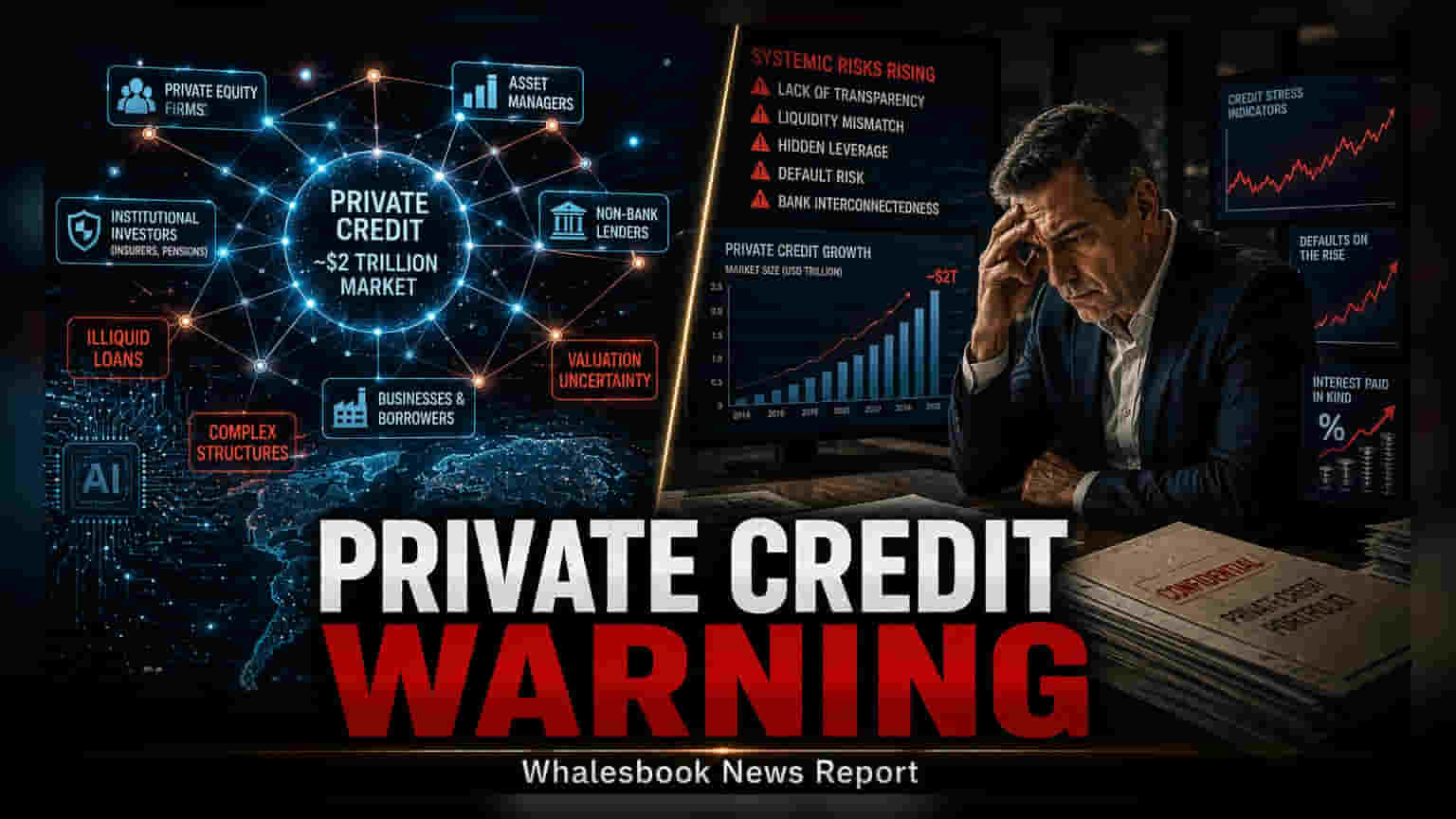
The private credit market, now valued at approximately $2 trillion, is facing concerns over transparency and liquidity. While the sector has supported growth in tech and other industries, regulators have highlighted risks like valuation opacity and potential borrower defaults that could ripple through the broader financial system.
The private credit industry, a massive network of non-bank lending, has become a significant player in global finance. With a market size estimated at roughly $2 trillion, this sector connects private equity firms, asset managers, and institutional investors like insurers to provide loans that might not be available through traditional banks. While this model has effectively supported capital expansion for businesses and offered attractive returns to lenders, recent assessments by global watchdogs, including the Financial Stability Board, have pointed to growing systemic vulnerabilities.
At the core of the concern is the structure of these loans. Unlike publicly traded bonds or bank loans, private credit deals are often tailored agreements between private parties. This lack of public oversight creates challenges regarding transparency. When a company borrows from a bank, its health is monitored through standard regulatory disclosures. In the private credit space, however, valuation processes can be less clear, making it difficult for investors and regulators to assess the true quality of the underlying assets or the health of the borrowers.
Another significant issue involves liquidity and default risk. Some private credit funds promise investors the ability to withdraw their money regularly, yet the loans they hold are illiquid and cannot be easily sold. This creates a potential mismatch where funds might struggle to meet redemption demands during market stress. Furthermore, there is growing concern that some borrower distress is being masked through complex arrangements where interest is paid in kind rather than in cash. While this keeps a company technically current on its obligations, it often indicates underlying cash flow struggles that could worsen if economic conditions tighten.
The systemic risk arises from how deeply this sector is now intertwined with the traditional banking system. Many banks act as partners or financing providers to private credit funds, creating a web of connections that could spread problems if a large number of defaults occurred simultaneously. Because the sector lacks the uniform, real-time data transparency required of traditional banks, regulators face difficulties in conducting effective stress tests to understand how these firms would hold up during a broader economic downturn.
For investors, the situation highlights the importance of understanding the broader financial plumbing that supports asset prices. While there is no immediate systemic collapse, the increasing reliance of high-growth sectors on this type of funding means that any disruption could have wider consequences. Moving forward, the key monitorable for the market will be how regulators approach transparency requirements for private credit and whether data becomes available to properly quantify the extent of hidden leverage and credit quality issues in the sector.