

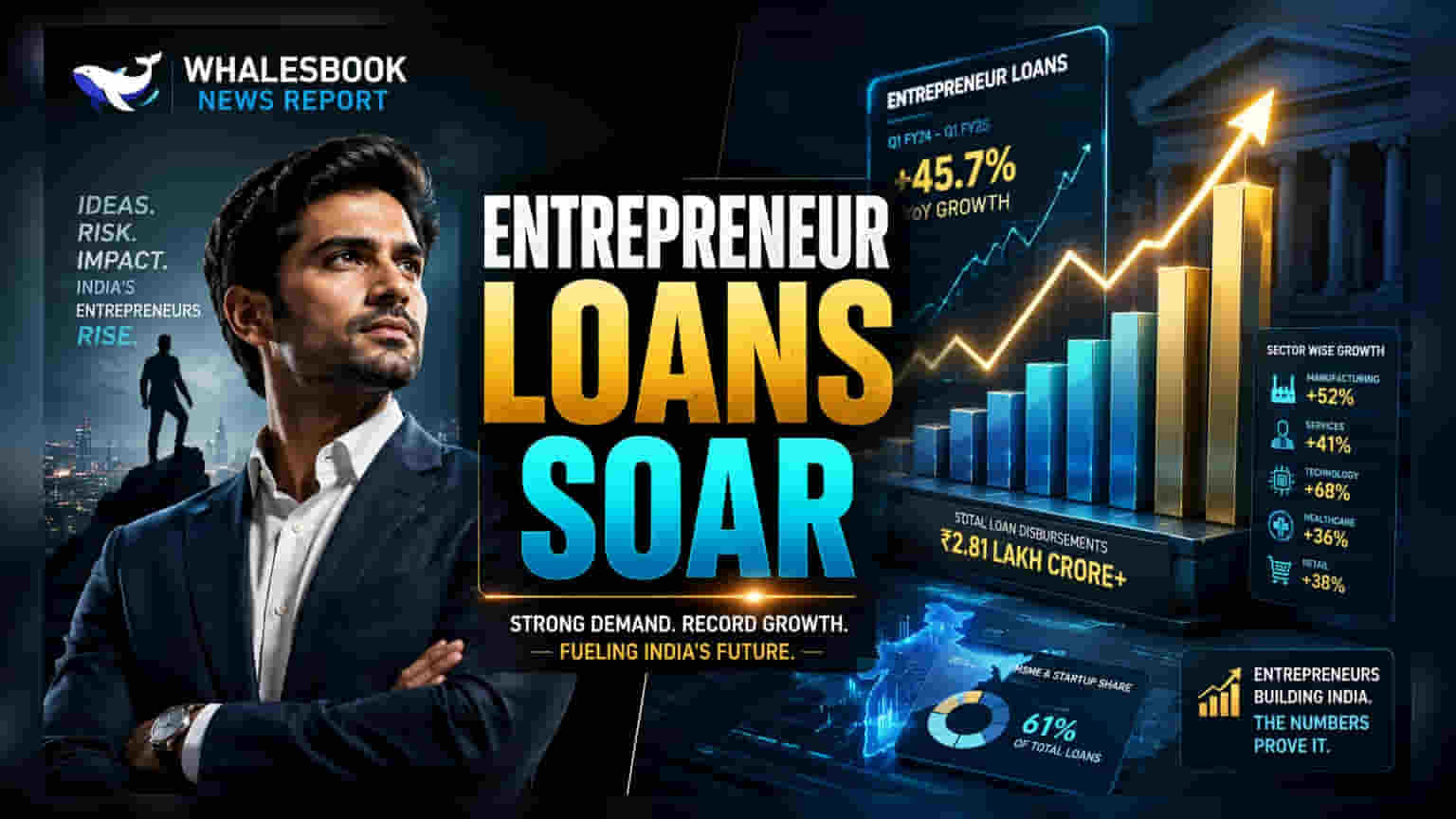
Loans to individual entrepreneurs in India are rising significantly faster than credit to formal commercial entities, according to new TransUnion CIBIL data. While this highlights a major shift in how MSMEs access capital, the report also warns of rising delinquency rates in unsecured business loans. Understanding this trend is essential for investors tracking banks and non-banking financial companies (NBFCs) with high exposure to the MSME segment.
Lending Trends Shift Toward Individuals
A recent report from TransUnion CIBIL reveals a clear change in how Indian micro, small, and medium enterprises (MSMEs) are borrowing. Between March 2023 and March 2026, credit extended to individual entrepreneurs grew at 1.8 times the speed of credit given to traditional commercial entities. This shift shows that many small business owners are now preferring or are more easily accessing credit in their personal capacity rather than through formal business structures.
The Scale Of MSME Credit
By the end of March 2026, total commercial credit in India reached ₹65.8 trillion, representing a 14% increase compared to the previous year. Individual borrowers have become a major force, now accounting for 28% of all outstanding commercial credit. Their presence is especially strong in specific segments: they hold 68% of total loan-against-property balances and 76% of all commercial vehicle loans. This concentration makes individual entrepreneurs a vital, yet increasingly complex, segment for banks and NBFCs.
Rising Stress In Unsecured Loans
While the broader credit market appears stable, the report highlights pockets of risk that investors should watch closely. The overall delinquency rate—loans more than 90 days past due—stood at 1.8%. However, unsecured business loans granted to commercial entities showed a higher delinquency rate of 7.2%. Additionally, small-ticket borrowers with exposure between ₹2 lakh and ₹10 lakh saw a 5.6% delinquency rate. Early data also indicates that unsecured loans issued in the first quarter of 2025 are already showing signs of payment stress.
Who Is Lending To Whom
Public sector banks remain the primary lenders to smaller enterprises, focusing on credit access at the base of the pyramid. Meanwhile, non-banking financial companies (NBFCs) have actively expanded their presence in the mid-size segment, covering loans between ₹10 lakh and ₹2 crore. Private banks continue to hold a strong position in larger-ticket commercial lending. This distribution of market share indicates how different financial institutions are balancing their risk appetites across various MSME categories.
Untapped Market Potential
Despite the growth in credit, India’s MSME sector remains largely under-penetrated. Out of roughly 8.7 crore registered MSMEs, only about 3.6 crore have accessed formal credit. This leaves a significant portion of the sector—nearly 60%—without formal financing, representing a long-term growth opportunity for lenders. Investors may monitor how quickly financial institutions can bring these first-time borrowers into the formal banking system without compromising on asset quality.
What Investors Should Track
Moving forward, the key monitorables include the asset quality trends for lenders with high MSME exposure, particularly in the unsecured and small-ticket segments. Investors may watch for management commentary on credit costs and delinquency levels in quarterly results. Additionally, tracking the growth rates of individual versus commercial-entity loan books will help in understanding whether the current shift toward personal-capacity borrowing continues or if it reaches a saturation point.