

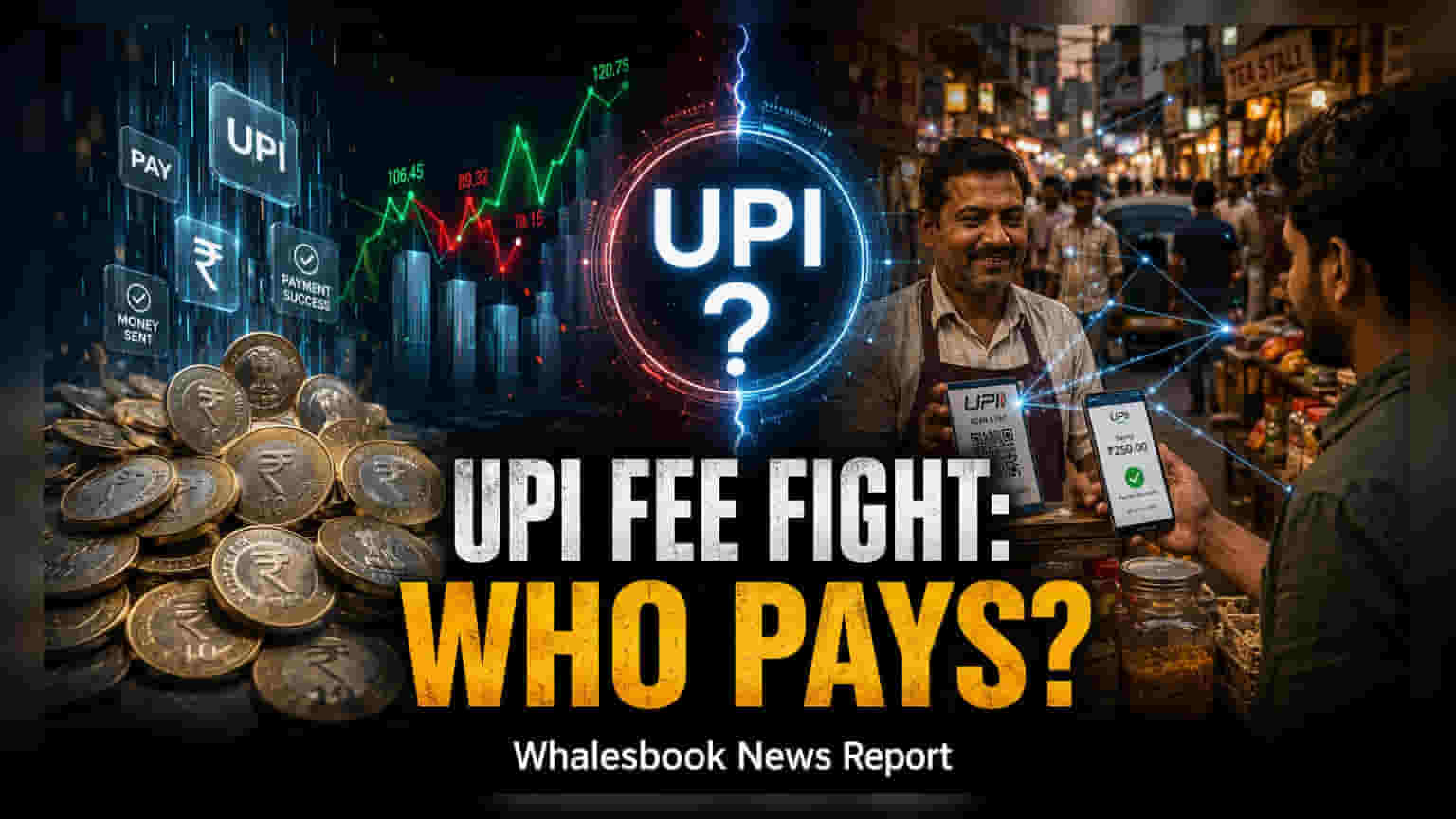
Payment companies are lobbying for a limited Merchant Discount Rate (MDR) on large UPI transactions to cover operational costs estimated at ₹8,000-10,000 crore annually. While the government currently enforces a zero-fee model, industry players argue this is unsustainable without targeted charges on high-value merchants. This shift could impact revenue models for major payment aggregators if approved.
The long-standing zero-fee model for India's Unified Payments Interface (UPI) is facing pressure as industry participants seek to reintroduce a limited Merchant Discount Rate (MDR). Payment firms argue that the massive costs involved in maintaining UPI infrastructure, combined with declining government incentives, necessitate a new fee structure. They propose charging MDR only on the top 4% to 6% of high-value merchants, specifically for transactions above ₹2,000, to ensure the sustainability of the digital payment ecosystem.
Financial Challenges in the UPI Ecosystem
Operational costs for maintaining UPI platforms are estimated between ₹8,000 crore and ₹10,000 crore annually. These expenses include merchant onboarding, mandatory Know Your Customer (KYC) processes, integration support, compliance audits, and the management of refunds or chargebacks. While payment aggregators provide these essential services, they are currently facing a funding gap. The government’s financial support through the UPI and RuPay incentive scheme has seen a reduction, with the allocation for FY27 dropping to ₹2,000 crore from FY26 levels. Industry players report that delays in receiving these payouts create uncertainty, making it difficult to invest in expanding digital payments into rural areas or supporting feature-phone users.
Proposed Fee Structure and Market Impact
To address these financial strains, industry bodies have proposed a targeted fee approach. By applying a 15-basis-point MDR—or 0.15%—only on transactions exceeding ₹2,000, firms believe they can generate significant revenue without affecting the vast majority of small, daily transactions that drive UPI's popularity. According to estimates by Bernstein, such a model could generate roughly $1 billion in annual revenue for the ecosystem. This approach is intended to strike a balance between maintaining the low-cost nature of UPI for consumers and ensuring that payment service providers remain profitable.
Investor and Sector Monitorables
The move towards a limited MDR highlights a critical juncture for payment companies, many of which rely on transaction volumes that have grown significantly. In June 2026, UPI processed 22.72 billion transactions valued at ₹28.92 trillion. While this volume demonstrates the platform's success, the lack of transaction fees has historically pressured the profit margins of payment aggregators. Investors may track future policy updates from the Reserve Bank of India and the government regarding the incentive scheme, as any shift toward a fee-based model could directly impact the revenue visibility and operating margins of listed and private payment companies. The primary monitorable will be whether the government prioritizes the zero-fee digital inclusion mandate or shifts toward a sustainability-focused model that allows for targeted merchant fees.