

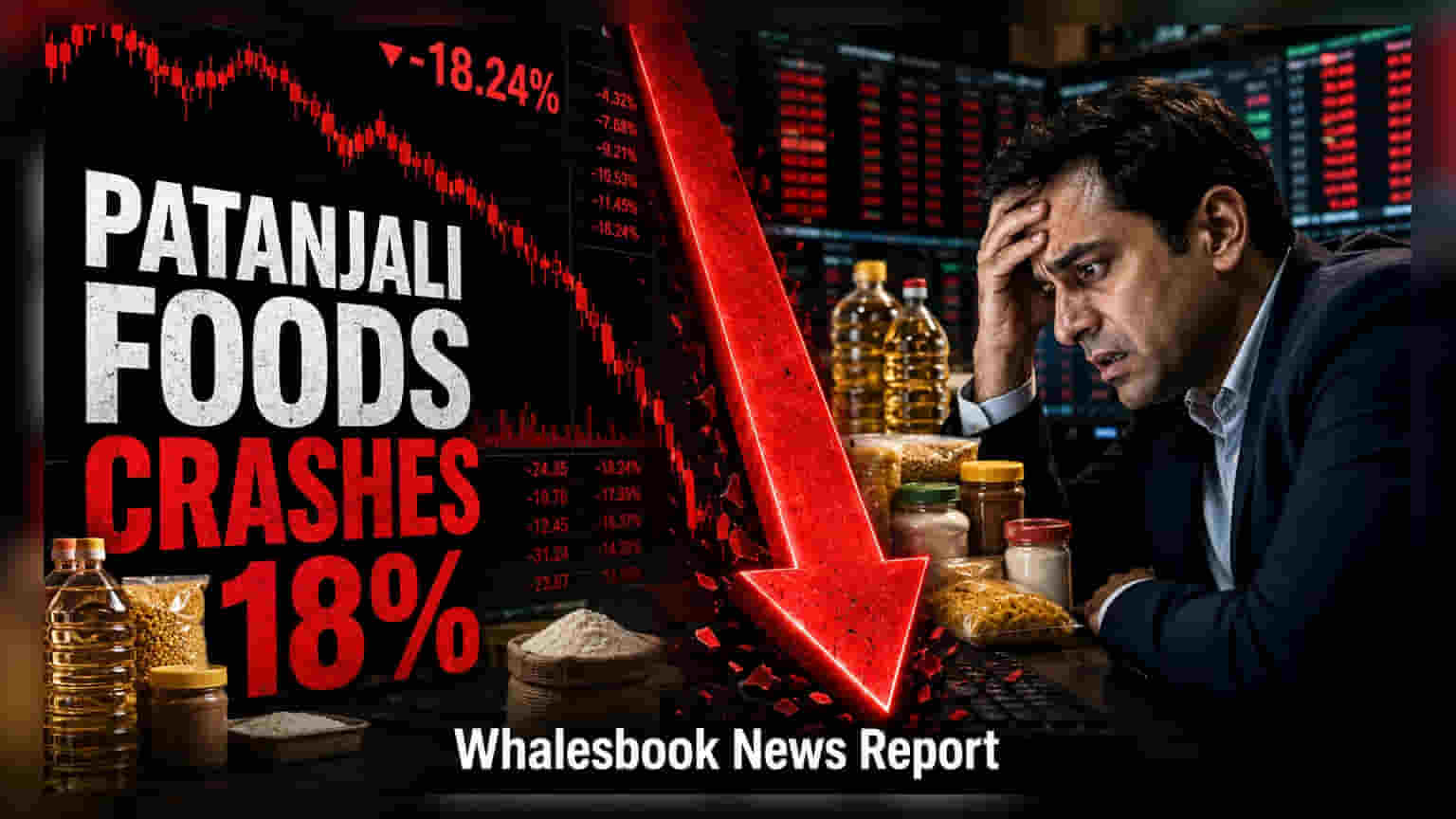
Patanjali Foods shares dropped 18% on July 15 as 1.5% of the company's equity changed hands through block deals worth ₹195 crore. The massive surge in trading volume suggests major institutional investors are rebalancing their holdings in the stock.
Shares of Patanjali Foods experienced a sharp decline on Wednesday, July 15, falling as much as 18% during intraday trading. This significant price movement followed large block deal activity involving approximately 54.24 lakh shares, representing about 1.5% of the company's total equity. These shares were exchanged at an average price of ₹355 per share, resulting in a total deal value of ₹195 crore.
Surge in Trading Volume
The sell-off was accompanied by an exceptionally high trading volume, which caught the attention of market participants. By midday, over 2.3 crore shares had been traded. This figure stands in stark contrast to the company's 20-day average volume of approximately 25 lakh shares. Such a sharp jump in volume, combined with an increase in delivery-based trading, typically indicates that large institutional investors or major shareholders are adjusting their positions in the stock.
Financial and Market Context
Patanjali Foods operates in the competitive fast-moving consumer goods (FMCG) sector, where profitability often depends on raw material costs and consumer demand patterns. The stock has been subject to market fluctuations as investors weigh the company's growth strategy against its debt profile and operational margins. The company has previously focused on scaling its edible oil and food business, which makes it sensitive to commodity price changes and import duties on palm oil and other raw materials.
Risks and Monitorables
For investors, the primary concern during large block deals is understanding who is selling and whether this reflects a change in the long-term outlook for the company. Institutional rebalancing can sometimes create short-term price pressure. Beyond the immediate stock movement, market observers will continue to monitor the company’s ability to manage its debt levels and maintain profit margins in an environment where FMCG players are facing pressure from rising input costs and intense competition from both established national brands and local players. The next important step for investors will be to review official exchange filings to identify if any major promoters or institutional investors have filed disclosures regarding changes in their shareholding, as this will clarify the source of the selling pressure.