

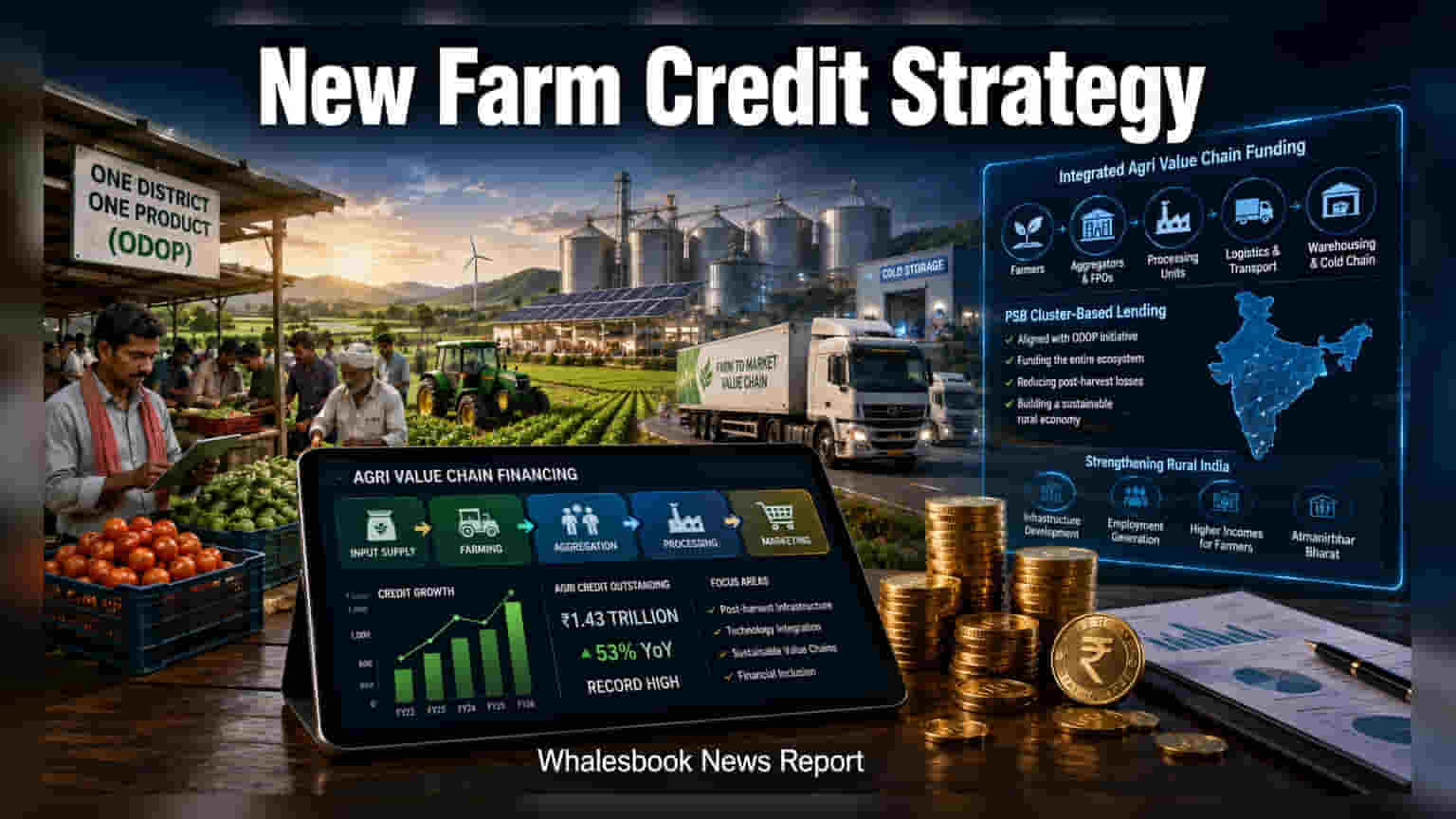
Indian public sector banks are restructuring agricultural lending to focus on the full value chain rather than individual farm loans. Aligning with the One District One Product (ODOP) initiative, this shift aims to boost rural infrastructure and fix credit gaps. Banks must now create district-specific roadmaps within six months to improve loan efficiency and reduce post-harvest waste.
Public sector banks (PSBs) in India are changing how they lend to the agricultural sector. Instead of only providing loans to individual farmers, banks are moving toward a cluster-based model. This change is being driven by the government to align banking support with the One District One Product (ODOP) initiative. The goal is to fund the entire ecosystem—including farmers, logistics providers, and processing units—to solve credit gaps that have long affected the rural economy.
Traditionally, agricultural lending focused heavily on direct crop loans. While this helped farmers with seeds and fertilizers, it often left other key parts of the farm economy, such as cold storage and transportation, without sufficient capital. By funding the entire value chain, the government aims to reduce post-harvest losses, which are a major concern for the sector. The government believes that supporting aggregators and processors alongside farmers will create a more efficient and profitable rural ecosystem.
Banks have been given a six-month window to develop and implement these district-specific lending plans. This requires banks to update their management information systems to track not just individual credit, but the broader needs of the agricultural value chain. Farmer Producer Organizations (FPOs) are expected to play a central role as the connecting link between growers and processors, helping to simplify the lending process for the institutions.
Implementation Risks and Asset Quality
While this shift aims to modernize credit flow, it brings new operational challenges. Moving from standard crop loans to assessing the risks of an entire cluster, which may include smaller logistics or processing firms, requires banks to develop new underwriting and monitoring capabilities. Managing these integrated supply chain risks is fundamentally different from traditional agricultural lending.
Agricultural loans have historically been a point of stress for bank balance sheets, often showing higher default rates compared to other sectors. While the overall gross non-performing assets (GNPAs) for commercial banks have reached record lows in recent years, the success of this new model will depend on how effectively banks manage these larger, integrated exposures. The risk is that if the supporting infrastructure or the processing units underperform, it could lead to stress on the associated credit facilities.
What Investors Should Monitor
Investors and analysts will likely track how quickly banks adapt their internal systems and how these new lending roadmaps impact asset quality in the agricultural segment over the coming quarters. The key monitorable will be whether this shift leads to more sustainable credit growth and improved rural infrastructure without increasing the risk of bad loans. Management commentary on the implementation of these roadmaps in upcoming quarterly updates will be important to follow.