 Whalesbook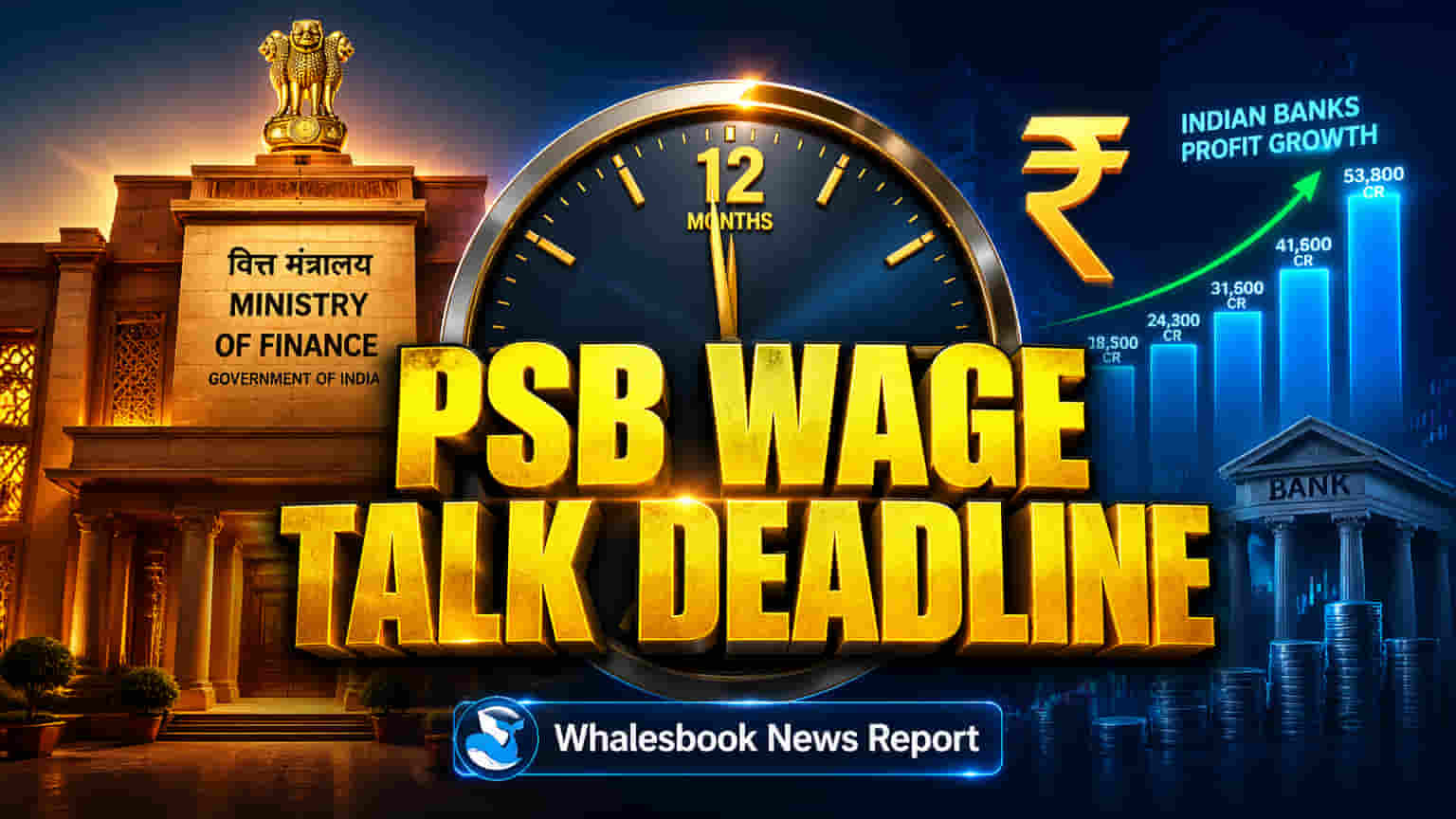


Government Directs Swift Resolution for PSB Wage Talks
India's Department of Financial Services has directed public sector banks (PSBs) to finalize wage negotiations for the 13th Bi-partite Settlement within a strict 12-month timeframe. This process, governing wage revisions effective from November 1, 2027, typically involves the Indian Banks' Association (IBA) and employee unions. The government is pushing to avoid the lengthy delays in wage implementation that have marked past settlements. Historically, these negotiations often span 12 to 24 months, with some extending even longer, leading to significant arrears. The directive aims for a more streamlined and timely process, emphasizing that a quick conclusion is essential for industrial harmony.
Record Profits Bolster PSB Bargaining Position
This push for faster wage talks comes as PSBs report exceptionally strong financial performance. In FY25, PSBs collectively posted record profits of ₹1.78 lakh crore, building on prior years' gains. Their profitability surged 26% in FY25 to ₹1.83 lakh crore, significantly narrowing the gap with private banks, which saw 7% growth. This strong financial standing is due to improved asset quality, with Gross Non-Performing Assets (NPAs) at a record low of 2.30% as of September 2025, and healthy capital adequacy ratios. PSBs have also shown renewed competitiveness, outperforming private sector banks in loan growth for the first time in over a decade in FY25, with advances growing 13.1% compared to 9% for private lenders. This financial strength provides a solid base for wage negotiations, potentially strengthening employee unions' position.
Past Wage Hikes: Costs and Impact
Past wage settlements have historically added significant costs for PSBs. The 12th Bipartite Settlement, effective November 2022, resulted in a 17% wage hike, costing public sector banks approximately ₹8,284 crore annually. This rise in employee costs has been a key factor pushing PSB cost-to-income ratios higher than those of private sector banks. The 17% hike resulted in an additional liability of around ₹12,589 crore for 12 PSBs. While current profits are substantial, managing these rising operational costs is a key consideration for banks and regulators.
PSBs Gain Ground on Private Lenders
PSBs are closing the gap with private banks across various performance metrics. Their profit growth in recent quarters has outpaced that of private lenders. PSBs also expanded their loan books faster than private banks in FY25, signalling a shift in market dynamics. This better performance, driven by improved asset quality and technology adoption, has boosted their competitive standing. The Indian banking sector operates within a well-regulated framework overseen by the RBI, contributing to its overall stability.
Challenges Remain Despite Gains
Despite strong financial performance and the government's directive, significant hurdles remain. Protracted wage negotiations, often taking years to conclude, have historically led to substantial arrears and employee unrest. While the current 12-month target is ambitious, past experiences suggest potential delays. Wage increases directly impact cost-to-income ratios, potentially pressuring profitability even with record earnings. PSBs also face challenges in retaining talent, competing with private banks and non-banking financial companies (NBFCs) that may offer more attractive packages. Issues like the pending implementation of a 5-day work week and the structure of Performance Linked Incentives (PLI) remain points of contention, indicating that not all employee concerns may be resolved by this wage settlement alone.
Looking Ahead
The 13th Bi-partite Settlement is set to become effective from November 1, 2027. The government's focus on timely regulatory amendments aims to ensure revised salaries and benefits are implemented without delay from the due date. Successfully and promptly concluding these negotiations, balancing employee aspirations with financial prudence, will be key to maintaining morale and operational efficiency in the public banking system.