

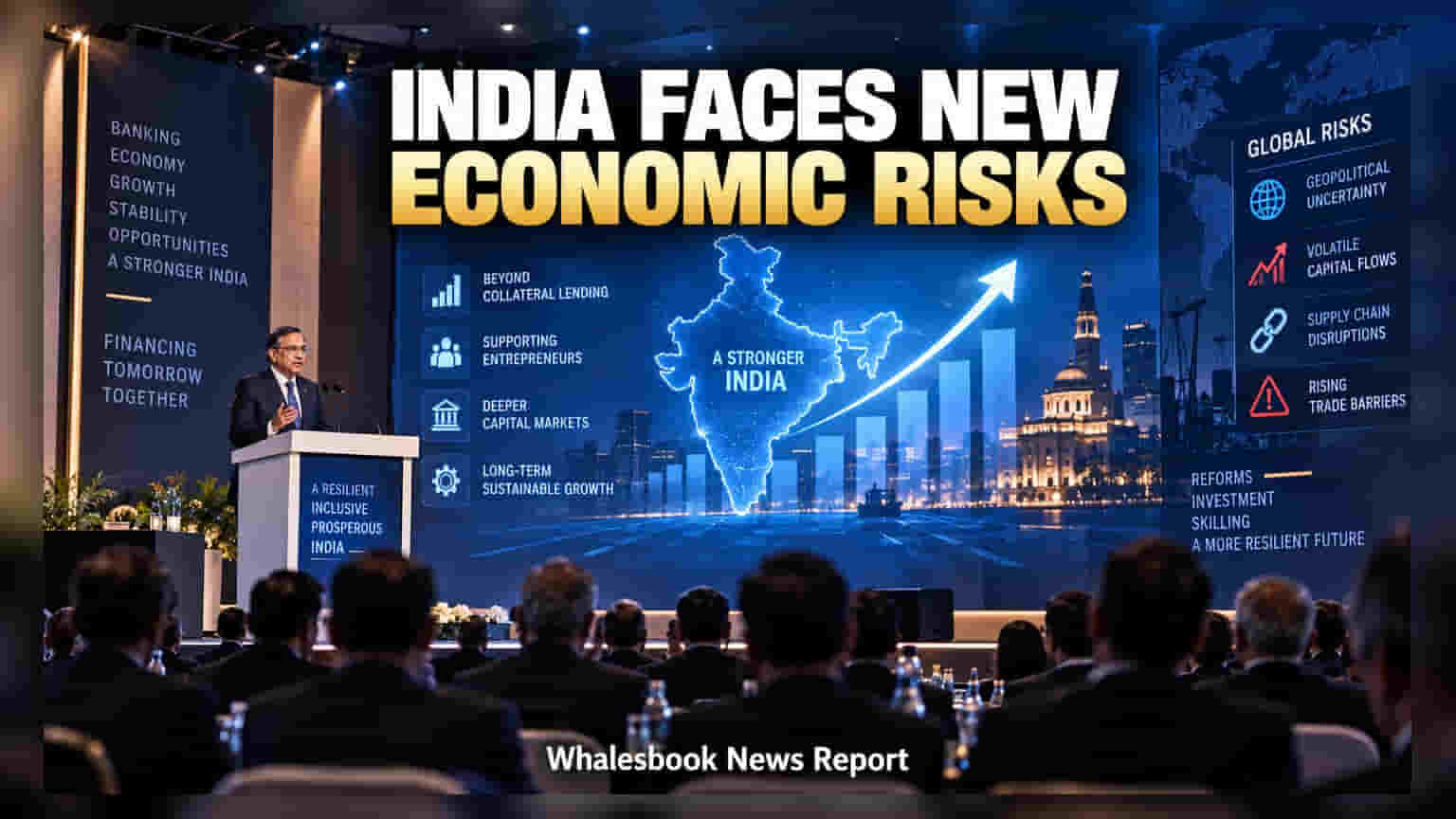
Principal Secretary PK Mishra addressed the SBI conclave, calling for a transition in India’s financial framework to navigate global risks like supply chain disruptions. He urged lenders to prioritize project earnings over traditional collateral to support long-term economic growth and deepen capital markets.
PK Mishra, Principal Secretary to the Prime Minister, addressed the banking and economics conclave hosted by the State Bank of India on Wednesday, outlining a significant shift needed in India's financial strategy. Amidst rising global instability, including fragmented alliances and volatile capital flows, he argued that the nation must transition from the financial inclusion focus of the last three decades to an enabling framework designed for long-term growth.
Moving Beyond Collateral-Based Lending
A critical part of the proposed shift involves changing how Indian banks assess loan applications. Mishra emphasized that credit appraisals should move away from traditional collateral-based lending—where loans are sanctioned primarily against physical assets like land or buildings—and instead focus on project economics and earnings potential. This approach is intended to better support first-generation entrepreneurs and asset-light businesses, such as service exporters, who often struggle to provide heavy physical collateral but possess strong business viability.
This call for reform aims to help banks avoid the historical cycles of bad debt that have plagued the financial system in the past. By basing lending decisions on the actual income-generating capacity of an enterprise, regulators and bankers hope to ensure that capital is directed toward productive, sustainable businesses, effectively minimizing the risk of asset clean-ups later.
Deepening Capital Markets
The speech also highlighted the need to reduce the economy's heavy reliance on the banking sector alone. Mishra stressed that for India to fund its infrastructure and energy transition goals, it requires a more diverse array of long-term funding sources. This involves a push to deepen the corporate bond market and encourage more infrastructure funds and institutional investment.
By moving toward these sophisticated financial structures, the goal is to convert domestic savings into productive, long-term capital that can withstand external shocks. The government’s view is that relying solely on credit from banks is insufficient for a modernizing economy facing a world where supply chains are increasingly weaponized and trade barriers are on the rise.
Preparing for Global Risks
The warning against complacency comes as India faces a more complex global environment than in previous years. With the era of easy tailwinds fading, Mishra highlighted that securing India's status as a leading global economy requires not just growth, but active management of these geopolitical and economic threats. The focus on workforce skilling and improved domestic manufacturing output remains a core priority to navigate this period of global uncertainty.