

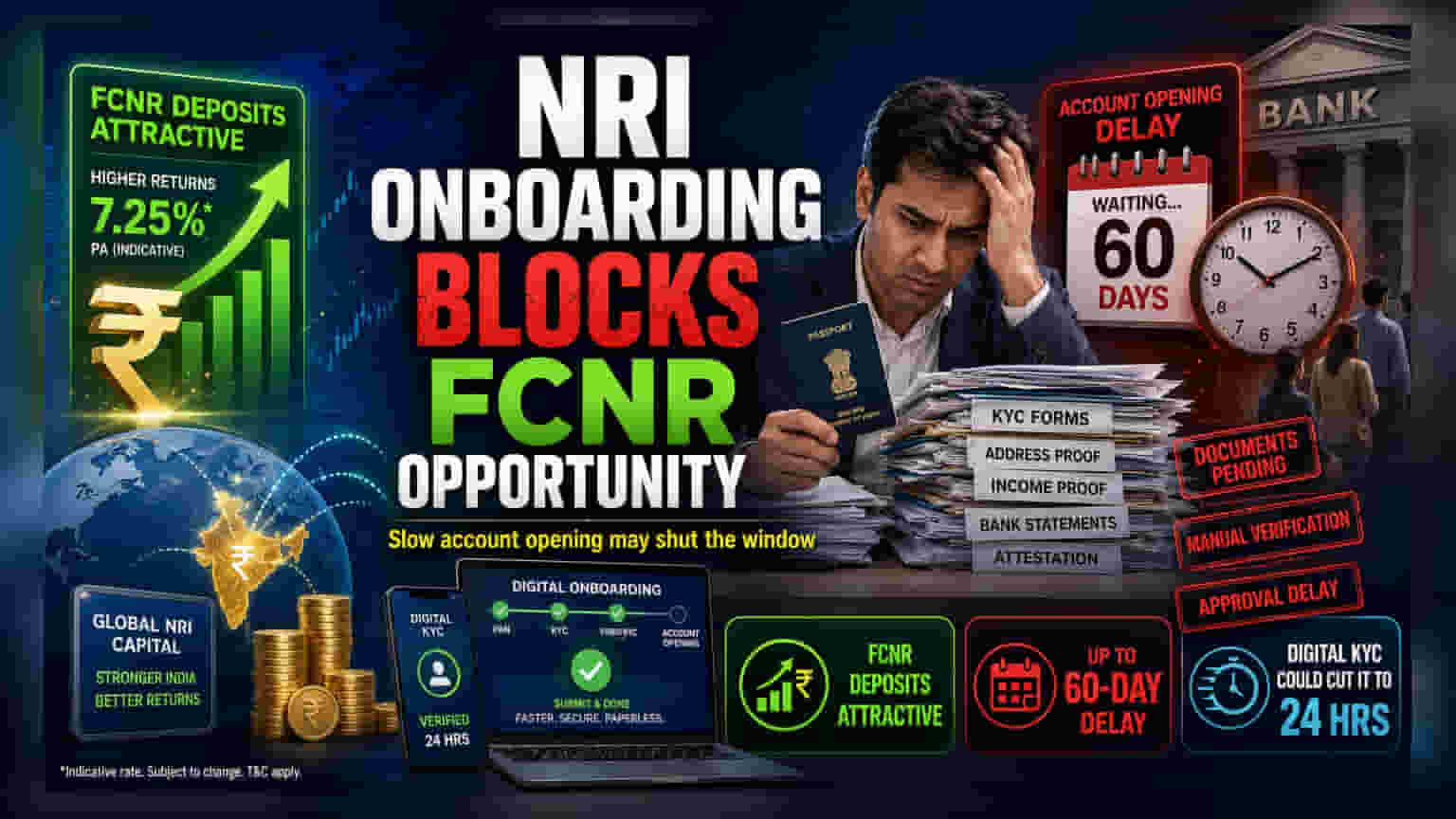
Zerodha co-founder Nithin Kamath has highlighted that lengthy account opening procedures are preventing NRIs from accessing lucrative FCNR deposits. While these deposits offer attractive returns with minimized currency risk, a 60-day wait for onboarding often discourages potential investors.
What Happened
Zerodha co-founder Nithin Kamath has raised concerns about the slow account-opening processes that continue to block Non-Resident Indians (NRIs) from accessing key investment opportunities in India. Kamath specifically pointed to the Foreign Currency Non-Resident (FCNR) deposit scheme, which he described as a high-value opportunity for NRIs. He noted that while these deposits are currently very attractive, a potential 60-day wait to complete paperwork can make the window of opportunity close before an investor is even ready to start.
The Attraction Of FCNR Deposits
FCNR deposits allow NRIs to keep their savings in foreign currencies like the US Dollar, British Pound, or Euro while earning interest from Indian banks. The primary appeal, according to Kamath, is that the Reserve Bank of India (RBI) is currently bearing the currency hedging costs. This means depositors can earn returns similar to Indian fixed deposits without taking on the risk of the Indian rupee losing value against the currency they hold. For many, this makes FCNR deposits a straightforward and attractive financial choice.
Why Onboarding Remains A Hurdle
Despite the clear benefits of these products, Kamath emphasized that the administrative process is a major barrier. Opening an investment or bank account as an NRI involves complex Know Your Customer (KYC) requirements, including overseas address verification, tax documentation, and notarization of physical papers.
These steps often require coordinating with notaries, embassies, or courier services. Kamath noted that in an age where resident Indians can open digital accounts and start trading within a day, NRIs often face a multi-week waiting period. This friction causes many potential investors to drop out or lose interest before they can even make their first investment.
The Push For Digital Simplification
To address these delays, there is a push for better technology and smoother onboarding. Kamath highlighted that platforms like Rupeeflo, which is backed by Rainmatter, are attempting to bridge this gap. These services aim to digitize the document verification and notarization process, with the goal of reducing the onboarding time from weeks to as little as 24 hours. The broader industry debate now centers on whether faster digital onboarding is the final piece of the puzzle to unlock higher NRI participation, or if deeper regulatory or tax complexities still remain.
What Investors Should Watch
For investors and the broader market, the key monitorable is whether financial institutions and regulators can align to make cross-border investing as seamless as domestic investing. If onboarding times for NRIs drop consistently across the banking sector, it could lead to higher inflows of foreign capital into Indian financial products. Investors should track updates on digital KYC norms, simplified documentation requirements, and the adoption of tech-enabled platforms that aim to remove traditional paperwork barriers.