 Whalesbook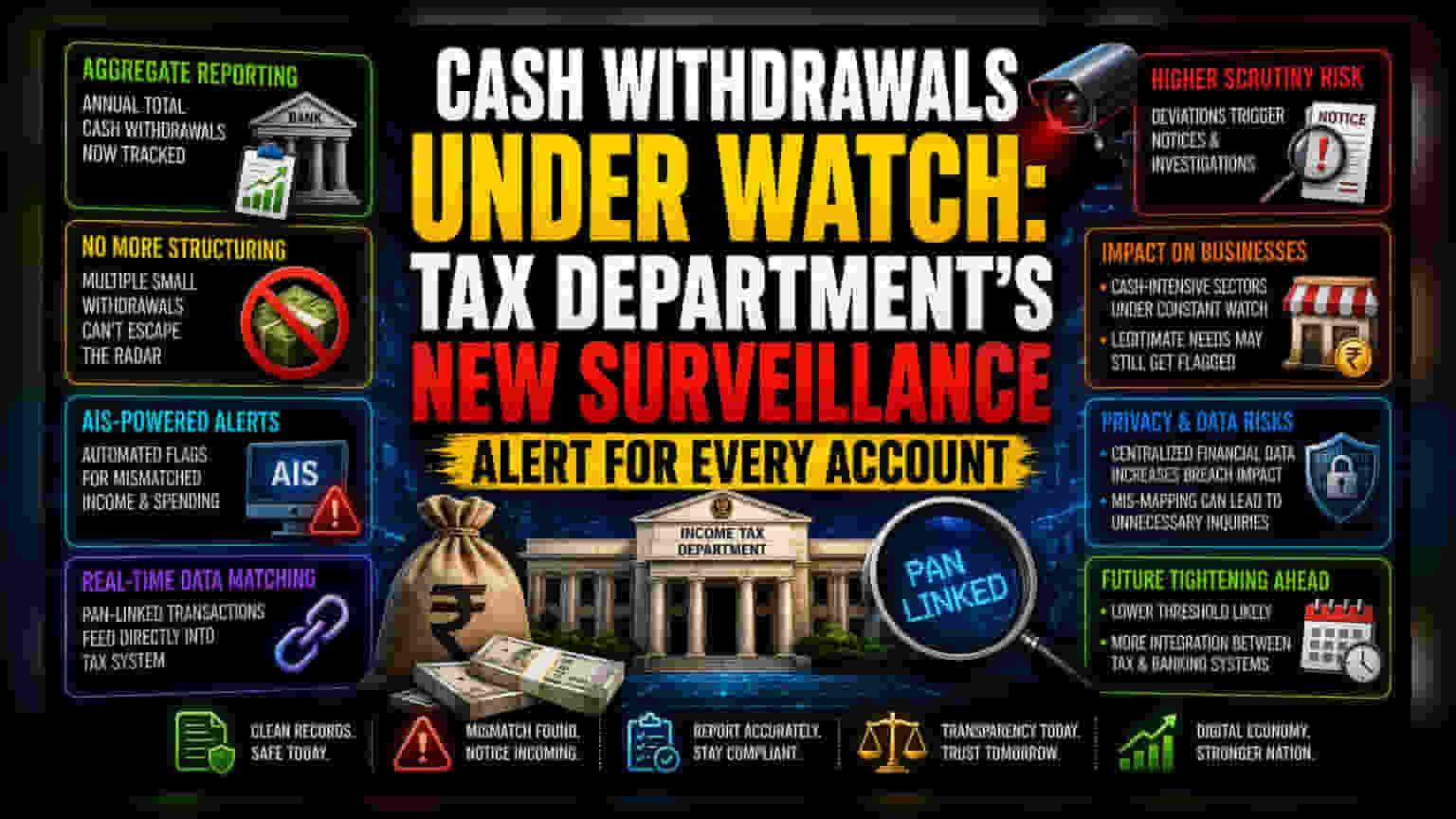


The Shift Toward Real-Time Financial Surveillance
The move to enforce stricter reporting on aggregate cash withdrawals is not merely a bureaucratic update but a significant refinement of the Income Tax Department’s data-matching capabilities. By requiring banks to aggregate annual withdrawals rather than monitoring singular events, the regulatory framework captures a more granular view of individual liquidity. This strategy effectively eliminates the workaround of structuring multiple smaller withdrawals to evade detection thresholds, placing the onus on financial institutions to maintain clean, PAN-linked transaction logs that feed directly into the central tax repository.
Analytical Depth: The Data Correlation Engine
Unlike traditional tax audits that rely on post-hoc assessments, this mechanism relies on the Annual Information Statement (AIS) to trigger automated alerts. When an individual’s total withdrawal profile deviates from their tax bracket or reported business turnover, the system flags the account for secondary review. This creates a high-stakes environment for high-net-worth individuals and small business owners who frequently utilize physical cash for operations. Compared to previous years, where such scrutiny was often manual and selective, the current infrastructure utilizes machine learning models to identify spending patterns that appear incongruent with filed income data, making the risk of a notice significantly higher for those with opaque financial reporting.
The Forensic Bear Case: Compliance and Privacy Risks
The implementation of these mandates introduces substantial friction for legitimate high-cash-flow businesses. Small enterprise owners, who may require significant liquidity for operational agility, face the persistent risk of administrative harassment if their withdrawal patterns are flagged by an algorithm that lacks context regarding sectoral cash needs. Furthermore, the reliance on PAN-linked tracking increases the potential impact of data breaches at the institutional level, as all personal financial movement is effectively centralized. For those with complex, multi-account banking structures, the risk of technical errors—such as incorrect PAN mapping by a bank—could result in unnecessary tax inquiries, forcing taxpayers to expend significant resources to resolve automated discrepancies.
Future Outlook and Regulatory Trajectory
Market experts anticipate that this move is a precursor to a wider tightening of cash-based transactions. With the government’s push toward a formal, digital-first economy, the threshold for scrutiny may see downward adjustments in the coming years. Taxpayers should expect more integrated communication between the Central Board of Direct Taxes and retail banking software, reducing the lead time between an flagged transaction and a formal request for information.