

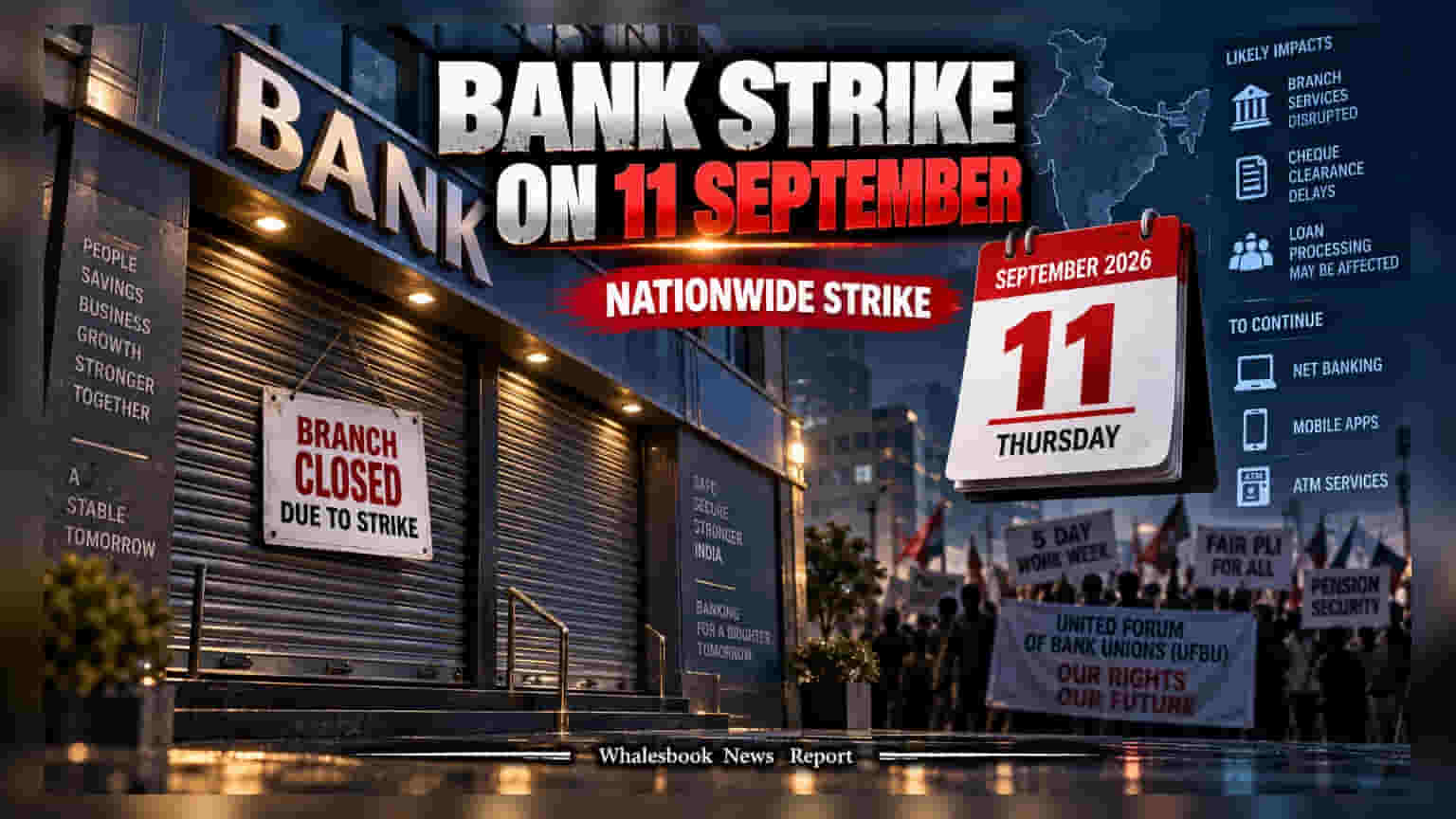
Banking services across India face potential disruptions on September 11, 2026, as unionized employees proceed with a nationwide strike following failed negotiations with the Indian Banks’ Association. While digital platforms and ATMs are expected to remain operational, physical branch services may be impacted. Investors should note that further industrial action is threatened for late September and October if demands regarding work schedules and incentive schemes remain unresolved.
Banking operations across India are bracing for potential disruptions on September 11, 2026, as the United Forum of Bank Unions (UFBU) has confirmed a nationwide strike. This decision follows a breakdown in discussions between union leadership and the Indian Banks’ Association (IBA) regarding long-standing labor demands. The industrial action is expected to affect the daily functioning of many public sector banks, which have already begun disclosing the potential impact of this strike to stock exchanges in accordance with SEBI compliance requirements.
At the center of the dispute is the implementation of a five-day work week, a proposal that has remained in limbo for over two years despite being discussed in previous industry-wide settlements. In addition to the schedule adjustment, employees are raising concerns regarding the revised Performance Linked Incentive (PLI) scheme. Union representatives argue that the current incentive structure creates a disparity, offering higher rewards for senior officers while falling short for staff members up to Scale III. Unresolved pension issues also remain a key point of contention for the employee groups.
For bank customers, the immediate impact will likely be felt at physical branch locations, where services such as cheque clearance, cash deposits, and loan processing may face delays. However, banks have generally maintained that digital infrastructure, including net banking, mobile applications, and ATM networks, will continue to function. This operational distinction serves as a critical buffer for the broader economy, preventing a total standstill in financial transactions.
From an investor perspective, the primary concern lies in the potential for escalation. The current strike is a single-day event, but union leadership has signaled that further industrial action is planned for September 28, 29, and 30, with a threat of an indefinite strike beginning on October 26, 2026, should their demands remain unaddressed. Prolonged or frequent industrial action can weigh on operational efficiency and could lead to temporary service backlogs.
Market participants are likely to monitor the frequency of these disruptions and any subsequent regulatory filings from public sector banks. As the situation evolves, the key monitorable for shareholders will be management’s ability to navigate these labor negotiations without incurring significant operational downtime or long-term damage to employee morale, which remains a factor in the productivity of the public sector banking space.