

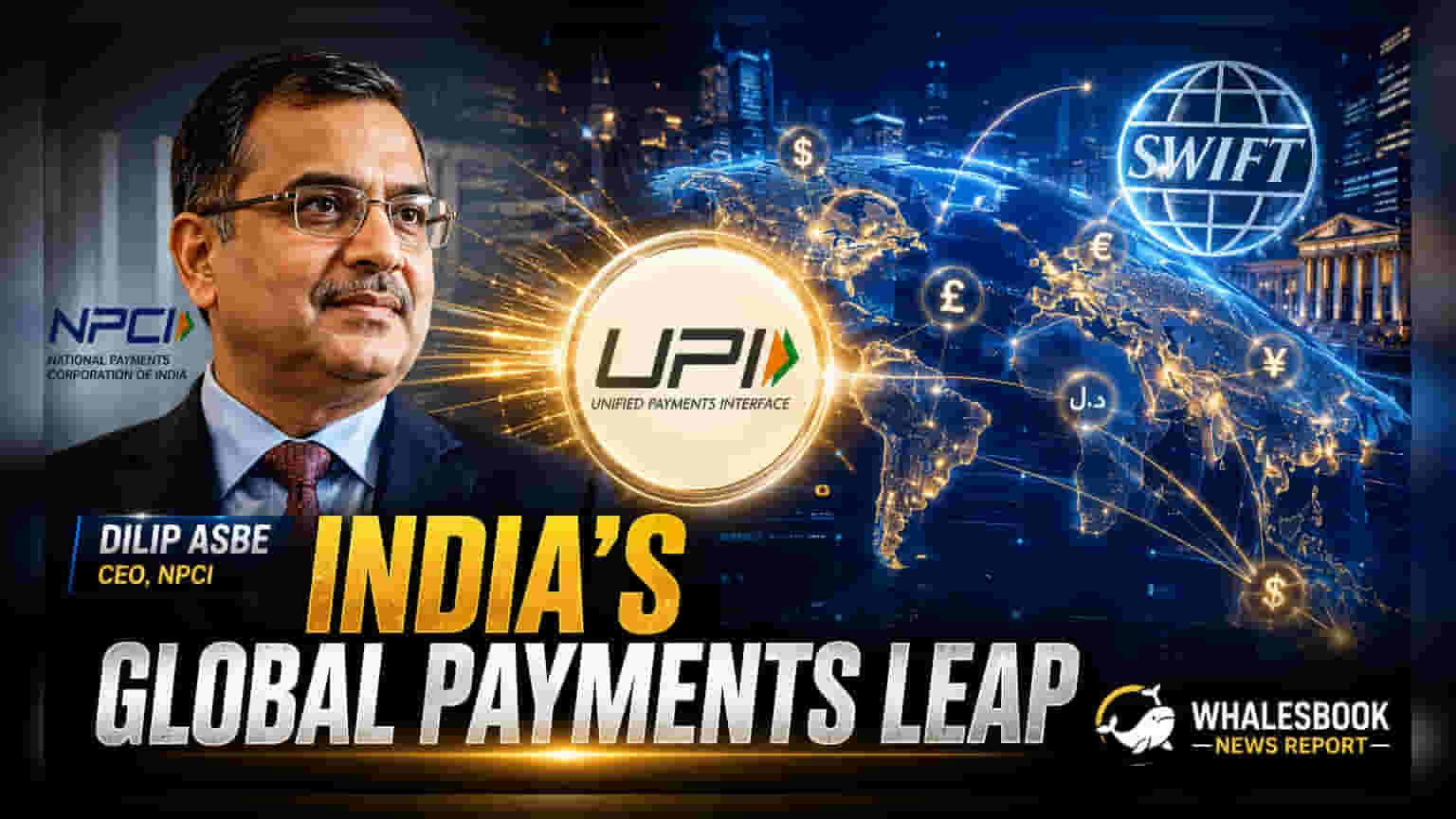
Dilip Asbe, CEO of the National Payments Corporation of India (NPCI), has been appointed to the global supervisory board of SWIFT. This move gives India a seat at the table in setting international financial messaging standards. It highlights the global recognition of India’s digital payment infrastructure and UPI's widespread success.
The appointment of Dilip Asbe, Managing Director and CEO of the National Payments Corporation of India (NPCI), to the supervisory board of the Society for Worldwide Interbank Financial Telecommunication (SWIFT) marks a major shift in India's role within global finance. SWIFT serves as the primary messaging network used by financial institutions worldwide to conduct secure international transactions.
A New Voice in Global Finance
Asbe’s inclusion in the SWIFT supervisory board comes as the organization implements a new two-tier governance structure. This structure separates oversight and management, with the supervisory board consisting of up to 15 members tasked with preventing regional dominance and ensuring global representation. His appointment, which awaits final regulatory formalities scheduled for October 2026, ensures that India’s perspective on real-time payments and large-scale digital architecture is integrated into future global standards.
This development is rooted in the success of the Unified Payments Interface (UPI). By processing more than 20 billion transactions per month, UPI has transformed from a domestic project into a global model for real-time retail payments. The participation of the NPCI leadership in SWIFT’s governance is a formal recognition of the technical expertise India has developed in creating high-volume, low-cost payment systems.
Expanding India’s Digital Payment Footprint
Since Dilip Asbe took charge as NPCI's CEO in January 2018, the organization has significantly diversified its operations. Beyond UPI, NPCI manages critical payment rails including IMPS (Immediate Payment Service), RuPay cards, and the FASTag toll collection system. Furthermore, NPCI has restructured its business to focus on global expansion through its subsidiary, NPCI International Payments (NIPL).
NIPL has already been actively exporting India’s payment technology to various countries, including parts of Asia, the Middle East, and Europe. This strategy aims to create interoperability between UPI and international payment networks, reducing the cost and time required for cross-border remittances. Asbe’s role at SWIFT may provide a strategic advantage here, as it positions him to advocate for technical standards that could make such international integration easier to implement.
Future Monitorables for the Sector
Investors and stakeholders in the Indian fintech and banking sectors should watch how this seat on the SWIFT board influences future cross-border payment protocols. As NPCI continues to build infrastructure for projects like the Central Bank Digital Currency (CBDC), its ability to influence global messaging standards could determine how easily Indian financial systems integrate with the rest of the world. The next phase to observe will be the formalization of this board position in October and any subsequent policy shifts regarding global interoperability for real-time payment platforms.