

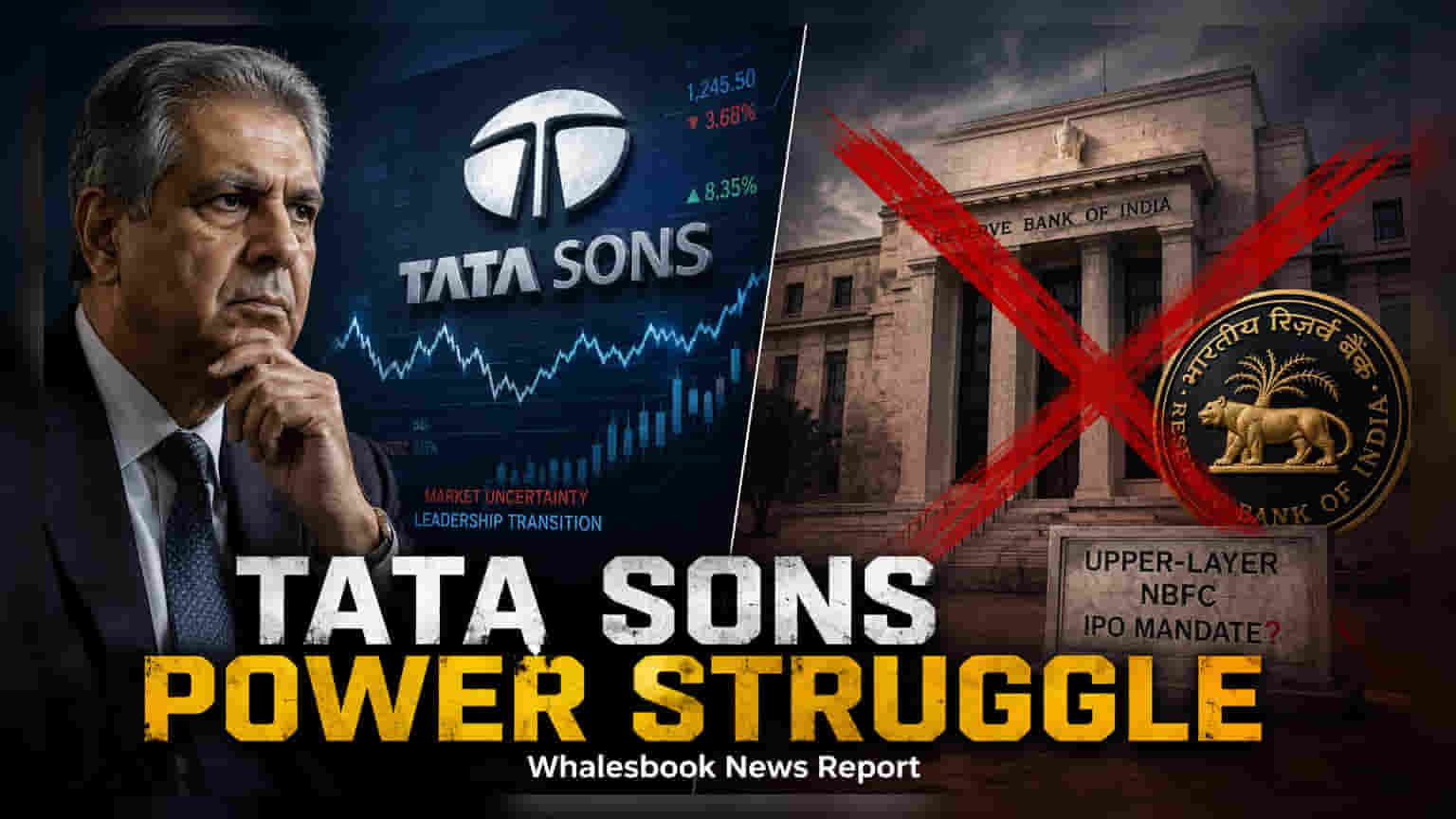
N. Chandrasekaran announced he will step down as Chairman of Tata Sons when his term ends on February 20, 2027, amidst reported strategic disagreements. The development, combined with regulatory uncertainty regarding a potential mandatory IPO, triggered a 4-5% decline in major Tata Group stocks like TCS and Tata Motors on August 12, 2026.
N. Chandrasekaran, the long-standing Chairman of Tata Sons, has decided not to seek reappointment when his current term concludes on February 20, 2027. The decision, announced on August 12, 2026, marks a significant leadership shift for India's largest conglomerate. Market participants responded immediately, with shares of major group companies such as TCS and Tata Motors trading lower by 4-5% during the session, reflecting investor sensitivity to leadership changes within the group.
Leadership Transition and Strategic Tensions
The leadership change comes against the backdrop of reported differences between the Tata Sons management and the board of Tata Trusts, the philanthropic arm that owns approximately 66% of the holding company. Tata Trusts, currently chaired by Noel Tata, has reportedly expressed concerns regarding the group’s strategic direction, board representation, and the company's approach to the potential listing of Tata Sons. This leadership announcement arrives just ahead of the company's annual general meeting (AGM) scheduled for August 18, 2026, creating an atmosphere of uncertainty regarding future governance and succession plans.
RBI Classification and IPO Uncertainty
Beyond internal leadership matters, Tata Sons is navigating a complex regulatory environment. The Reserve Bank of India (RBI) has classified Tata Sons as an 'upper-layer' non-banking financial company (NBFC) for the 2026-27 financial year. Under current regulatory norms, this classification often mandates a public listing within three years. While Tata Sons has applied to de-register as a core investment company to avoid this requirement, the regulator has yet to approve the request.
This regulatory limbo presents a primary risk for investors. If the RBI rejects the application, Tata Sons could be forced to launch an Initial Public Offering (IPO). A public listing would significantly alter the company's governance structure, mandating higher disclosures and diluting the control currently held by Tata Trusts and the Tata family. Noel Tata has historically favored keeping the holding company private to maintain long-term control over capital allocation and philanthropic objectives, a stance that remains a key point of divergence.
Investors are now focusing on how the group will manage this leadership transition while addressing regulatory pressures. The key monitorable for shareholders will be any official communication regarding the succession plan, the status of the de-registration application with the RBI, and whether the group can align its strategic objectives with the governance expectations of both the Trusts and public market regulators.