

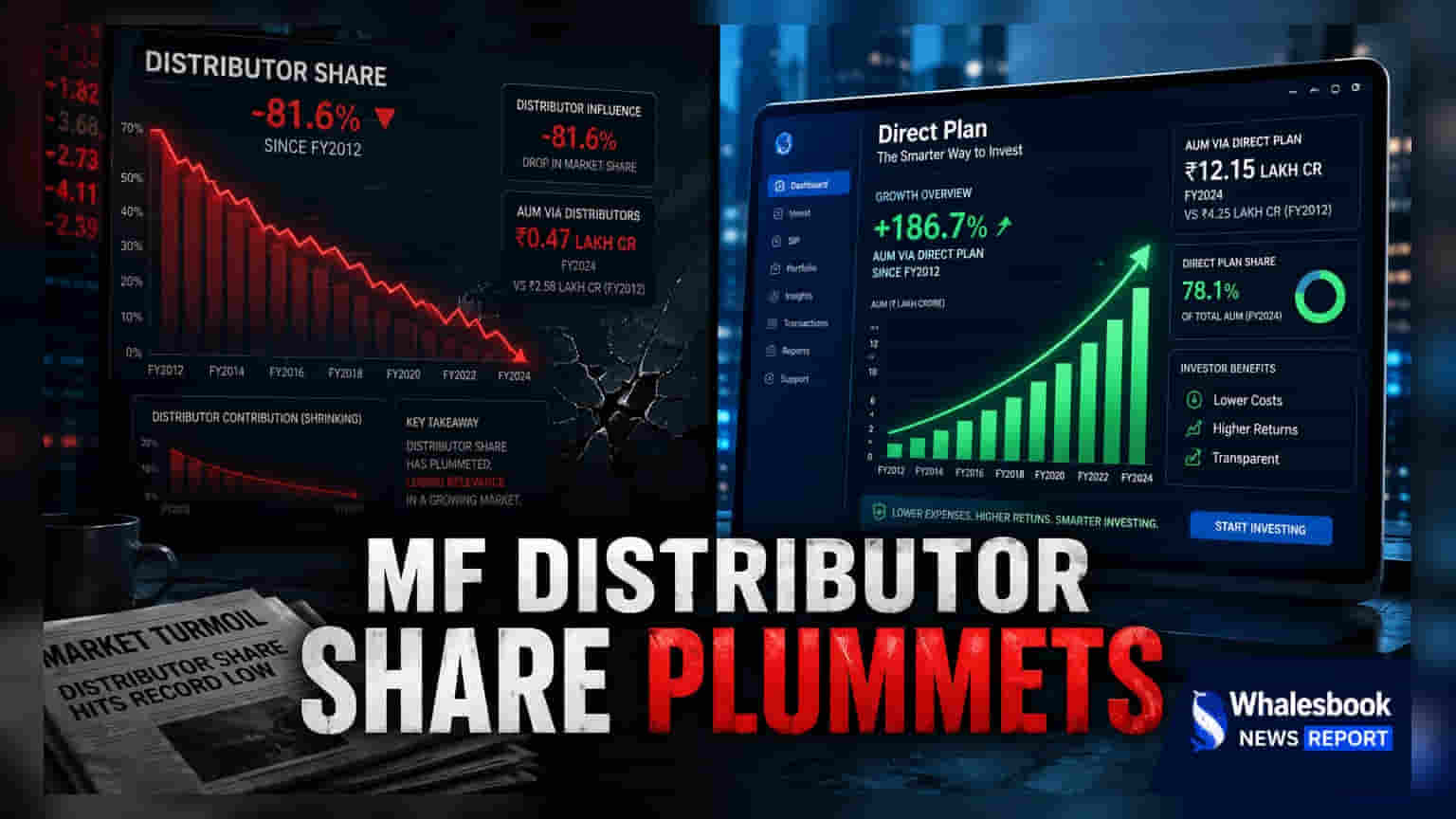
The share of mutual fund assets managed through distributors has fallen from 58.5% in June 2024 to 54.6% by May 2026. As retail investors increasingly prefer passive and hybrid schemes via direct platforms, distributors are facing challenges in client retention. This trend reflects a broader move toward low-cost, self-managed investing, though experts emphasize that expert advisory remains critical for complex financial goals.
What Happened
Between June 2024 and May 2026, the structure of mutual fund distribution in India shifted noticeably. The proportion of assets under management (AUM) routed through distributors declined from 58.5% to 54.6%. In contrast, direct plan investments—where investors bypass agents to invest directly with asset management companies—grew from 41.5% to 45.4% over the same two-year period.
This data indicates that while the overall mutual fund industry is expanding, a larger share of that growth is being captured by direct online platforms rather than traditional distribution channels. This shift is occurring amidst a period of significant volatility and changing investment preferences.
The Growth Of Passive And Hybrid Funds
A major driver of this shift is the popularity of passive and hybrid fund categories, which are often the entry point for direct retail investors. Industry data shows that passive fund assets, such as index funds and ETFs, surged by 46%, reaching Rs 15.27 lakh crore in May 2026, up from Rs 10.48 lakh crore in June 2024.
Hybrid funds, which balance equity and debt to manage risk, also saw strong growth. Their assets expanded by 38% to Rs 11.16 lakh crore from Rs 8.10 lakh crore. For comparison, traditional equity funds grew by 31% to Rs 36.14 lakh crore. The focus on these non-traditional categories suggests investors are seeking strategies that can better handle the range-bound equity market conditions seen over the past two years.
Why Investors Are Moving To Direct Platforms
The rise of direct platforms is fueled by several factors. Ease of access through digital portals and the influence of social media have made it simpler for retail investors to pick passive index funds without professional help. Additionally, institutional investors, such as corporations and financial institutions, have consistently funneled direct investments into non-equity categories.
Market volatility has also complicated the role of distributors. Because many distributors maintain high allocations to equity funds, the inconsistent returns in these categories during the last two years made it harder to manage client expectations and retain existing assets. Some investors, feeling the pressure of market fluctuations, have opted to manage their own portfolios through direct plans, partly to avoid the perceived impact of market cycles.
The Road Ahead For Distributors
Industry observers suggest that the current decline in distributor share is unlikely to reverse quickly. While a market rally could potentially bring some investors back to active advice, the trend toward direct investing seems structural.
For distributors, the path forward appears to be a shift in focus. Experts suggest that to regain traction, distributors must evolve from transaction-based agents to value-added advisors. This includes providing personalized financial planning and handling complex investment needs, particularly for investors in smaller cities where guidance is more critical than just execution. The value of professional advice is expected to remain high for investors navigating complex financial goals, even as direct platforms handle the simpler, passive component of their portfolios.