 Whalesbook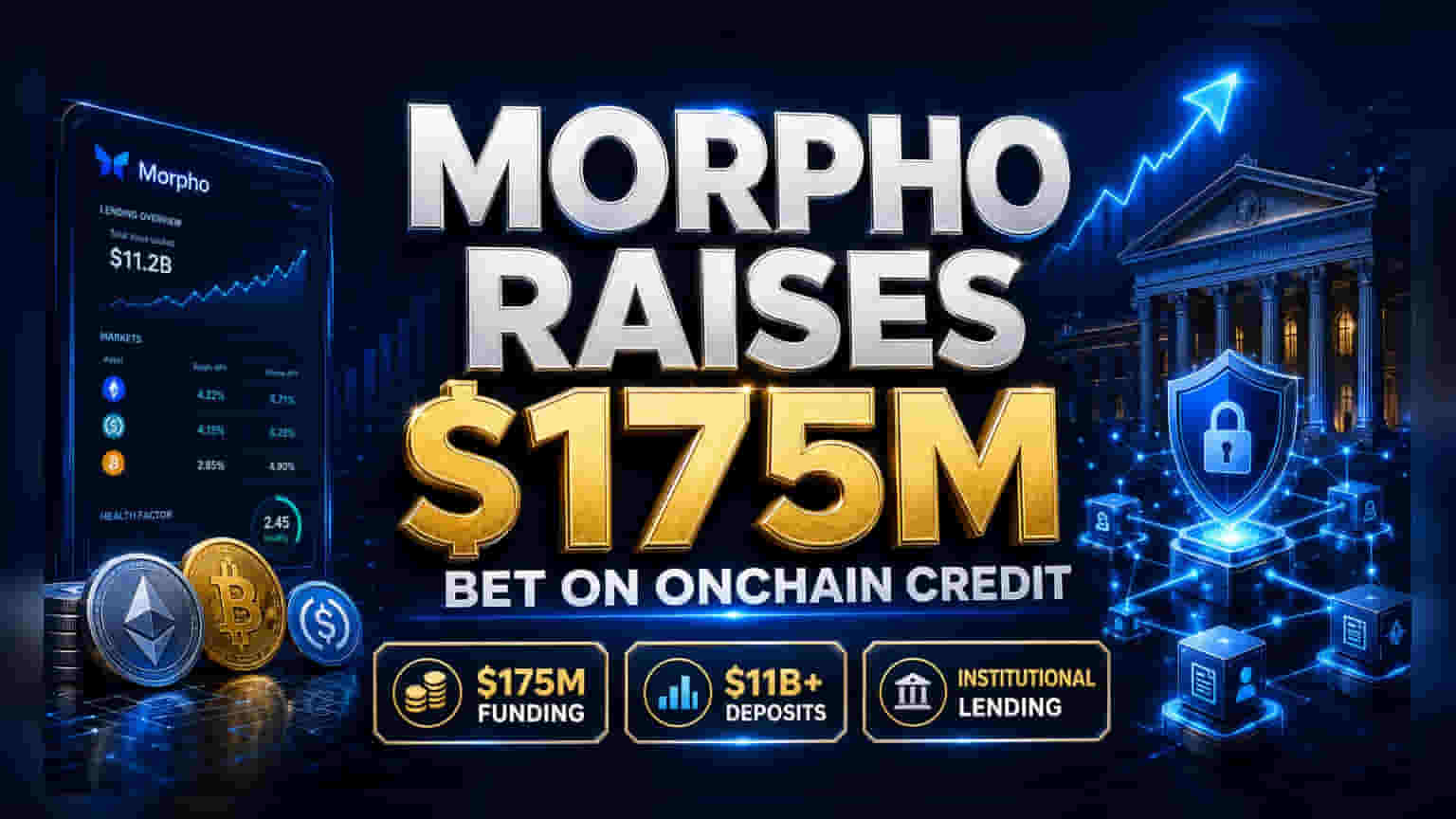


What Happened
Morpho, a decentralized lending protocol, has raised $175 million in a significant funding round. The investment was co-led by major venture capital firms including Paradigm, a16z crypto, and Ribbit Capital. Other participants in this round included Apollo Funds, Circle Ventures, VanEck, and Ledger Cathay. The capital is designated for expanding the company's institutional lending infrastructure, which allows financial firms to build credit products directly on blockchain networks.
The Move Toward Onchain Credit
The funding highlights a growing trend where financial institutions are exploring blockchain technology not just for trading, but for core lending and credit services. Morpho operates as an infrastructure provider. Instead of being a traditional bank that holds customer deposits, its network acts as the digital architecture where other fintech companies and institutions can offer lending products. The company reports that its platform currently handles over $11 billion in deposits, with users ranging from traditional financial firms to established digital asset entities like Coinbase, Galaxy, and Anchorage Digital.
The central goal of this project is to create a more efficient credit market. Traditional lending often involves slow settlement times and fragmented systems. By moving this activity onto blockchain rails—often referred to as onchain credit—the company hopes to enable faster settlement and more programmable credit options that can run automatically using software code.
Risks and Regulatory Challenges
While the technology attracts significant venture capital, the sector faces substantial risks that investors should understand. The most prominent is smart contract risk. Because the lending platform relies on software code (smart contracts) to manage funds, any error or security flaw in that code could potentially lead to loss of assets. While these platforms conduct regular security audits, they are not immune to cyber threats.
Furthermore, the regulatory environment for blockchain-based credit remains complex. In many jurisdictions, including India, the stance on crypto-assets and decentralized finance is evolving. Financial regulators often have strict requirements for lending platforms, including know-your-customer (KYC) norms and consumer protection standards. Institutional adoption depends heavily on whether these platforms can comply with the rigorous oversight that traditional financial institutions face. If global regulations tighten, or if a specific jurisdiction bans or restricts these activities, it could severely impact the adoption and scalability of such infrastructure.
Sector Context and Competition
The competition in the decentralized lending space is intense. There are several established protocols already operating in the market, each competing for liquidity and users. For institutions, the choice of infrastructure depends on liquidity depth, security records, and regulatory compliance. The push by firms like Circle and VanEck suggests that the industry is trying to bridge the gap between traditional finance and blockchain, but this bridge is still under construction.
What Investors Should Track
Investors interested in the financial technology sector should watch for updates regarding security audits and any incidents of code failure, as these are critical to the platform's stability. Additionally, the ability of Morpho and its peers to integrate with mainstream banking systems while remaining compliant with global financial regulations will be the primary factor determining the long-term success of onchain credit markets. Management commentary on how they plan to bridge the gap between decentralized protocols and traditional financial regulation will also be a key monitorable.