 Whalesbook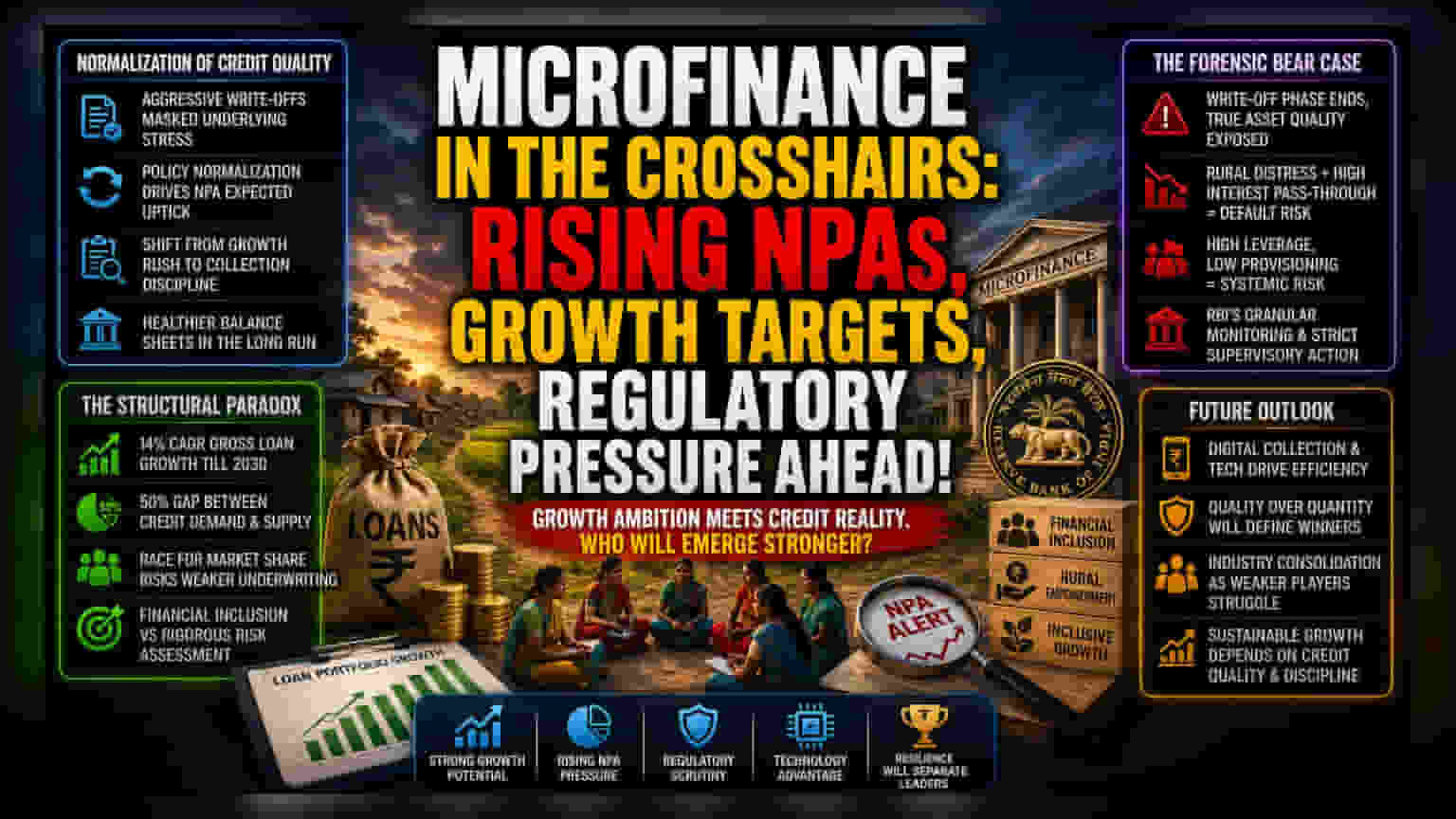


Normalization of Credit Quality
The expected uptick in non-performing assets signals the end of an artificial stability phase where aggressive write-off maneuvers masked deeper systemic issues. By accelerating the removal of impaired loans from balance sheets during the prior fiscal cycle, firms effectively lowered their headline NPA ratios. This policy normalization will now force institutions to confront the true state of their loan books as the crutch of rapid write-downs disappears. Lenders are effectively transitioning from a period of high-velocity loan disbursement to a stricter, albeit more punishing, era of collection scrutiny.
The Structural Growth Paradox
While market projections suggest a 14 percent compound annual growth rate in the gross loan portfolio through 2030, this expansion rests on the assumption that demand-side distress is temporary. The sector currently grapples with a persistent fifty percent mismatch between credit demand and available supply. This gap often incentivizes smaller, less regulated entities to lower underwriting standards to gain market share, potentially increasing the systemic risk within the rural lending environment. Financial inclusion remains a primary objective, but the drive to meet this demand often conflicts with the necessity for rigorous credit assessment in high-risk, low-income borrower segments.
The Forensic Bear Case
Critics point to the post-pandemic cycle as proof that the sector relies too heavily on state-led credit demand rather than organic repayment growth. Management teams at major microfinance firms now face a dual challenge: maintaining double-digit growth targets while simultaneously satisfying tightening regulatory frameworks. Unlike traditional commercial banks, microfinance institutions lack the liquidity depth to withstand prolonged regional economic shocks. There is a palpable risk that if rural economic activity falters, the combination of high interest rate pass-throughs and excessive borrower leverage will lead to a cluster of defaults that the current provisioning levels are ill-equipped to handle. Furthermore, the Reserve Bank of India’s increasingly granular monitoring means that any deviation from prudent provisioning will result in immediate supervisory intervention.
Future Outlook and Regulatory Pressure
Looking ahead, the sector’s trajectory hinges on its ability to leverage digital collection technologies to mitigate overhead costs while keeping credit quality intact. Analysts suggest that the institutions which emerge stronger will be those that prioritize technological efficiency over mere raw portfolio volume. The divergence between firms with sophisticated risk-modeling capabilities and those reliant on legacy, manual collection methods is set to widen, potentially leading to increased industry consolidation as smaller players struggle to balance regulatory compliance costs with the reality of rising loan defaults.