 Whalesbook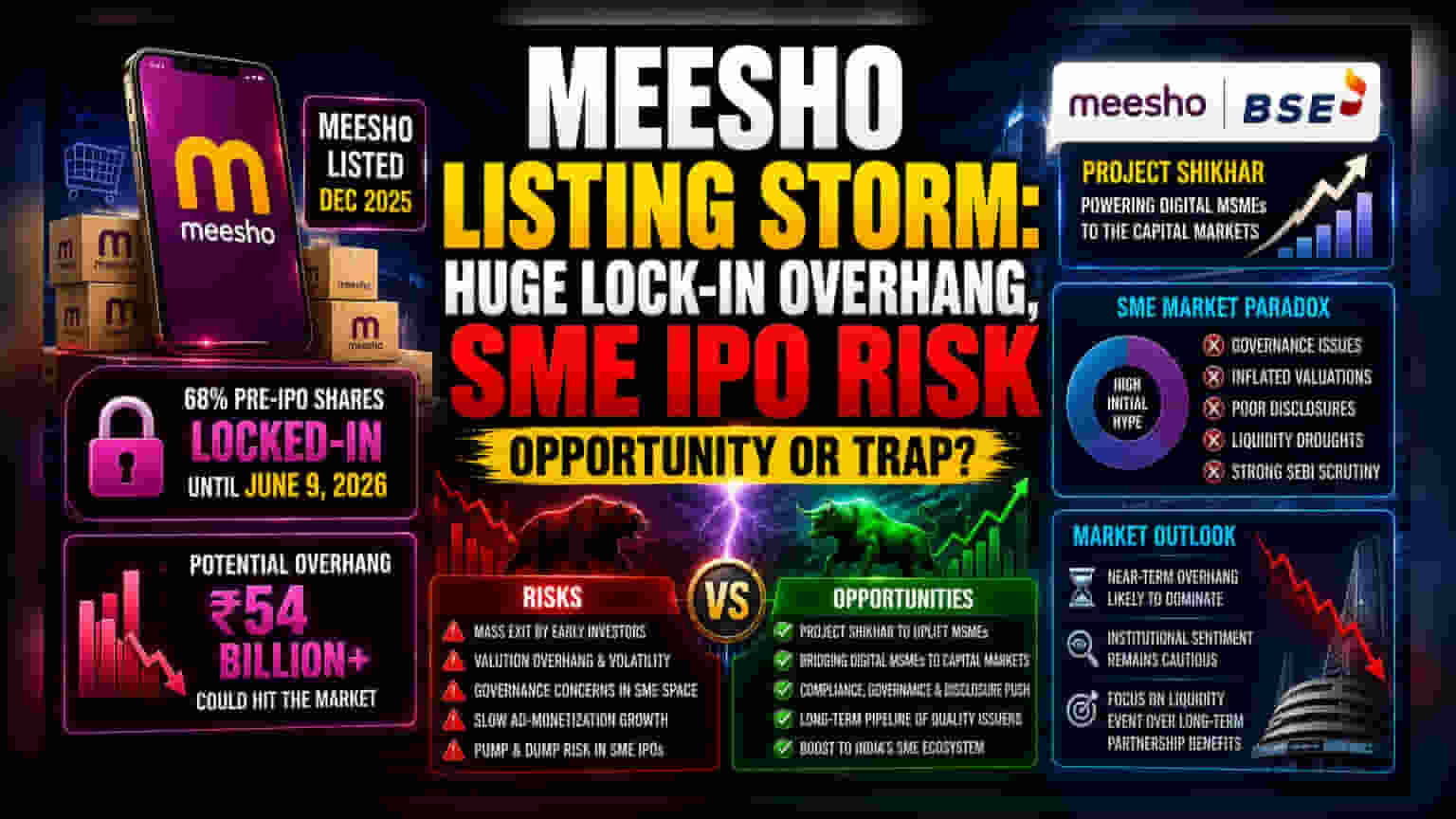


The Valuation Gap
While the partnership between Meesho and the Bombay Stock Exchange (BSE) seeks to formalize digital-first MSMEs through 'Project Shikhar,' market participants are currently distracted by a more pressing structural issue. Meesho, which debuted on the Indian exchanges in December 2025, is approaching a critical juncture. Approximately 68% of its pre-IPO shareholding is locked in until June 9, 2026. Financial estimates suggest that if only a fraction of this equity—potentially worth upwards of INR 54 billion—enters the secondary market, the liquidity surge could eclipse the original IPO size, creating immediate and substantial price volatility.
The SME Market Paradox
Project Shikhar intends to bridge the gap between informal digital commerce and the formal capital markets by assisting sellers with compliance, governance, and regulatory readiness for the BSE SME platform. While this aligns with broader initiatives to integrate MSMEs into India’s GDP, the SME IPO segment itself has become a theater of heightened risk. Recent market data indicates that while SME listings often see explosive initial participation, they are frequently marred by governance concerns, inflated valuations, and subsequent liquidity droughts. Unlike the stringent disclosure requirements of mainboard listings, the SME platform’s lower thresholds have occasionally been exploited for 'pump-and-dump' schemes, prompting SEBI to increase regulatory scrutiny.
The Forensic Bear Case
Investors evaluating the long-term merit of Meesho’s new initiative must contend with the company’s own fragile market positioning. Despite improvements in operating metrics, ad-monetization growth remains slower than anticipated, leading some analysts to maintain conservative valuations. The risk is twofold: a potential mass exit by early-stage venture capital and private equity investors looking to crystallize their gains, and the inherent difficulty of successfully transitioning high-growth e-commerce sellers—often accustomed to hyper-growth at the expense of bottom-line discipline—into public companies capable of consistent, transparent disclosure. History suggests that many SME-listed firms fail to maintain sustained investor interest post-listing, with many experiencing severe price corrections within months of their debut.
The Future Outlook
Project Shikhar may eventually serve as a pipeline for quality issuers, but its success will be judged by the caliber of the entities that actually survive the rigorous transition to public listing. In the near term, institutional sentiment remains cautious. With the stock currently facing a near-term overhang, the market is likely to prioritize the resolution of the upcoming liquidity event over the potential long-term benefits of the BSE partnership.