

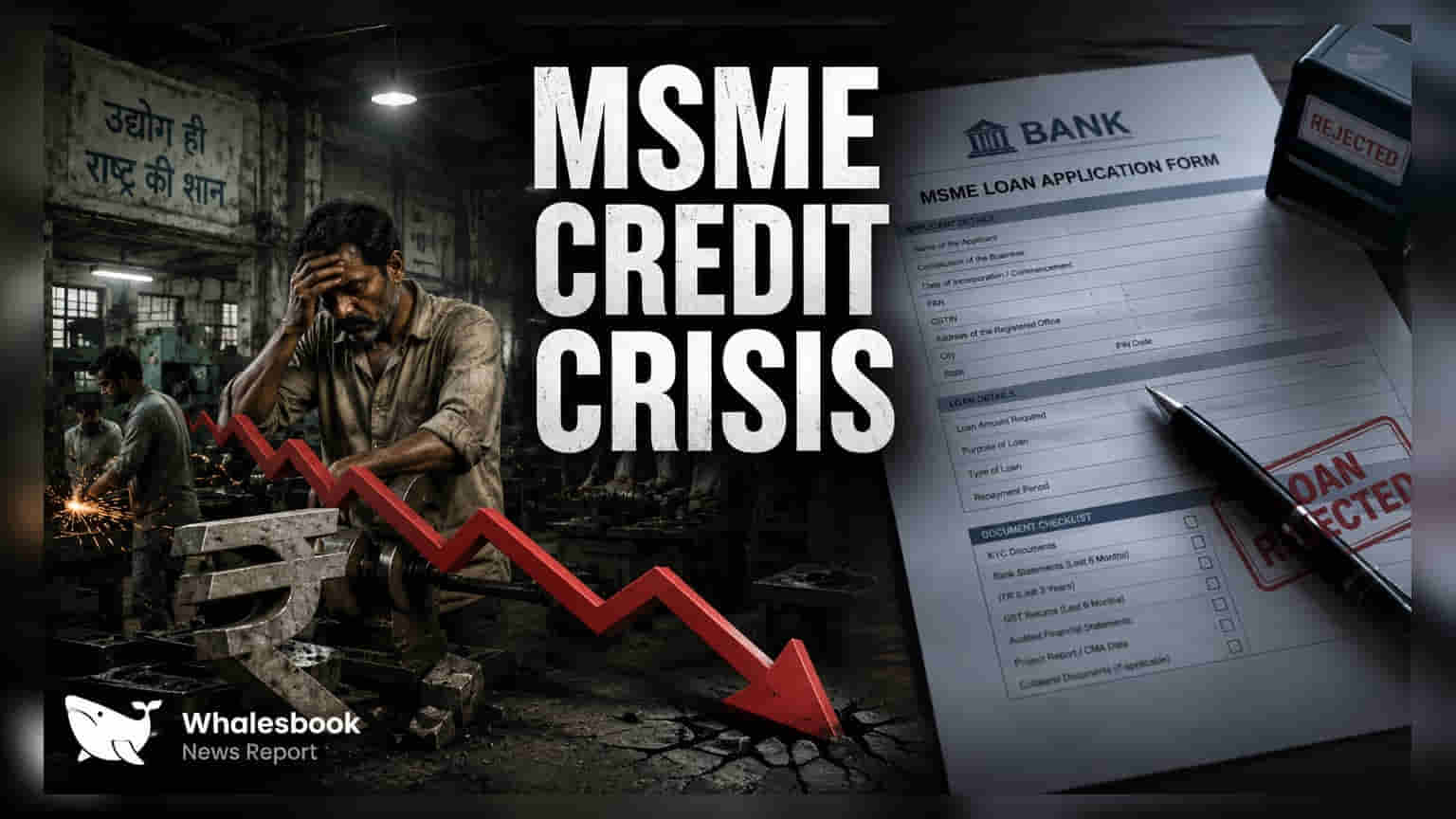
Credit growth for manufacturing MSMEs has slowed to a three-year low, with total outstanding balances reaching ₹15.3 lakh crore. Lenders are becoming more cautious, as only 41% of registered small businesses currently access formal credit, while delinquency rates in certain loan segments show a rising trend.
What Happened
Credit growth to manufacturing micro, small, and medium enterprises (MSMEs) has decelerated to its slowest rate in three years. While the total outstanding loan balance for this sector stands at ₹15.3 lakh crore, the pace of lending has cooled significantly. Official data indicates that just 41% of registered manufacturing MSMEs currently have access to formal credit channels. This slowdown comes as financial institutions adjust their risk appetite, leading to a decline in the number of new-to-credit customers entering the formal banking system.
The Shift In Lender Preference
Banks and non-banking financial companies are showing a clear preference for the 'trades' and 'services' sectors over manufacturing. Over the three years leading up to FY26, credit to the trades segment grew by 16%, while professional and other services expanded by 17%. In comparison, manufacturing credit growth has lagged. This shift suggests that lenders are prioritizing sectors with faster turnover cycles or different risk profiles, potentially leaving manufacturing-focused small businesses with tighter access to capital.
Where Credit Risks Are Emerging
While the broader asset quality of MSME portfolios remains relatively stable, with about 1.8% of loans overdue by more than 90 days, specific areas of concern are becoming visible. Unsecured business loans are experiencing higher stress, with delinquency rates climbing to 7.2%, marking an increase of 2.74% over the past three years. Furthermore, loans in the ₹2 lakh to ₹10 lakh ticket size range have seen delinquencies rise to 5.6%. For investors, these figures indicate that while the system is not under systemic distress, specific segments within the MSME lending space are facing higher repayment challenges.
Regional Concentration and Opportunities
Credit distribution remains highly concentrated, with Maharashtra, Gujarat, and Tamil Nadu serving as the primary hubs for manufacturing MSME lending. Over 50% of the total credit to this sector is directed toward textiles, engineering, and food processing industries. For lenders and investors, the growth opportunity lies in states where credit penetration remains low. Borrowers who are new to credit in these underserved regions have historically shown moderate-to-good repayment profiles, which may serve as a future growth area if lenders can manage risk effectively.
What Investors Should Track
Investors looking at banking and financial stocks should monitor the credit cost and asset quality trends within MSME portfolios. Key indicators include the proportion of unsecured lending in a bank's book, the pace of growth in new-to-credit customer acquisition, and any movement in delinquency rates for small-ticket loans. As lenders turn cautious, their ability to maintain net interest margins without compromising on asset quality will be the primary monitorable in the coming quarters.