

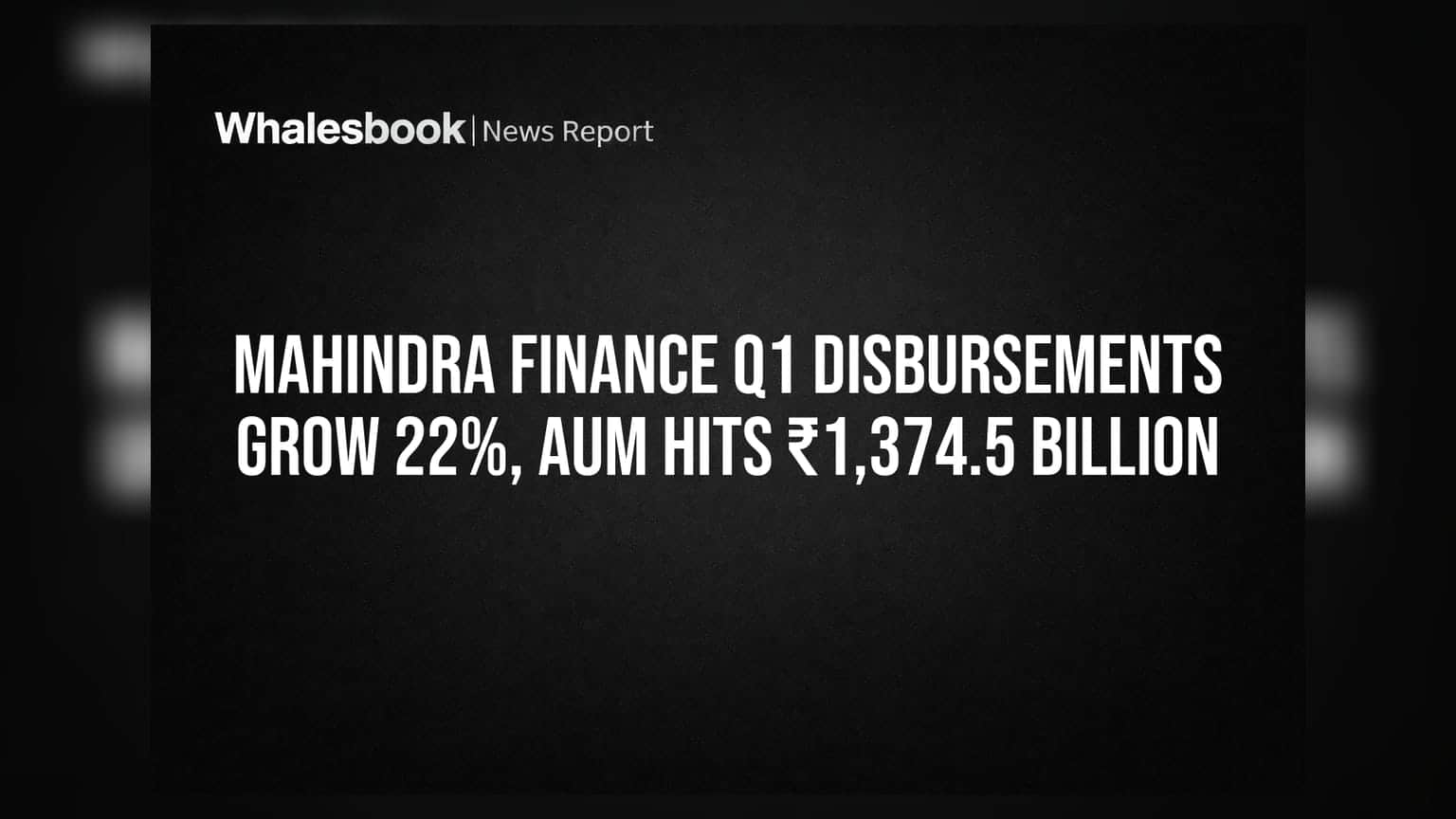
Mahindra & Mahindra Financial Services reported a 22% year-on-year rise in Q1 disbursements, supported by strong demand for tractors and vehicles. The company's total assets under management reached ₹1,374.5 billion, reflecting steady business growth. Investors are currently monitoring the impact of monsoon patterns on rural demand and the company's ability to maintain profit margins amid fluctuating funding costs.
Detailed Coverage
Mahindra & Mahindra Financial Services (MMFS) has reported a robust start to the fiscal year, with disbursement growth reaching 22% compared to the same period last year. This performance was largely driven by healthy demand across key segments, including tractors, passenger vehicles, and used commercial vehicles. The company’s total assets under management (AUM) saw a 13% year-on-year expansion, climbing to ₹1,374.5 billion.
Margin Outlook and Funding Costs
While the company has seen growth in its asset base, the broader financial environment remains sensitive to interest rate fluctuations. Rising bond yields have increased the cost of borrowing for many non-banking financial companies (NBFCs). However, projections suggest that MMFS may maintain stable profit margins through the current fiscal year. This stability is expected to be managed by optimizing the company's business mix—shifting toward higher-yield segments—and increasing income from fees and service charges, which helps offset higher funding costs.
Operational Efficiency and Asset Quality
Management continues to invest in digital transformation efforts to improve customer reach and loan processing efficiency. These investments are being balanced against productivity gains to keep operating expenses within a manageable range. On the asset quality front, the company has seen a flat trend quarter-on-quarter. Analysts monitoring the company have incorporated a credit cost estimate of approximately 1.7% for the current fiscal year, reflecting a cautious stance on managing loan losses in a competitive lending environment.
Business Risks and Future Monitorables
For investors, the primary monitorable remains the rural economy's health, which is heavily influenced by monsoon patterns. Since a significant portion of Mahindra Finance's business is tied to rural and semi-urban markets—particularly the tractor and agricultural vehicle segments—any deviation in rainfall can affect borrower repayment capacity and overall demand. Investors may also track whether the company can sustain its growth momentum if borrowing costs remain elevated or if rural consumption trends shift.
Looking ahead, the company's ability to balance its expansion with stable asset quality will be critical. The next significant updates for investors to watch will be the quarterly commentary on rural demand trends and any shifts in the cost of funds that could influence net interest margins.