

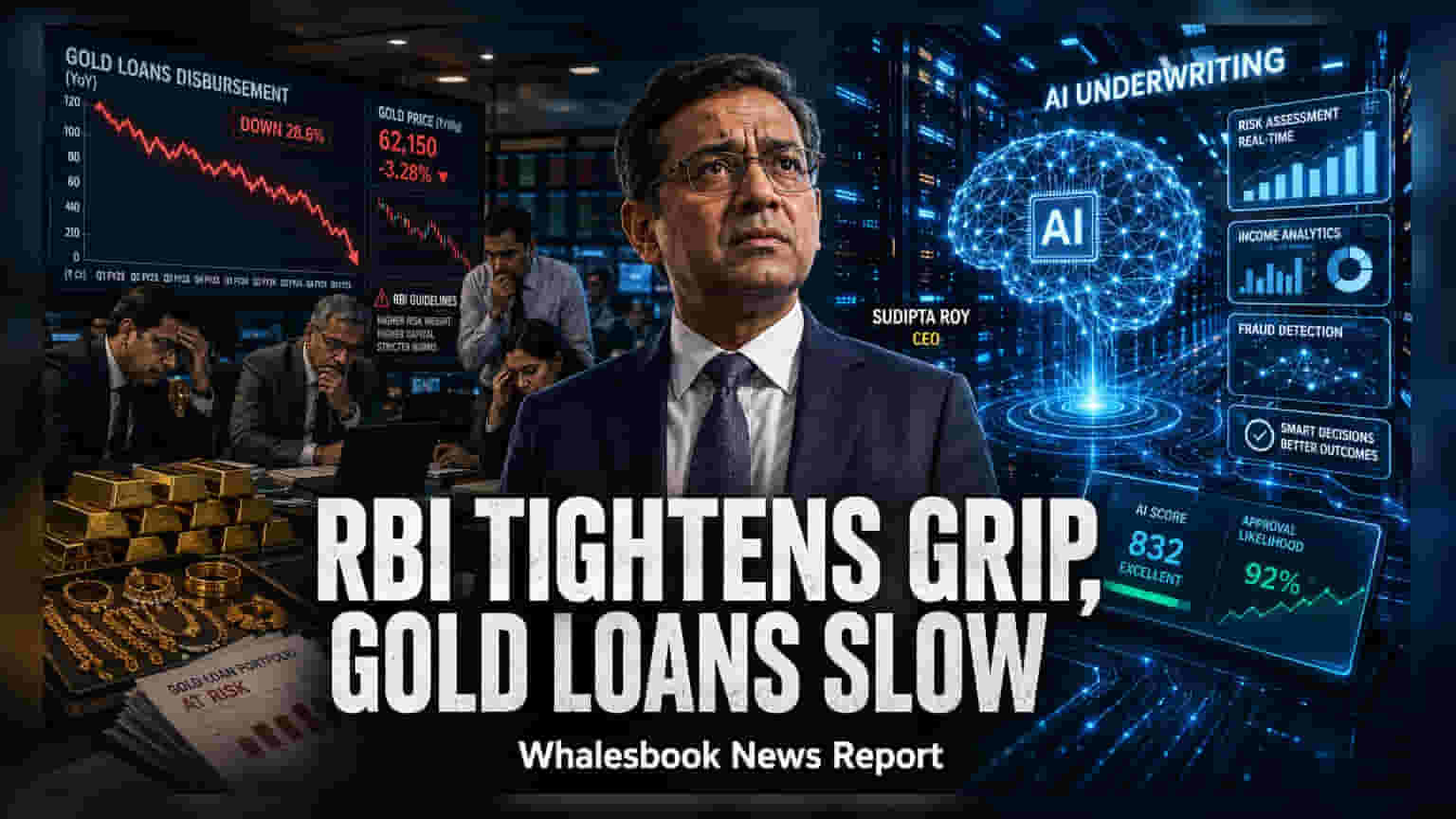
L&T Finance expects its gold loan business growth to moderate to 25% as the company aligns with the Reserve Bank of India's April 2026 regulatory framework. Despite these changes, the lender posted a 29% increase in net profit for the June quarter, supported by its shift toward a retail-heavy portfolio and AI-driven underwriting.
L&T Finance is recalibrating its gold loan business strategy following the implementation of new guidelines from the Reserve Bank of India (RBI). The company now projects its gold loan growth to stabilize at a more sustainable 20% to 25% annually, moving away from the rapid 40% to 50% expansion rate observed over the last two years. This shift reflects the lender's need to adapt to the central bank's updated framework, which was introduced earlier this year to increase oversight in the gold lending sector.
The regulatory changes, which came into effect on April 1, 2026, brought significant modifications to lending operations. The new framework introduced a tiered loan-to-value (LTV) ratio system—a measure of how much money a borrower can receive against the market value of their gold—along with stricter repayment schedules. Furthermore, the mandate for mandatory bureau checks on loans of ₹2.5 lakh and above has narrowed the pool of eligible borrowers, causing a temporary dip in disbursement volumes during the first quarter of the 2026-27 financial year.
Despite the friction caused by these new norms, L&T Finance has maintained strong financial performance. In its latest quarterly results for the period ending June 2026, the company reported a 29% year-on-year increase in net profit to ₹900 crore. Its net interest income also grew by 28% to ₹2,920 crore. This performance is supported by the company’s 'Lakshya 2026' strategy, which focuses on shifting the loan book toward high-yield retail assets. Retail loans now make up over 94% of the company's total asset mix.
To manage credit risks and operational efficiency, the company is leaning heavily on technology. Its proprietary AI-based underwriting engine, Project Cyclops, has become a core component of its lending process. By automating the assessment of borrower risk, the company aims to keep credit costs under control. Management has highlighted that while deploying these AI systems involves ongoing technical iterations and algorithmic adjustments, it is essential for maintaining profitability as the company scales its secured retail lending portfolio.
Looking ahead, investors will be monitoring how the company navigates the evolving sector conditions. Gold price volatility poses a direct risk, as it affects the value of the collateral backing the loans. Additionally, as many non-banking financial companies (NBFCs) move away from unsecured lending, competition in the secured space is intensifying. Any future regulatory updates regarding revolving credit or flexi-loan products could also necessitate further operational adjustments. The key monitorable for the coming quarters will be the company's ability to maintain asset quality while adapting to the stricter valuation and repayment requirements mandated by the regulator.