

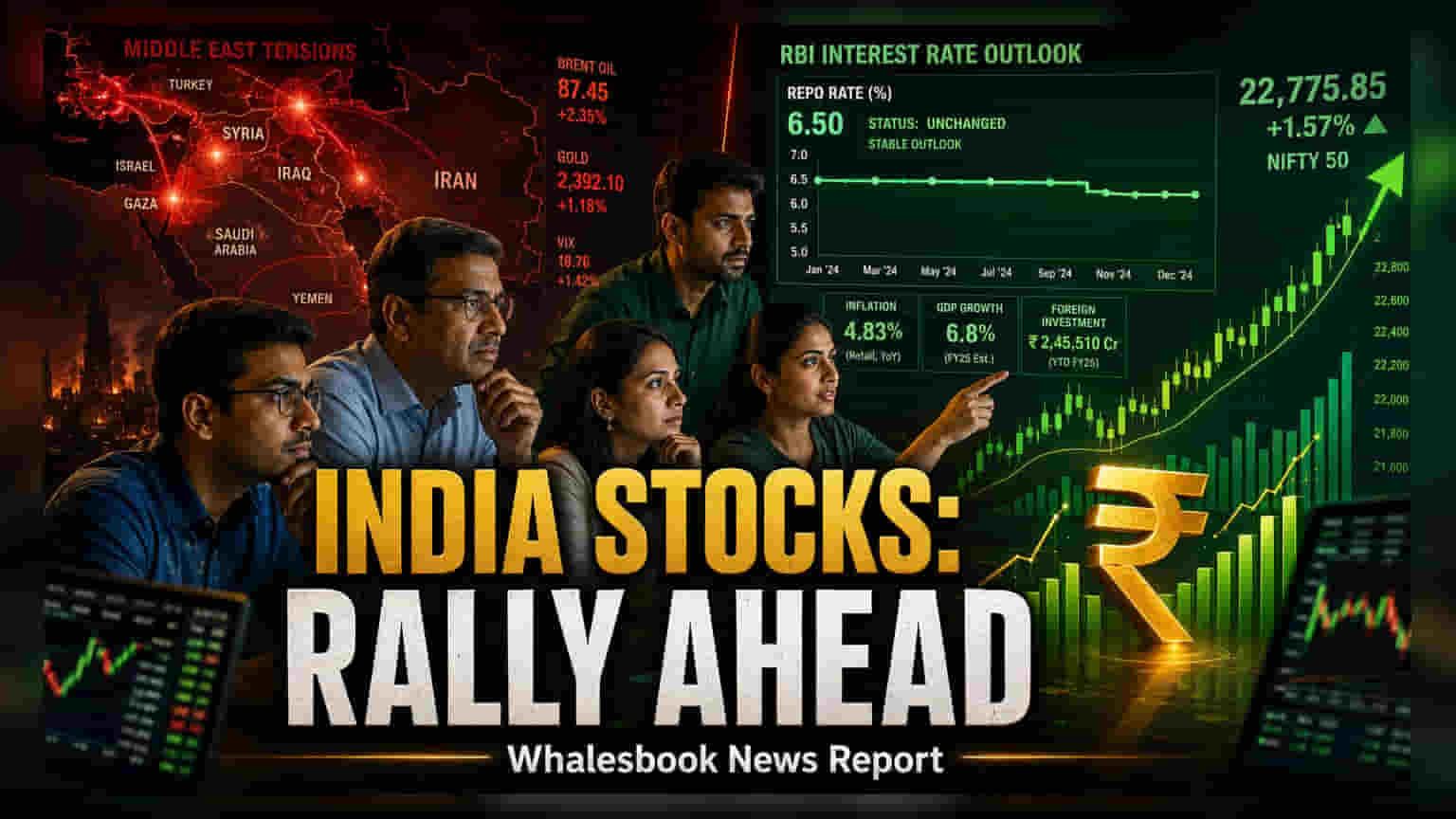
Raghvendra Nath, MD & CEO of Ladderup Asset Managers, forecasts that Indian equity markets can trend upward in FY27 even if Foreign Institutional Investor (FII) interest remains limited. He cites priced-in geopolitical risks and the rising trend of domestic savings moving into financial products as key drivers for this resilience. Investors should note this view as it contrasts with common concerns regarding heavy foreign capital dependency.
Raghvendra Nath, MD & CEO of Ladderup Asset Managers, recently shared an optimistic outlook for the Indian equity markets for the remainder of the financial year. He suggests that the domestic market has developed enough resilience to continue its upward trajectory even without relying heavily on Foreign Institutional Investor (FII) inflows. While foreign investment has traditionally been a major driver for Indian stocks, Nath believes the market dynamics are shifting.
One of the primary arguments for this resilience is that investors have already priced in several major risks, including geopolitical tensions in the Middle East and volatility in oil prices. Even though oil price fluctuations remain a concern, they have not sustained at levels that would severely hurt the economy. By incorporating these risks into current valuations, the market is arguably better prepared to handle future shocks than it was previously.
Beyond market sentiment, the outlook for the broader financial services sector remains a key highlight. Nath points to the ongoing financialization of savings as a structural growth engine. This term refers to the process where more Indian households are moving their money out of physical assets like gold and real estate and into financial products such as mutual funds, insurance, and brokerage accounts. Consequently, entities in the wealth management, asset management, and non-banking financial services (NBFC) spaces are expected to see sustained demand.
On the policy front, the Reserve Bank of India (RBI) is expected to maintain a steady hand. Nath anticipates that the central bank will keep interest rates unchanged to prioritize economic growth, while remaining data-dependent regarding inflation trends. Stable interest rates are generally viewed as helpful for capital-intensive sectors and for maintaining consistent liquidity in the system.
Despite this positive forecast, investors should remain aware of potential headwinds. Global market volatility, combined with the potential impact of changing trade or tariff policies from international partners, could still create pressure on specific Indian industries. Furthermore, the banking sector continues to navigate challenges related to slower deposit growth, which remains a factor to watch.
For the coming months, the direction of the market will likely depend on a few key factors. Investors may track the progress of the monsoon, as it influences rural consumption, as well as the actual earnings growth of companies throughout the fiscal year. These metrics will clarify whether the optimistic outlook is supported by underlying business performance.