

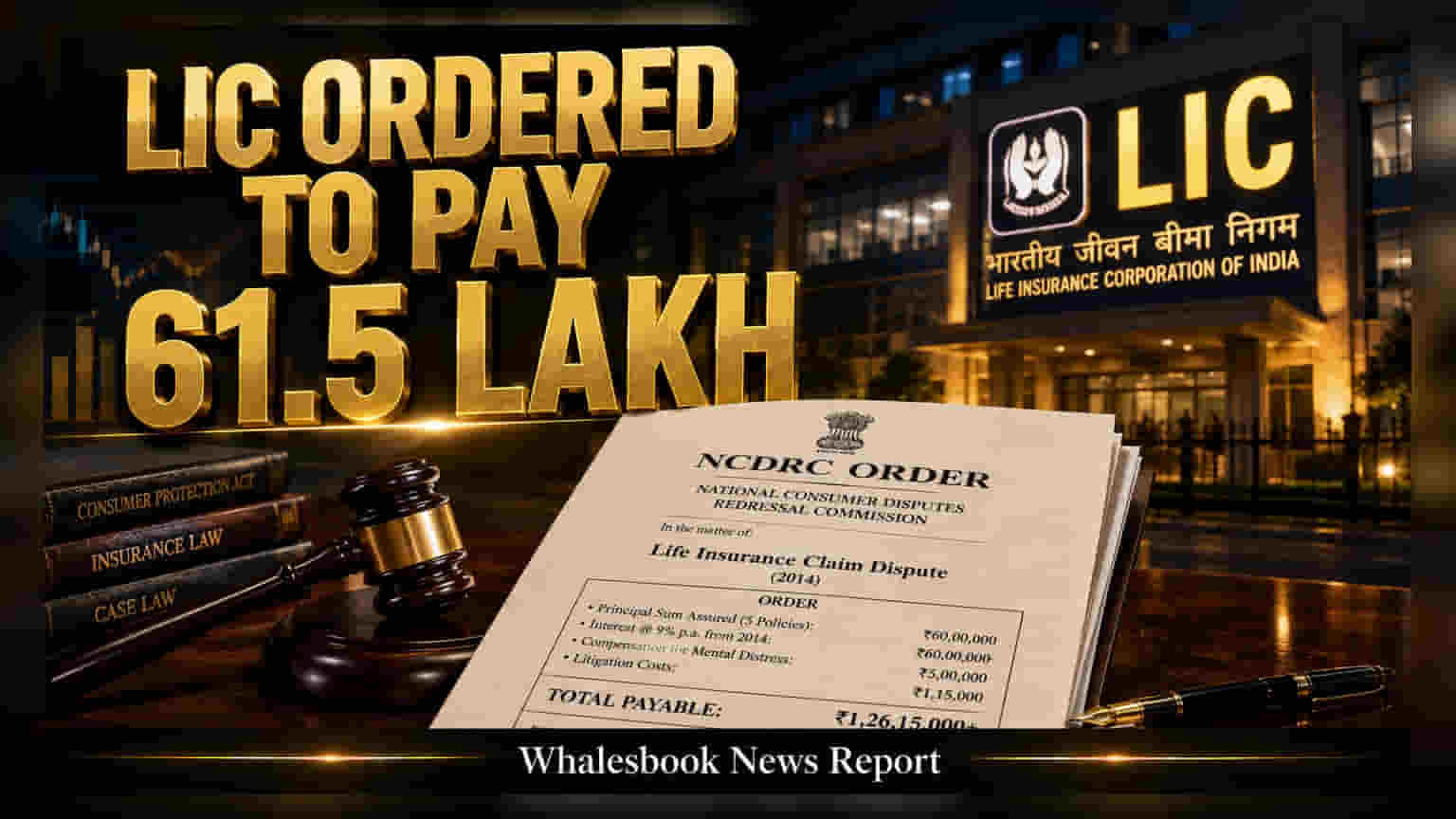
The National Consumer Disputes Redressal Commission has directed LIC to pay over ₹1.26 crore to the family of a deceased policyholder, concluding a 12-year legal battle. The insurer had originally rejected the claims citing non-disclosure of health conditions. This case underscores the financial and reputational risks insurers face when legal disputes over claim denials drag on for years.
The National Consumer Disputes Redressal Commission (NCDRC) has ruled against the Life Insurance Corporation of India (LIC) in a long-standing legal dispute, ordering the insurer to pay a total of over ₹1.26 crore to the family of a deceased policyholder. The ruling brings a close to a 12-year legal fight that began when the insurer rejected life insurance claims back in 2014.
The case involved five separate insurance policies purchased by the policyholder in 2010. Following the policyholder’s death in 2013, the family filed for the insurance payout. However, LIC rejected these claims, arguing that the deceased had not disclosed a pre-existing diabetic condition when applying for the policies. The insurer maintained that this non-disclosure was a material fact that justified the rejection of the claims.
Upon reviewing the evidence, the commission determined that LIC failed to prove that the policyholder was aware of, or suffering from, any such condition at the time of the proposal in 2010. The commission pointed out discrepancies in the medical evidence presented by the insurer, noting that records from 2013 actually listed the individual as non-diabetic. Consequently, the commission ruled in favor of the family, directing the insurer to honor the policies.
The financial impact of this ruling is significant due to the time elapsed. The original principal sum assured across the five policies amounted to ₹60 lakh. However, the NCDRC order also requires the insurer to pay 9% annual interest calculated from the date of the claim rejection in 2014, along with additional compensation for mental distress and legal costs. This accumulation of interest over 12 years has pushed the total payout to over ₹1.26 crore, more than double the original claim value.
For investors, this case highlights the risks associated with prolonged litigation and disputed insurance claims. Beyond the immediate financial impact of high interest payouts, insurers often face reputational challenges when legal battles with policyholders become public. There is also a broader trend of increased scrutiny from consumer forums and regulatory bodies regarding the grounds for claim repudiation. Insurers are increasingly expected to provide strong, clear evidence when rejecting claims based on technicalities or alleged non-disclosure.
As of early September 2026, LIC shares have shown moderate volatility, trading in the range of ₹408 to ₹412. While the payout itself is small relative to the massive size of the company’s balance sheet, market participants often track such rulings to gauge the efficiency of an insurer’s claim settlement process and the potential for legal expenses. The key monitorable for investors will be whether the company continues to see similar legal challenges and how these costs impact operating margins over the long term.