

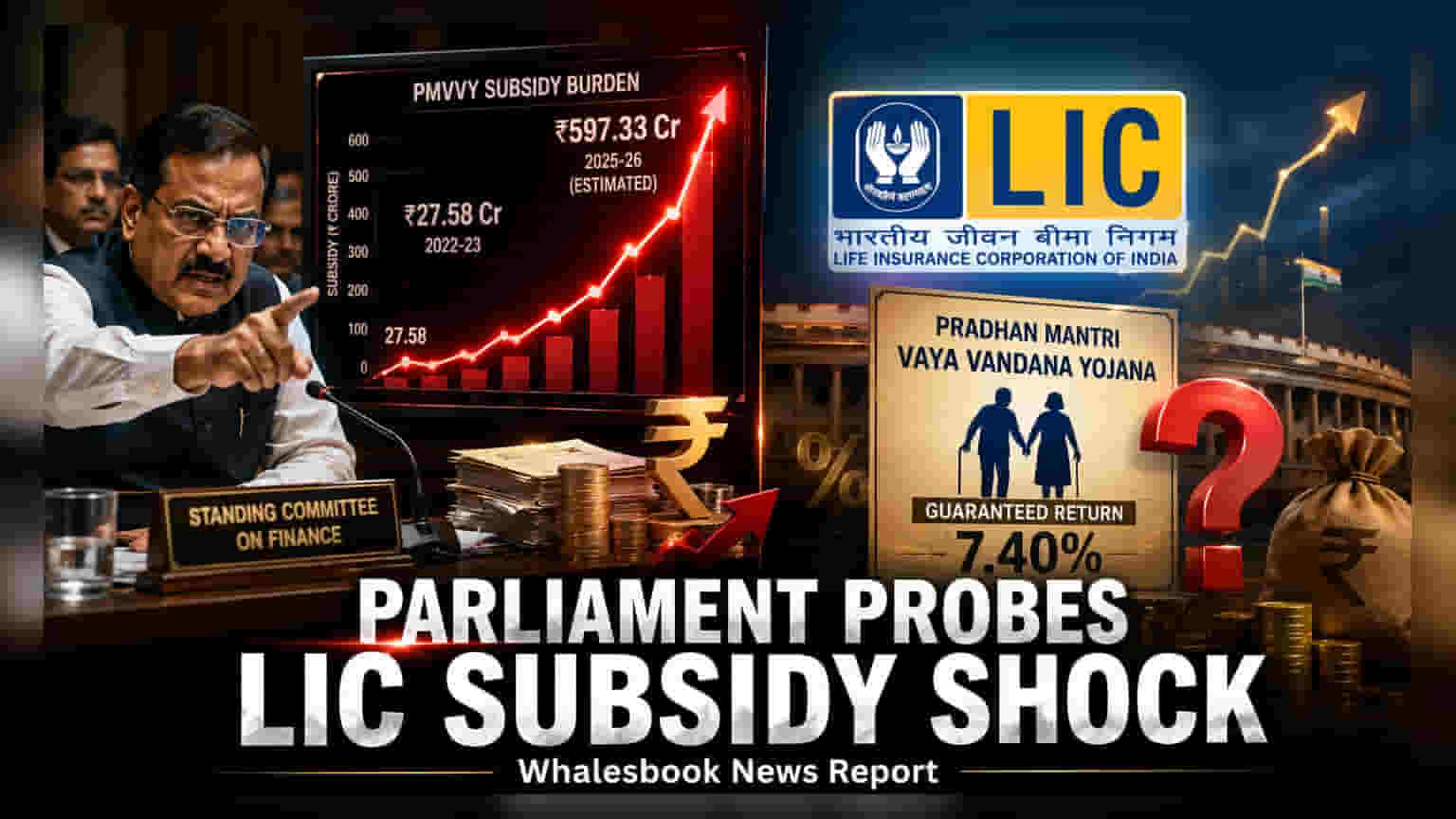
A parliamentary panel has raised alarms over the rising subsidy cost for the PMVVY scheme, which climbed from ₹27.58 crore to over ₹597 crore. The issue highlights risks in guaranteed-return products, leading to calls for structural design changes. Investors are also monitoring LIC share performance following the government's recent 6.5% stake sale.
The Parliamentary Standing Committee on Finance is examining a steep rise in the subsidy bill for the Pradhan Mantri Vaya Vandana Yojana (PMVVY), a government-backed pension scheme. According to the committee's recent report, the subsidy burden, which covers the gap between the scheme's promised returns and actual investment income, has surged significantly. The cost increased from ₹27.58 crore in 2022-23 to an estimated ₹597.33 crore for the 2025-26 period.
The core issue is the difference between the guaranteed 7.40 percent return promised to subscribers and the actual investment yields generated by the Life Insurance Corporation of India (LIC), which administered the scheme. When investment returns did not match the guaranteed payout, the government provided the difference as a subsidy. This yield mismatch has become a central point of the committee's review, raising concerns about the long-term sustainability of schemes that offer fixed returns in a changing interest rate environment.
To manage this risk, the committee has recommended that future social security programs be redesigned. They have suggested moving toward floating-rate mechanisms or periodic rate resets, which would be benchmarked against government bond yields. This strategy aims to ensure that the government is not overly exposed to fiscal volatility if interest rates change. It is important for investors to note that PMVVY was closed for new subscriptions on March 31, 2023, meaning these subsidy payments are tied to managing liabilities for existing policyholders.
For the stock market, this update coincides with a period of price movement for LIC shares. In early August 2026, the government completed an Offer for Sale (OFS) of a 6.5% stake in the insurance giant, with a floor price set at ₹382 per share. The stock has seen volatility following this divestment. While the PMVVY subsidy is primarily a government fiscal responsibility, changes in the design of future social security schemes could influence how similar products are structured and managed by major entities like LIC in the future.
Investors will likely watch for any further policy announcements from the Department of Financial Services regarding the framework for new social security products. The focus remains on how the government balances the need for public welfare schemes with the need for fiscal discipline and risk management.