 Whalesbook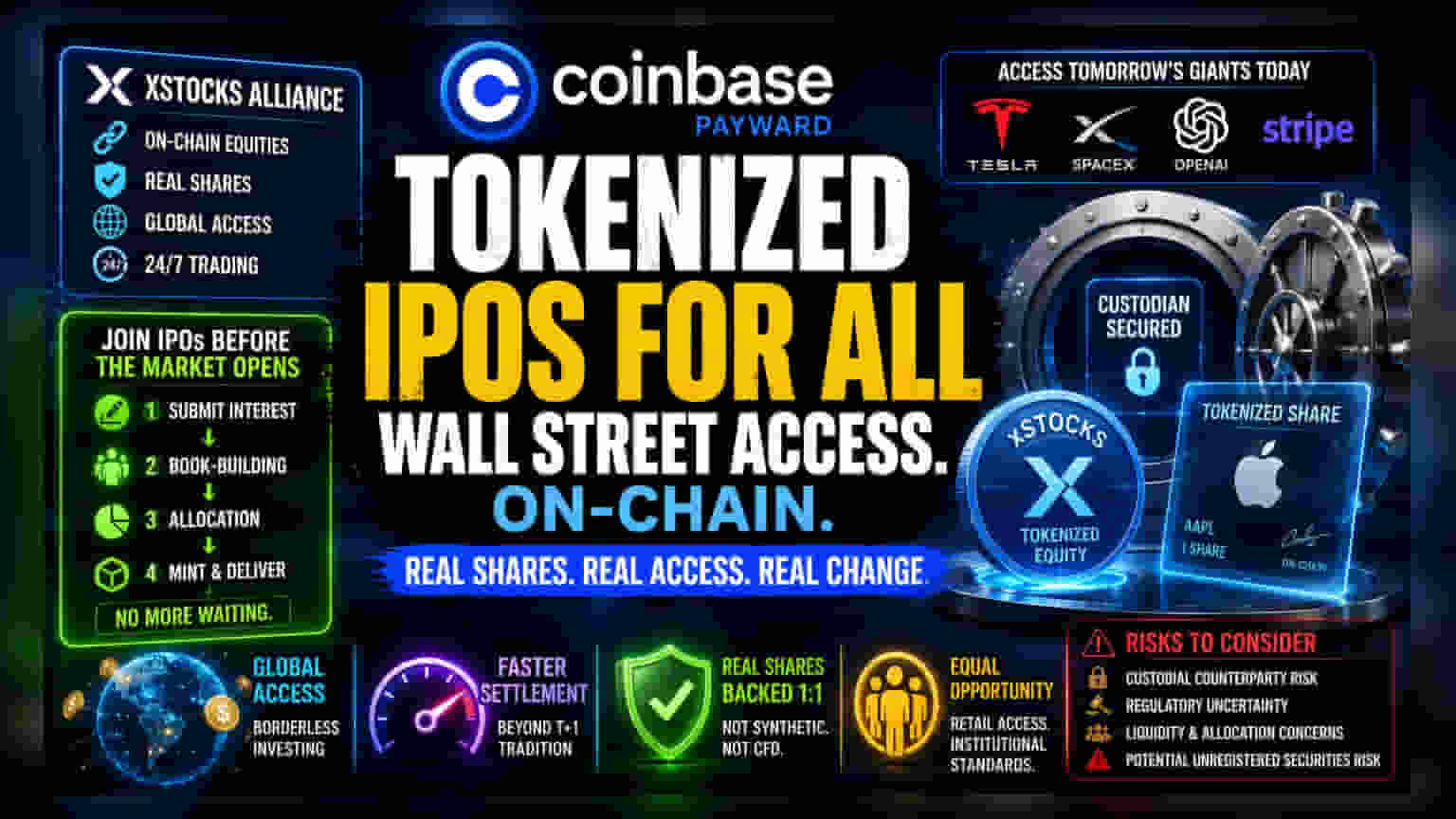


The Mechanism of Institutional Parity
By leveraging the xStocks Alliance, Payward is positioning its exchange architecture to function as a bridge for retail capital into primary market offerings. Unlike traditional retail brokerage apps that often capture orders only after secondary market trading commences, this model attempts to integrate into the book-building process. Investors submit interest while the company coordinates with underwriters to secure specific block allocations. These shares are then held by a centralized custodian and mirrored on-chain, allowing the tokens to represent actual underlying equity rather than synthetic derivatives. This effectively bypasses the tiered system that historically keeps retail investors waiting for post-launch liquidity to purchase shares.
Scaling the Tokenized Infrastructure
The ambition to include high-profile private entities like SpaceX or prominent AI labs indicates a pivot toward institutional-grade product offerings as the crypto exchange market faces tighter margins and oversaturation. Market participants view this as a strategic effort to capture fee revenue from high-turnover equity products while increasing the average duration of assets held on their platforms. While competitors like Robinhood have previously attempted to expand IPO access to smaller accounts, Payward’s reliance on blockchain-based tokens aims to solve the settlement speed and cross-border accessibility hurdles that plague traditional T+1 settlement cycles. However, the adoption of this technology hinges on whether underwriters, who have historically preferred stable, long-term institutional relationships, are willing to accept decentralized or retail-heavy investor bases.
The Forensic Bear Case: Custodial and Regulatory Risk
While the promise of democratized access appears attractive, the structure introduces significant counterparty and legal exposure. Because these shares are held by a custodian and represented by tokens, the security of the investment is entirely dependent on the solvency and integrity of that custodial relationship. Unlike holding shares directly through a brokerage like Fidelity or Schwab, tokenized holders are at least one step removed from the direct ownership registry. Furthermore, the regulatory environment surrounding security tokens remains fragmented. Should a national regulator deem these tokens to be unregistered securities, the liquidity of the underlying assets could be frozen or rendered inaccessible. Additionally, the lack of transparency in how Payward selects and distributes these limited allocations raises questions regarding equitable treatment, mirroring the criticisms historically directed at traditional investment banks during the allocation phase.
Market Outlook and Capital Flows
Analysts are monitoring how this platform interacts with existing liquidity providers. If the initiative gains traction, it could force a re-evaluation of how pre-IPO shares are distributed, potentially pressuring traditional brokerages to modernize their own antiquated access systems. The success of this venture will likely be determined by the firm's ability to navigate SEC disclosure requirements and maintain the integrity of its custodian partnerships as it attempts to scale this model across global jurisdictions.