 Whalesbook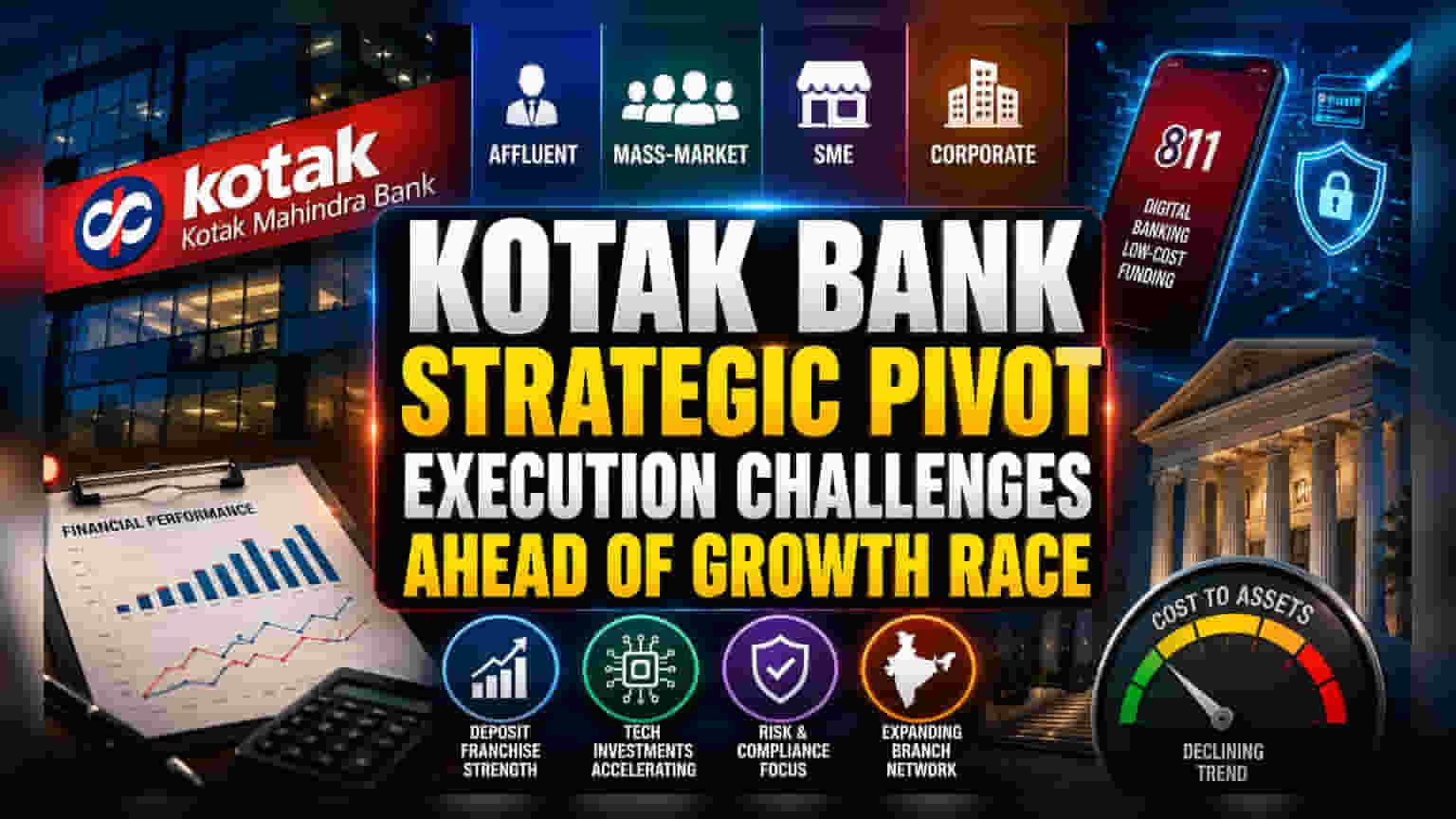


The Operational Transition
The strategic shift at Kotak Mahindra Bank is moving away from the product-centric silos that previously defined its operations. By reorienting its internal structure toward four distinct client segments—affluent, mass-market, SME, and corporate—the lender is attempting to leverage its historical deposit franchise to drive deeper wallet share. The recent completion of leadership rotations is intended to stabilize the bank, yet the efficacy of this pivot remains contingent on whether internal technology investments can truly offset the persistent rise in operating costs. While management suggests a declining cost-to-assets ratio, the broader reality for private sector lenders in India involves a race to digitize while contending with increasingly sophisticated cybersecurity demands that often inflate capital expenditure unexpectedly.
The Valuation Conundrum and Competition
Market participants are currently pricing the stock based on a cautious expectation of steady, rather than explosive, growth. Comparing Kotak’s current trajectory against rivals like HDFC Bank or ICICI Bank reveals a distinct difference in momentum. While peers have aggressively pushed into high-yield retail products to protect margins, Kotak remains tethered to a more conservative credit expansion plan of 15% to 20%. This discipline, while beneficial for long-term asset quality, places the bank in a position where it may trail broader sector growth if the lending environment remains highly competitive. The reliance on the 811 digital account base as a source of low-cost funding is a critical variable; whether this segment matures into high-value banking relationships or remains a cost-heavy acquisition channel is the primary debate among institutional observers.
The Forensic Bear Case
Investors must weigh the optimism surrounding the bank’s tech recovery against the structural risks inherent in its current model. The bank’s historical regulatory friction regarding its IT infrastructure remains a lingering concern; any further technical slippage could invite renewed oversight, potentially capping valuation multiples. Furthermore, while the shift away from large-scale entity-level M&A is framed as a strategic choice, it may also reflect a lack of attractive targets that fit the bank’s stringent risk-adjusted profitability requirements. Unlike competitors who have scaled rapidly through inorganic means, Kotak’s organic focus leaves it vulnerable to execution lag. If deposit growth fails to keep pace with the aggressive expansion of its branch network—targeting a move from 2,300 to 3,500 locations—margin pressure will likely persist as the cost of funds remains elevated.
Future Trajectory
Forward-looking sentiment hinges on the bank’s ability to stabilize net interest margins amidst ongoing deposit repricing. As the yield environment normalizes, the focus will shift squarely to the Return on Assets (RoA) improvement promised by management’s efficiency initiatives. Unless the bank demonstrates a significant breakout in cross-selling penetration across the SME and affluent segments, the stock is likely to remain in a period of consolidation, serving more as a defensive compounder than a high-growth institutional favorite.