

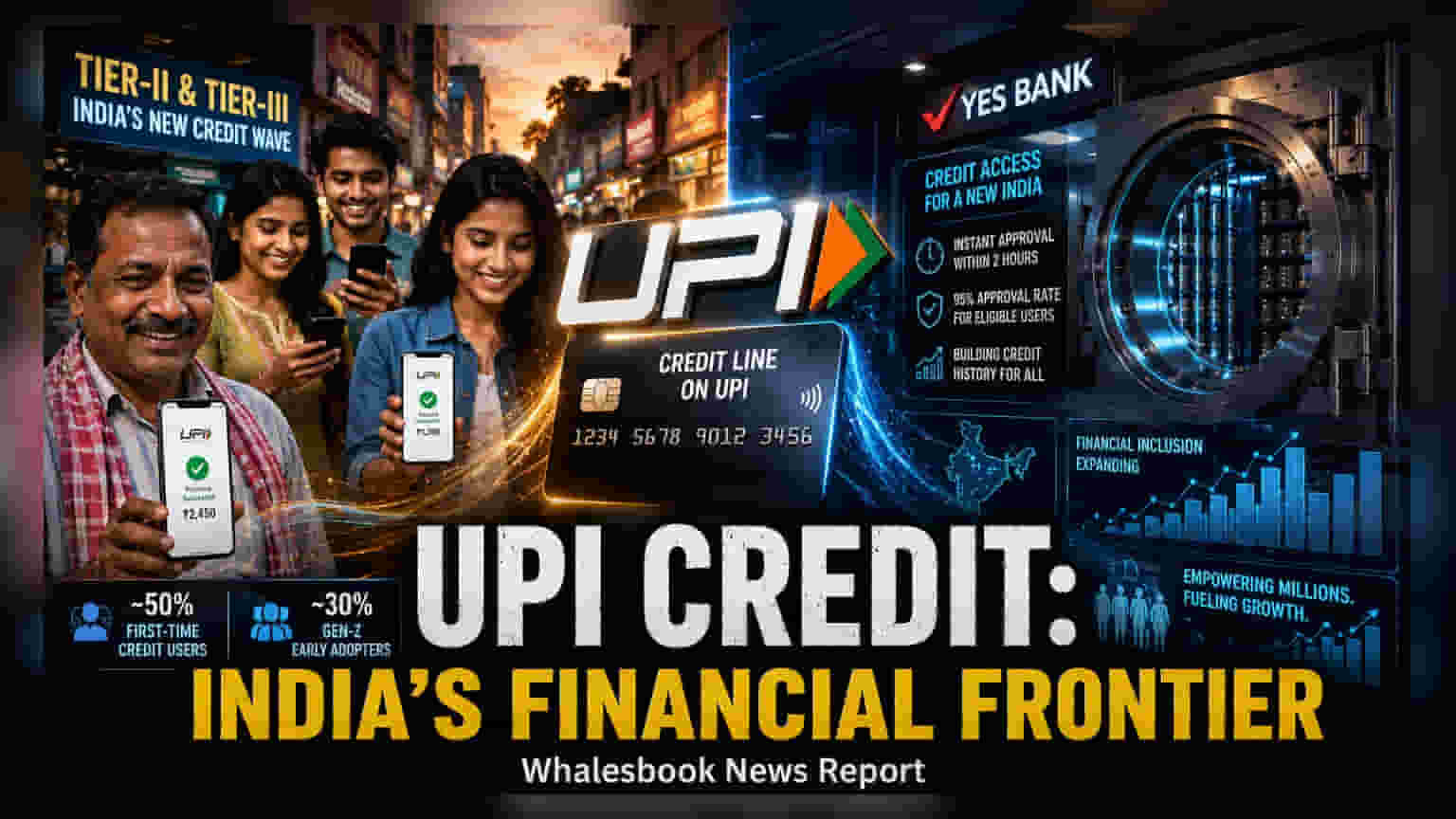
Fintech platform Kiwi, in partnership with Yes Bank, is seeing rapid uptake for its UPI credit line products among first-time borrowers in smaller cities. While the shift expands formal credit access to the underserved, it also brings potential risks for users, including debt management challenges and high interest costs that require careful monitoring.
The Unified Payments Interface (UPI) ecosystem is moving beyond simple money transfers to becoming a primary tool for credit access in India. New data from Kiwi, a fintech platform operating in partnership with Yes Bank, shows that its 'Credit Line on UPI' (CLOU) product is successfully reaching segments that were previously excluded from formal banking credit, such as those without credit cards or formal credit history.
In its recent operational update, the platform reported that nearly 50% of its credit line users are first-time credit seekers. A significant portion of this user base is located in Tier-II and Tier-III cities, areas where access to traditional credit cards has historically been limited. Additionally, roughly 30% of early adopters belong to Generation Z, indicating a strong preference among younger users for digital-first, instant credit solutions.
Digital Credit Dynamics
The appeal of these products lies in their speed and integration. Unlike traditional credit cards, which often require extensive documentation and waiting periods, digital credit lines on UPI allow for pre-approved, revolving credit limits that can be used directly for daily transactions. Kiwi noted that approximately 95% of eligible applicants received approval within two hours, a pace that makes credit highly accessible for routine spending rather than just large, one-time purchases.
For banking partners like Yes Bank, these products offer a way to acquire new customers and build a credit profile for individuals who were previously 'invisible' to the formal banking system. By embedding credit directly into the payment flow, banks can gather data on spending habits, which can help in assessing creditworthiness over time.
Risks and Market Context
While this digital expansion promotes financial inclusion, it introduces specific risks that users must navigate. Because these credit lines are integrated into daily payment apps, there is a risk of impulsive or overspending, which can lead to debt accumulation. Users should be aware that failing to repay these dues on time often incurs high interest charges and late fees, similar to traditional credit cards. This can negatively impact credit scores, potentially limiting future borrowing options.
From a regulatory and sector perspective, the digital payment environment remains under observation. Recent legislative developments, such as the Taxation and Other Laws (Amendment) Bill, 2026, provide the government with a framework to potentially notify charges on UPI transactions. However, government clarifications have consistently signaled that any potential Merchant Discount Rate (MDR) charges would be levied on merchants rather than individual end-users.
As the industry scales, the key monitorable for the sector will be the performance of these portfolios. The long-term viability of UPI-based credit depends on the repayment behavior of these new-to-credit borrowers. Investors and market observers will track whether these credit products maintain low default rates as they expand into more regions and user demographics.