

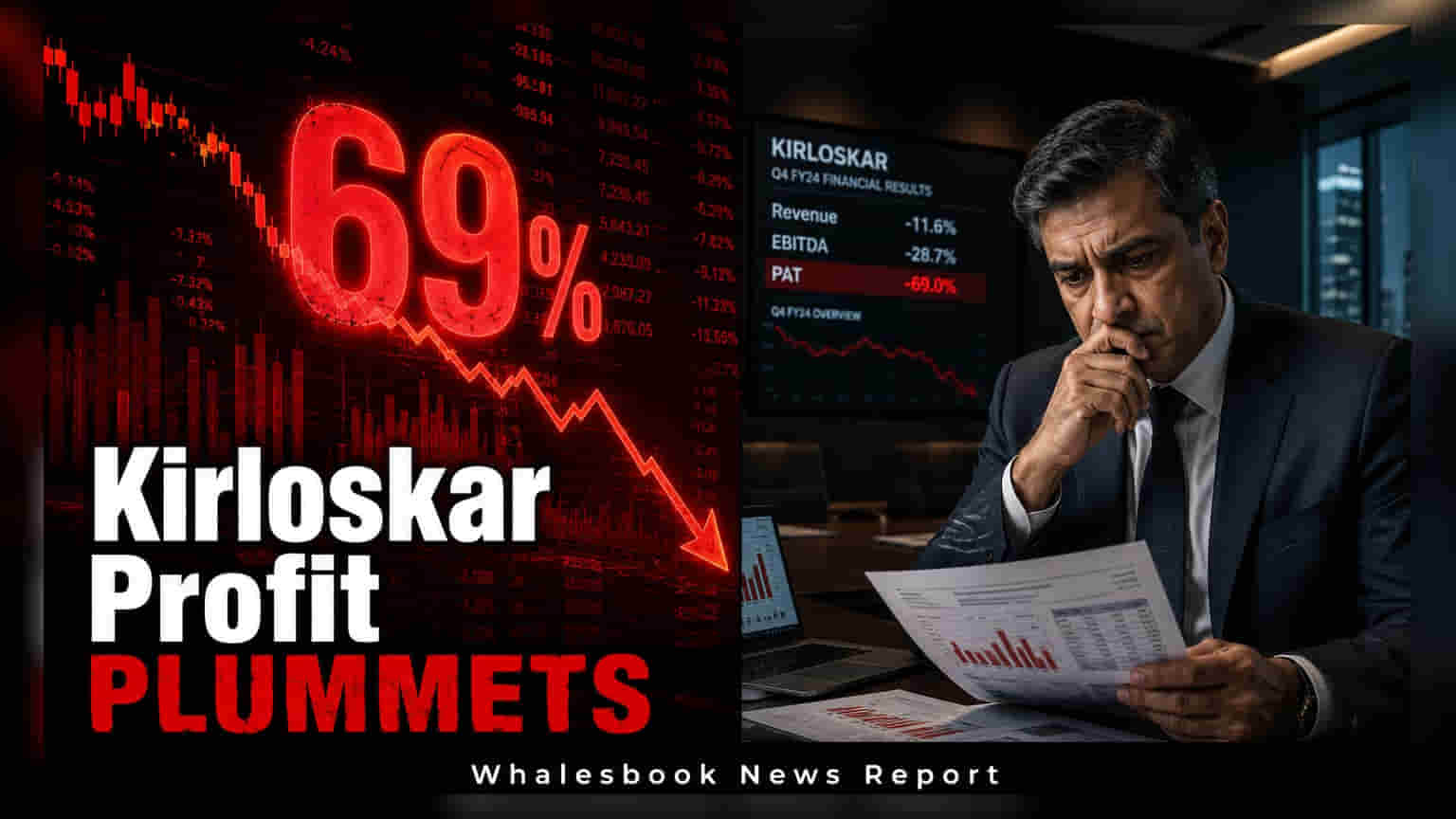
Kirloskar Industries reported a 69.3% drop in June quarter profit to ₹33.7 crore, largely driven by one-time merger expenses of ₹29.33 crore. Despite this, revenue rose 4.3% year-on-year. Shares closed 1.25% higher at ₹3,769, as investors appeared to look past the non-recurring costs.
Kirloskar Industries Ltd. reported a 69.3% decline in its consolidated net profit to ₹33.7 crore for the first quarter of the 2026-27 financial year, compared to the same period a year ago. While the headline profit figure shows a sharp decrease, the primary driver for this decline was a one-time exceptional expense of ₹29.33 crore. This cost is tied to the merger of ISMT Ltd. with the company’s subsidiary, Kirloskar Ferrous Industries, which involved stamp duty and other related charges.
Despite the pressure on the bottom line, the company’s core revenue remained steady. Revenue from operations increased by 4.3% year-on-year, reaching approximately ₹1,779 crore. This growth in revenue suggests that while the one-time accounting expenses hit the reported profit, the underlying business operations continue to demonstrate resilience.
Kirloskar Industries functions primarily as a core investment and holding company for the Kirloskar Group. It manages a large investment portfolio, which was valued at nearly ₹6,944 crore at the end of the previous financial year. This portfolio includes significant stakes in group companies such as Kirloskar Ferrous Industries, Kirloskar Brothers, and Kirloskar Oil Engines. Beyond its investment arm, the company is involved in wind energy projects and manages commercial real estate through its subsidiary, Avante Spaces.
On August 12, 2026, the company’s stock price rose 1.25% to close at ₹3,769. The positive market reaction, despite the lower quarterly profit, suggests that investors may be focusing on the non-recurring nature of the merger costs and the long-term value of the company's investment portfolio rather than the short-term impact of the one-time expense.
For shareholders, the most important factor to track in the coming quarters is the integration of ISMT with Kirloskar Ferrous Industries. As the merger proceeds, the market will look for evidence of operational synergy and cost savings. Because the company’s portfolio is exposed to cyclical sectors like steel, casting, and industrial components, investors should also watch for demand trends in these industries, as they directly affect the value and performance of the company’s investments. Additionally, the company recently announced the resignation of Independent Director Vijay Varma, effective September 30, 2026, which is an administrative update for investors to note.