 Whalesbook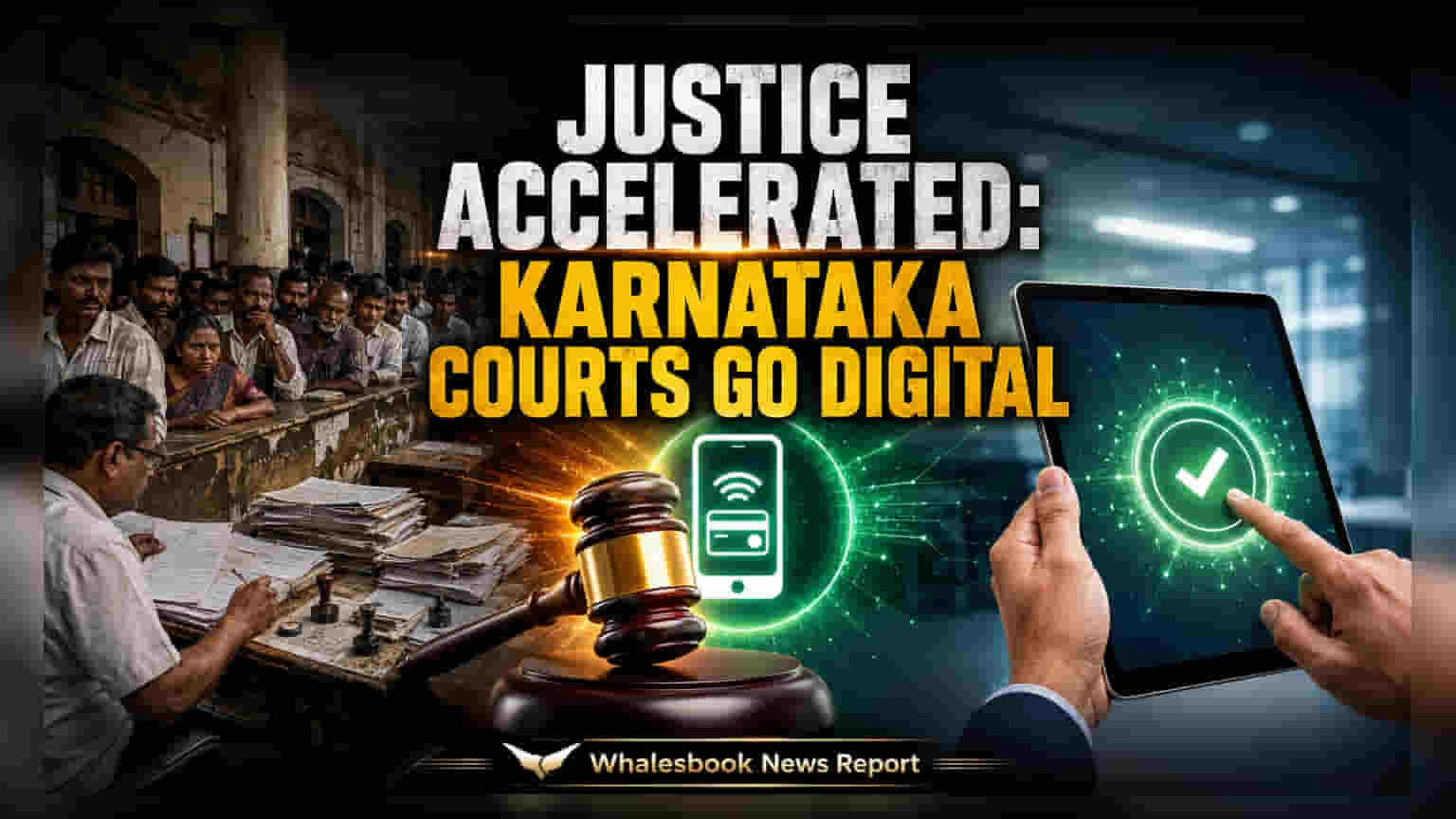


Streamlining Justice Through Digital Finance
The Karnataka High Court is ushering in a new era of judicial efficiency with its newly implemented digital payment system. This initiative directly addresses the pervasive issue of case delays stemming from minor financial discrepancies such as deficit court fees, unpaid process fees, and shortfalls in copying charges. Previously, these procedural hurdles led to cases being listed under objections, delayed summons, and postponed issuance of certified copies, creating significant administrative burdens and unnecessary adjournments.
Automated Financial Compliance with 'Call Money'
At the heart of this transformation is the 'call money' mechanism, designed for seamless transaction processing. The system automatically identifies any financial deficit related to court fees, process fees, copying charges, fines, or court-directed deposits. It then generates an immediate demand notice detailing the exact amount due, case specifics, and payment deadline. This notification is dispatched to the relevant advocate or litigant via SMS, email, or other messaging platforms, accompanied by a pre-filled payment link. Upon successful payment, the case record is updated in real-time, preventing minor financial shortfalls from stalling legal proceedings.
Flexible Payment Options for Enhanced Accessibility
To accommodate a wide range of users, the 'call money' system provides three distinct compliance modes: Manual, Semi-Automatic, and Fully Automatic. The Manual Mode allows users to review and approve payments via a provided link. The Semi-Automatic Mode prepares payments and sends reminders for user approval, balancing efficiency with oversight. For high-volume users like law firms, the Fully Automatic Mode enables pre-authorized payments from a linked account, ensuring continuous financial compliance without manual intervention. Payments can be made through UPI, cards, net banking, and UPI 123Pay, making the system accessible even via basic feature phones.
Benefits for Legal Professionals and Court Users
This digital overhaul promises substantial advantages for legal practitioners and court users. Advocates will benefit from simplified bookkeeping, automated reconciliation of receipts, and a clear digital audit trail, eliminating the need for manual tracking and physical visits to court counters. For litigants, particularly those in remote areas or with mobility challenges, the system removes the barrier of physical presence, enhancing overall access to justice. The real-time update of case records post-payment ensures that legal matters progress without unnecessary delays.
Elevating Judicial Administration and Transparency
The broader implications for judicial administration are significant. By transitioning from a paper-based system to an automated, integrated, and auditable platform, the court anticipates a reduction in administrative workload and recording errors. The system integrates directly with Karnataka's treasury management system, Khajane II, providing administrators with real-time financial oversight and enabling more informed decision-making. A key objective is the reduction of adjournments, a primary contributor to judicial backlogs, by ensuring prompt financial compliance. The digital nature of all transactions fosters transparency and accountability, simplifying audits and mitigating the potential for irregularities.