
New Leadership at DRAT
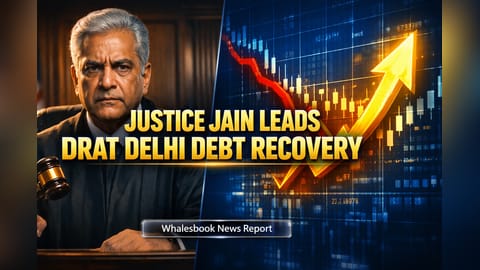
Justice Sudhir Kumar Jain will lead the Debts Recovery Appellate Tribunal (DRAT) in Delhi. This appointment comes as India's banking sector shows significant improvement in asset quality. The move reinforces the commitment to managing stressed assets and resolving debt disputes quickly. DRAT plays a key role in credit recovery, which affects the financial system's liquidity and stability.
Justice Jain's Background and NPA Context
Justice Jain, a former Delhi High Court judge with broad experience, brings significant judicial expertise to the DRAT. He is appointed for five years or until he turns 70. This appointment coincides with a positive trend in India's financial sector. Net non-performing assets (NPAs) for scheduled commercial banks dropped to a record low of 0.4% in December 2025. Gross NPAs fell to 1.9%, down from 2.5% a year earlier. This strong asset quality improvement highlights the need for effective systems to handle remaining stressed accounts, which is DRAT's main job. Despite some volatility in the Nifty Bank Index, the NPA reduction provides a stable basis for DRAT's work. Justice Jain's past role at the National Consumer Disputes Redressal Commission (NCDRC) and his mediation experience with around 12,000 cases are valuable for speeding up dispute resolution.
DRAT's Role in Debt Recovery
The DRAT operates under the Recovery of Debts and Bankruptcy Act, 1993, reviewing decisions from Debt Recovery Tribunals (DRTs). Its goal is to speed up the process of adjudicating and recovering debts owed to banks and financial institutions, helping to prevent NPAs. Earlier, regular civil courts were too slow for debt recovery, causing delays and affecting bank liquidity. Gross NPAs peaked at 11.18% around 2018. DRTs and DRATs were created for a more efficient, specialized approach. Processes are also being digitized, with mandatory e-filing for DRTs and DRATs to improve transparency and access. Strong judicial systems are vital for economic health, as inefficiencies can hinder contract enforcement and credit access. Justice Jain's experience is expected to help tackle these systemic issues.
Challenges in the System
Despite progress in reducing NPAs and appointing skilled leaders, India's debt recovery system still faces challenges. The judiciary, including tribunals like DRAT, often struggles with judicial vacancies and case backlogs. These issues could slow down the appeal process. While digitization aims to improve efficiency, the sheer volume and complexity of financial disputes remain taxing. Also, the requirement for appellants to deposit a percentage of the debt amount can create hurdles, potentially delaying resolutions or affecting perceived fairness. The success of Justice Jain's leadership will depend on overcoming these long-standing systemic constraints.
Impact on Financial Sector
Justice Jain's leadership at DRAT Delhi is expected to strengthen debt recovery capabilities. This could increase financial institutions' confidence in resolving distressed assets, potentially improving credit flow and banking sector stability. As India grows economically, efficient debt resolution is vital. This appointment shows a focus on reinforcing financial sector stability and building on recent asset quality improvements.