

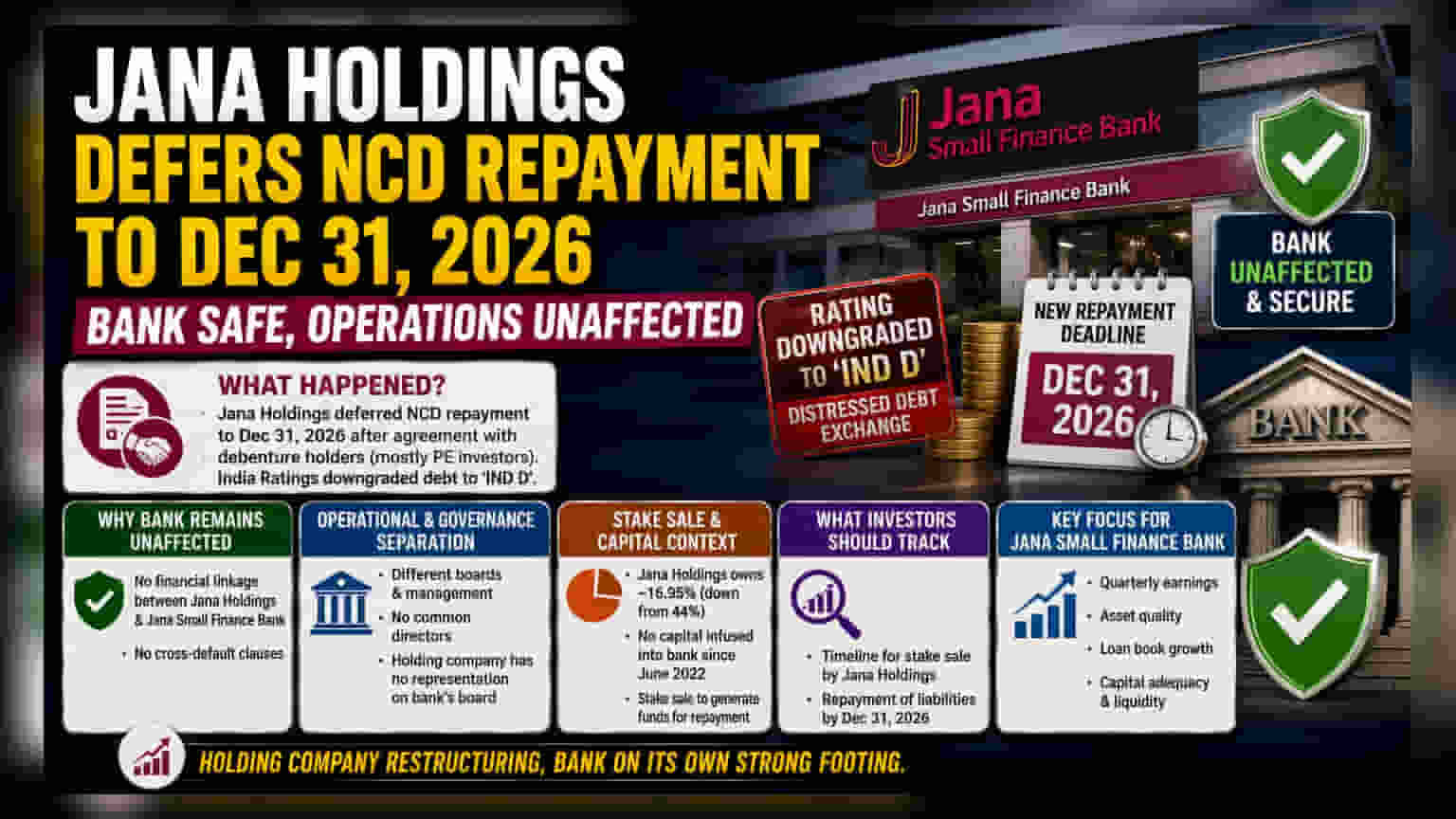
Jana Holdings has extended its NCD repayment deadline to December 31, 2026, leading to a credit rating downgrade to 'IND D'. However, Jana Small Finance Bank's operations remain insulated from this development. The two entities maintain independent governance and financial structures, with no cross-default clauses or shared directorships between the holding company and the bank.
What Happened
Jana Holdings Ltd. has deferred the repayment of its non-convertible debentures (NCDs) to December 31, 2026. This decision followed a consensual agreement with debenture holders, who are primarily private equity investors. In response to this extension, credit rating agency India Ratings & Research downgraded the company's debt instruments to 'IND D', classifying the arrangement as a distressed debt exchange. This downgrade reflects the delay in original repayment terms rather than an insolvency event at the bank.
Why The Bank Remains Unaffected
For investors, the primary concern when a holding company faces debt stress is whether the regulated entity—in this case, Jana Small Finance Bank—will face similar pressure. According to available information, there is no financial linkage between the two. The bank and its holding company operate with distinct boards and independent financial structures. Crucially, there are no cross-default clauses, which means a default or restructuring at the holding company level does not trigger a liability or repayment issue for the bank.
Operational And Governance Separation
The management and governance of Jana Small Finance Bank are separate from Jana Holdings. There are no common directors between the two entities, and Jana Holdings holds no representation on the bank's board. This separation is standard in many financial structures to ensure that a bank's capital adequacy, liquidity, and asset quality remain protected from the volatility or financial challenges of its parent or holding company.
Stake Sale And Capital Context
The decision to reschedule debt is tied to the holding company's strategy to divest its stake in the bank. Jana Holdings currently owns approximately 16.95% of the bank, significantly down from its earlier 44% stake. The company has not injected capital into the bank since June 2022, which further highlights that the bank has been operating on its own internal resources and independent capital-raising efforts.
What Investors Should Track
Investors may monitor the timeline for Jana Holdings' stake sale, as this will likely be the primary method for the holding company to generate the cash required to clear its liabilities by the new December 2026 deadline. For Jana Small Finance Bank, the key monitorables remain its quarterly earnings, asset quality, and loan book growth, which are driven by its own business performance rather than the holding company's financial status.