 Whalesbook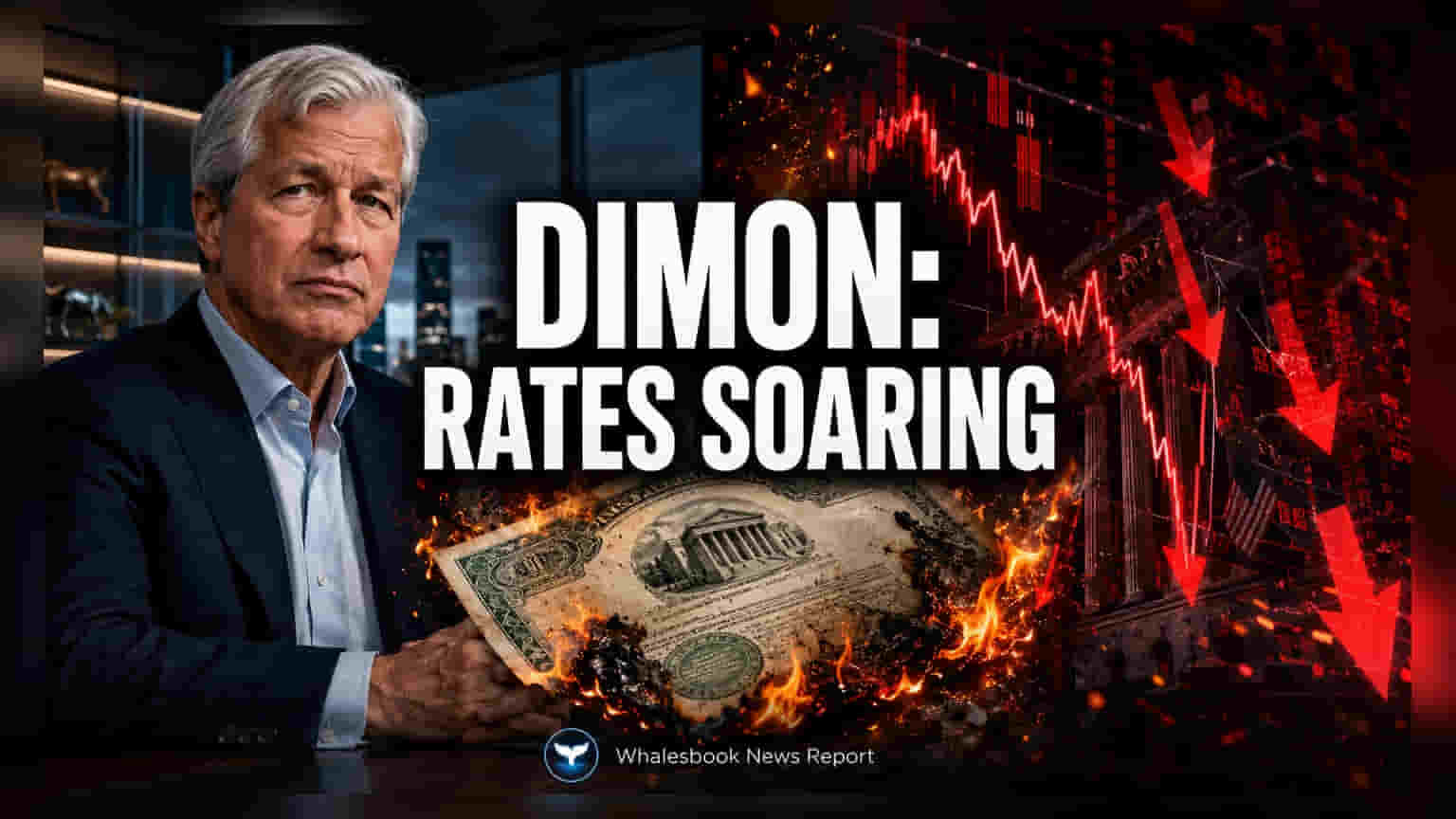


Rates Facing Upward Pressure
JPMorgan Chase CEO Jamie Dimon issued a stark warning that interest rates could climb substantially beyond current levels. "They could be much higher than they are today," Dimon stated in a Bloomberg Television interview, suggesting a potential economic shift from a "saving glut" to insufficient savings. This perspective comes as long-dated bonds experience renewed selling pressure, with yields on 30-year Treasuries reaching their highest point since 2007. The rate on two-year securities has also climbed to its highest since February 2025.
Several factors are fueling these concerns. Elevated oil prices, significant government spending in key economies, and robust growth from artificial intelligence are contributing to inflationary pressures. Dimon noted that "We may have gone from a saving glut to not enough savings."
Investor Worries Mount Amid Deficit Concerns
Investor anxiety is mounting over the persistent inflationary threat and the escalating U.S. deficit. The U.S. national debt has surpassed $30 trillion, with projections indicating the Treasury will borrow over $2 trillion in fiscal year 2026. The average interest rate on federal debt has risen to 3.35% as of January 31, 2026, making interest costs a significant part of government spending. Dimon highlighted the refinancing challenge, stating, "The average rate is 3.5%. Even today, they can't possibly refinance it lower than that rate." With an additional $2 trillion in debt issuance anticipated this year, market uncertainty persists regarding the timing of a potential crisis of confidence if inflation erodes the willingness to hold long-term securities.
JPMorgan Chase Valuation and Dividends
JPMorgan Chase (JPM) currently trades with a Price-to-Earnings (P/E) ratio around 14.13, which is approximately 17% above its 10-year median. This valuation is noted as being less expensive than the average P/E ratio for the Finance sector, which stands around 23.84. The company's market capitalization was approximately $809.15 billion as of May 2026. Despite concerns about rising rates, JPMorgan Chase has demonstrated a consistent dividend increase for 15 years, with a payout ratio of 28.74%, considered sustainable.
Fiscal Instability and Monetary Policy Risks
The primary risk to the financial system, as highlighted by Dimon's concerns, is the unsustainable U.S. fiscal trajectory. A projected $2 trillion deficit for fiscal year 2026 means the government is spending significantly more than it takes in during a period of relative economic stability. This level of deficit, exceeding 6% of GDP, is more than double the 3% threshold considered sustainable for a developed economy. The U.S. national debt is approaching $39 trillion, and interest payments alone have reached substantial levels, with annualized costs nearing $1 trillion per year. This situation raises concerns about the market's tolerance for continuous unsustainable borrowing, increasing the risk of a fiscal crisis.
Compounding these fiscal worries is the evolving monetary policy stance. While the Federal Reserve has largely maintained interest rates steady, recent inflation data, particularly from rising oil prices due to geopolitical tensions, has led to discussions about potential rate hikes. Some analysts even suggest the Fed could hike rates as early as July 2026. This policy uncertainty, coupled with significant fiscal deficits, creates a volatile environment for bondholders and the broader market.
Future Outlook for Interest Rates
The outlook for interest rates remains uncertain, heavily influenced by inflation trends, geopolitical events, and Federal Reserve policy. While some projections indicated potential rate cuts in 2026, recent developments, including the surge in oil prices and persistent inflation, have shifted expectations towards a more hawkish stance. JPMorgan's own research suggests the Fed might hold rates steady through 2026, with a potential hike in the third quarter of 2027. The market will be closely monitoring incoming economic data for further clues on the direction of monetary policy and its impact on bond yields and the overall economy.