

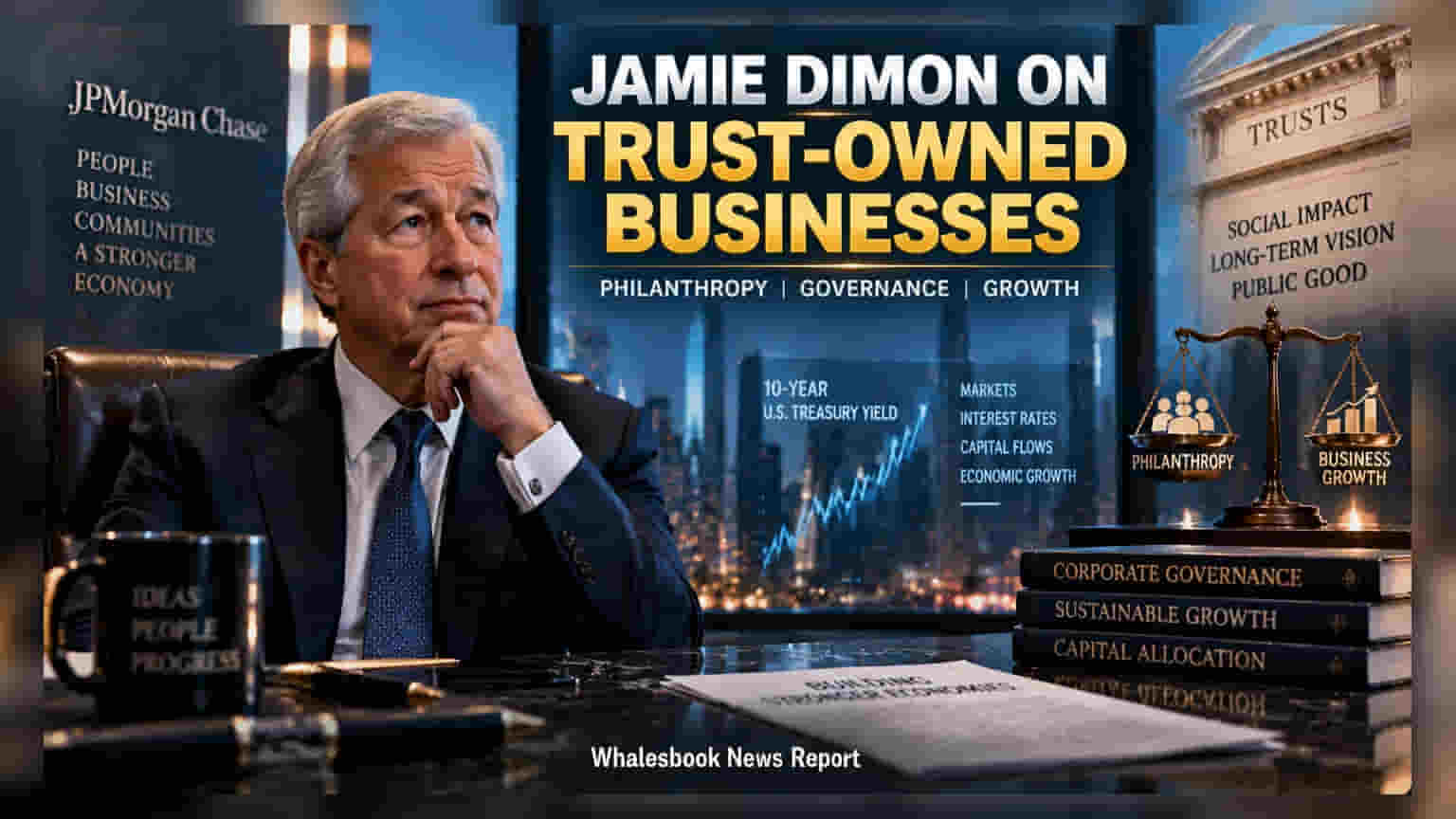
JPMorgan CEO Jamie Dimon has expressed concerns about corporations owned by charitable trusts, suggesting that non-commercial goals can create governance conflicts. While praising the value creation under Tata Sons' Chairman N. Chandrasekaran, Dimon emphasized that companies must prioritize operational efficiency and rigorous governance to stay competitive. This perspective provides a rare insight into how global leaders evaluate unique ownership structures prevalent in parts of the Indian corporate sector.
JPMorgan Chase Chairman and CEO Jamie Dimon has sparked a debate on corporate ownership, specifically questioning the model where charitable trusts hold controlling stakes in large business groups. In recent commentary, Dimon noted that while philanthropic objectives are honorable, they can sometimes clash with the strict requirements of managing a competitive, publicly oriented corporation. He argued that to drive economic growth and job creation, a business must stay focused on operational vibrancy, clear governance, and maintaining a healthy balance sheet.
The Debate on Trust-Owned Structures
For Indian investors, the discussion is particularly relevant due to the presence of large conglomerates, such as the Tata Group, where charitable trusts hold a significant portion of shares. This ownership structure is often praised for providing long-term stability and a protective shield against hostile takeovers or short-term market pressures. However, it also introduces unique governance complexities, such as balancing dividend policies with the financial needs of the charitable trusts and the capital requirements of the operating companies.
Dimon specifically acknowledged the success of Tata Sons under Chairman N. Chandrasekaran, offering praise for his record in value creation. By distinguishing the success of the individual leadership from the structural model, Dimon highlighted that effective management can overcome the inherent challenges of these ownership designs. The core concern for investors remains whether the board can maintain a singular focus on commercial success without being diverted by non-commercial or philanthropic mandates.
Economic Health and Market Indicators
Beyond corporate governance, Dimon also shared his perspective on the current economic environment. He downplayed concerns about the impact of recent interest rate policies, suggesting that the broader financial system remains resilient. Instead of focusing on short-term rate adjustments, he pointed to the 10-year US Treasury yield as a more reliable indicator of business health.
For global and Indian markets, the 10-year US Treasury yield serves as a critical benchmark for the cost of capital. A rise in these yields can influence liquidity flows into emerging markets, including India, affecting stock valuations and corporate borrowing costs. Dimon’s focus on this metric highlights the necessity of tracking global macro trends alongside individual company performance.
What Investors Should Track
For investors evaluating companies with unique ownership structures, the key monitorables extend beyond standard financial metrics. It is essential to track the consistency of capital allocation, the independence of the board in making commercial decisions, and the ability of management to maintain competitive growth. As companies continue to navigate evolving global regulatory expectations and market volatility, the ability of a firm to balance its social objectives with its duty to drive shareholder value will remain a critical metric for long-term assessment.