

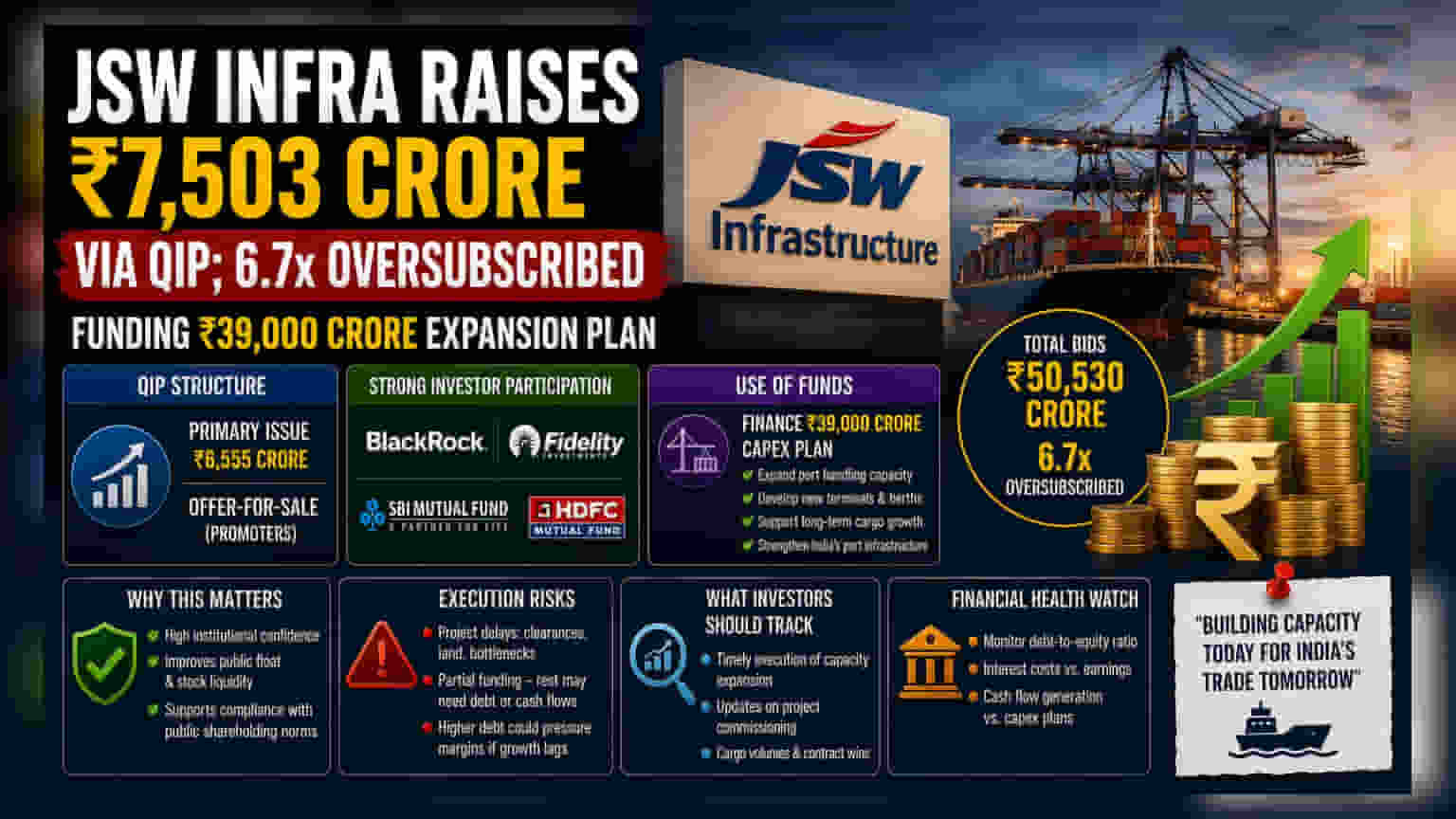
JSW Infrastructure has raised ₹7,503 crore through a qualified institutional placement, combining new share issuance and a promoter stake sale. The funds will support a massive ₹39,000 crore capital expenditure program aimed at significantly increasing port capacity over the next few years.
What Happened
JSW Infrastructure has successfully completed a Qualified Institutional Placement (QIP), raising ₹7,503 crore. The transaction was structured as a combination of a primary share issuance worth ₹6,555 crore and an offer-for-sale (OFS) where promoters sold a portion of their existing stake. The issue saw strong demand, receiving bids totaling ₹50,530 crore, which reflects an oversubscription of 6.7 times. The placement attracted major institutional investors, including global names like BlackRock and FMR, alongside domestic entities like SBI Mutual Fund and HDFC Mutual Fund.
The Expansion Strategy
The primary objective of this fundraising is to finance a multi-year capital expenditure (capex) program totaling ₹39,000 crore. JSW Infrastructure, which operates various port terminals, plans to use these funds to expand its port handling capacity. In the infrastructure business, this kind of expansion is necessary to manage higher cargo volumes and secure new long-term contracts. By bringing in this capital, the company aims to accelerate its infrastructure development without relying entirely on fresh debt.
Why This Matters For Investors
For investors, the success of this QIP signals high institutional trust in the company's growth outlook. The involvement of long-term investors like pension funds suggests confidence in the company’s long-term business model. Additionally, the QIP helps the company comply with minimum public shareholding requirements, which improves the stock's float and liquidity. However, shareholders should note that the primary issuance part of the QIP leads to the dilution of existing equity, meaning each share now represents a smaller portion of the company’s total profit.
Execution And Financial Risks
While the expansion plan is aggressive, investors must consider the execution risks involved. Large-scale port projects are complex and can face delays due to environmental clearances, land acquisition issues, or equipment supply chain bottlenecks. Furthermore, while ₹7,503 crore is a large sum, it is only a fraction of the total ₹39,000 crore projected spending. The company will likely need to fund the remainder through internal cash flows or additional debt. If the company takes on significant new debt, it could increase interest costs, which might put pressure on profit margins if cargo demand does not grow as expected.
What Investors Should Track
Going forward, the most important factor to monitor is the timeline of the capacity expansion. Investors should look for updates in quarterly filings regarding the commissioning of new berths or projects. Any delay in project execution could push back revenue growth. Additionally, keep a close watch on the company’s debt-to-equity ratio in the coming quarters to see how the management balances the remaining capex funding requirements with the company’s financial health.