 Whalesbook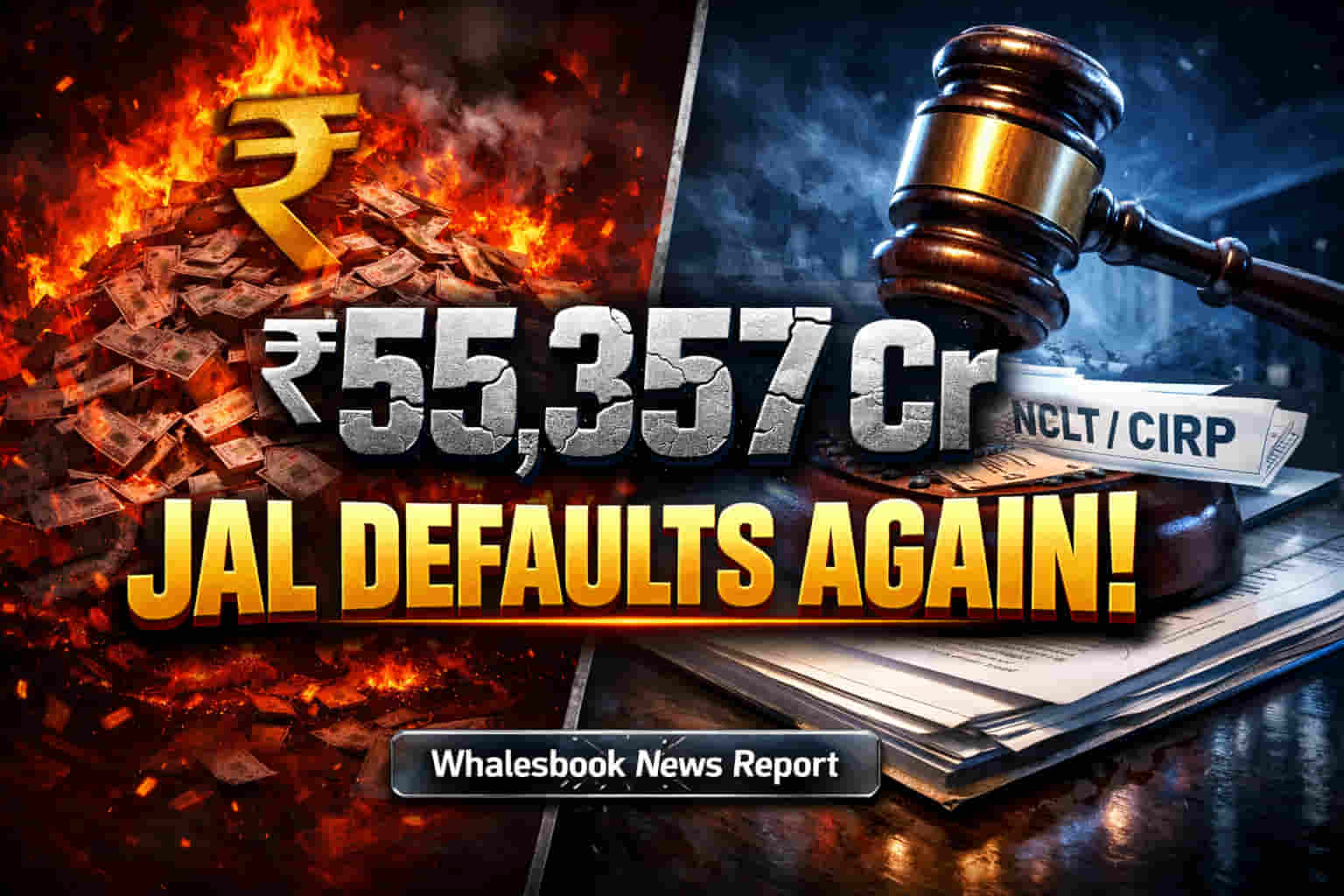


JAL Defaults on ₹55,357 Cr Debt Amid Ongoing CIRP
Jaiprakash Associates Limited (JAL) has disclosed continued defaults on its loan obligations, reporting non-payment of interest and principal amounts for the month ended February 2026. The total financial indebtedness stands at a staggering ₹55,357.39 crore as of February 28, 2026. This disclosure reiterates the company's ongoing financial distress while it remains under the Corporate Insolvency Resolution Process (CIRP) since June 2024.
Reader Takeaway: Defaults continue on ₹55,357 Cr debt; CIRP resolution remains uncertain.
What just happened (today’s filing)
Jaiprakash Associates Limited filed its monthly disclosure on March 3, 2026, detailing defaults on payments due in February 2026. The company confirmed that it failed to meet interest and principal repayment obligations on its loans from banks and financial institutions.
The total outstanding borrowings from banks and financial institutions, along with total financial indebtedness, were reported at ₹55,357.39 crore as of February 28, 2026.
These disclosures are mandated for companies undergoing insolvency proceedings, providing transparency to lenders and the market about the company's financial status.
Why this matters
These defaults underscore the severe and persistent financial strain on Jaiprakash Associates, even while under the structured resolution process of CIRP. For lenders, this means continued non-recovery and further uncertainty about their dues.
The ongoing CIRP itself is a complex process aimed at finding a viable resolution plan, which could involve restructuring debt, asset sales, or new ownership. However, continued defaults highlight the challenges in reviving such a heavily indebted entity.
The backstory (grounded)
Jaiprakash Associates, a diversified conglomerate involved in construction, cement, real estate, and power, has a long history of financial struggles. The first insolvency proceedings against the company were initiated as early as 2018 by ICICI Bank, followed by State Bank of India in 2022.
The Allahabad bench of the National Company Law Tribunal (NCLT) officially admitted JAL into CIRP on June 3, 2024, following these persistent debt issues. Over the years, the company has attempted to pare down its substantial debt through the sale of various assets, including cement plants and hydropower projects.
Despite these efforts and the formal insolvency process, the company's financial indebtedness has remained significant, reported to be around ₹55,000 crore to ₹57,000 crore in recent periods.
What changes now
Shareholders face continued uncertainty as the company remains under insolvency.
Lenders are actively engaged in the CIRP, filing and verifying their substantial claims against the company.
The resolution professional and the committee of creditors will continue to evaluate potential revival plans.
Risks to watch
Continued defaults while under CIRP indicate a highly challenging path to resolution.
The complexity and duration of the CIRP process, with potential delays and legal challenges.
Lenders' ability to achieve a satisfactory recovery of their dues through the resolution plan.
Peer comparison
In contrast to JAL's insolvency, major players in the infrastructure and construction sector, such as Larsen & Toubro (L&T), Adani Enterprises, and IRB Infrastructure Developers, continue to operate robustly. These companies manage significant market capitalizations and are not under any insolvency proceedings, reflecting a stable operational and financial standing.
Context metrics (time-bound)
- Total outstanding borrowings from banks and financial institutions stood at ₹55,357.39 crore as of February 28, 2026.
- Total financial indebtedness, encompassing short-term and long-term debt, was also reported at ₹55,357.39 crore as of February 28, 2026.
What to track next
Monitor the progress of the Corporate Insolvency Resolution Process (CIRP) and claim verification by lenders.
Observe any key decisions or directives from the NCLT regarding JAL's resolution plan or future proceedings.
Follow updates on the restructuring efforts and potential outcomes for creditors and stakeholders.