

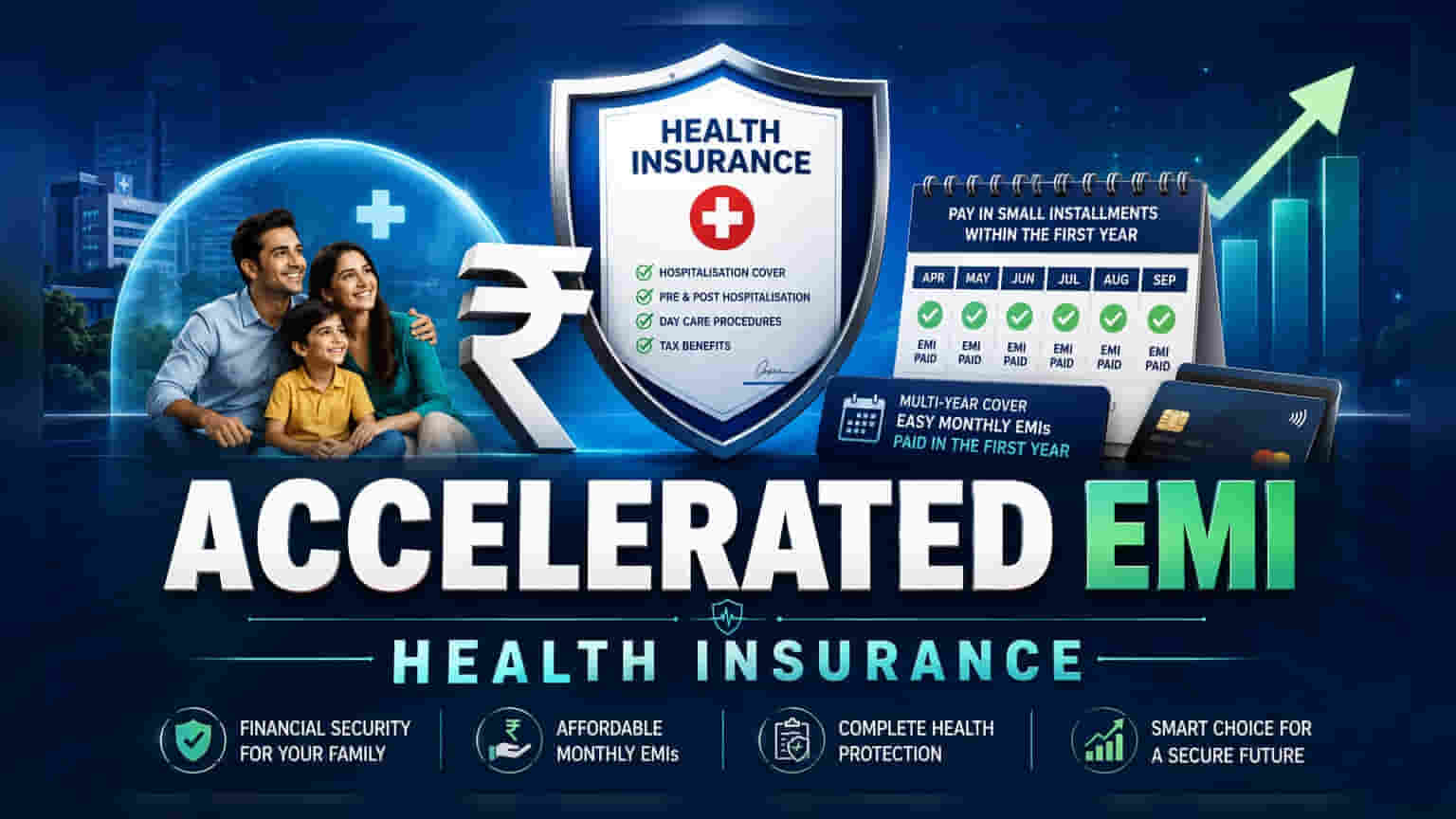
Indian health insurers are introducing 'Accelerated EMI' options for multi-year policies, allowing customers to pay full premiums within the first year. This move aims to improve insurance penetration by making long-term protection more affordable. Investors should watch how this impacts policy retention, though potential interest costs and policy lapse risks remain important factors to consider.
What Happened
Health insurance companies in India are introducing a new payment feature called 'Accelerated EMI' to make long-term health coverage more affordable. Unlike traditional annual plans, this option is designed specifically for multi-year policies. It allows policyholders to pay the entire multi-year premium within the first year, spreading the cost through monthly, quarterly, or half-yearly installments. Major players like Star Health and Care Health Insurance have started offering this feature, aiming to help customers avoid the heavy one-time upfront cost of a multi-year policy.
Why This Matters For Business
The Indian health insurance sector has long focused on increasing coverage among the general population. Many potential buyers find the cost of a multi-year policy difficult to pay in one go. By breaking down these costs, insurers hope to secure more long-term customers. This is a strategic shift, as multi-year policies help reduce the risk of customers leaving or failing to renew their insurance every year. If successful, this could lead to more stable, long-term revenue for insurers compared to yearly plans.
Cost and Policy Risks
While this option makes the product easier to buy, it is not always cost-free. Some insurers may charge a marginal interest component of up to 10% on these payments. Investors should also note the risk of policy lapses. If a customer misses their installment, they generally have a grace period of 15 to 30 days to pay. If they fail to do so, the policy could lapse, which effectively cancels the insurance cover. However, as long as the policy remains active and payments are current, the claims process for the customer remains unchanged.
Competitive Landscape
This innovation comes as competition in the health insurance space continues to rise. Companies like HDFC ERGO, ICICI Lombard, Niva Bupa, ManipalCigna, Aditya Birla Health Insurance, Bajaj Allianz General Insurance, and Digit already offer standard EMI facilities, usually for one-year plans. The introduction of 'Accelerated EMI' by some players is an attempt to create a product edge in the multi-year category, differentiating their offerings from standard annual EMI models.
What Investors Should Track
For investors and market analysts, the key monitorables are whether this product feature actually boosts long-term customer acquisition and how it impacts the companies' profit margins. It will be important to observe whether the interest income compensates for the administrative cost of managing more frequent, smaller payments. Additionally, monitoring the lapse rate—the percentage of policies that are canceled due to missed payments—will provide insight into whether this flexible payment structure is financially sustainable for the insurers in the long run.