

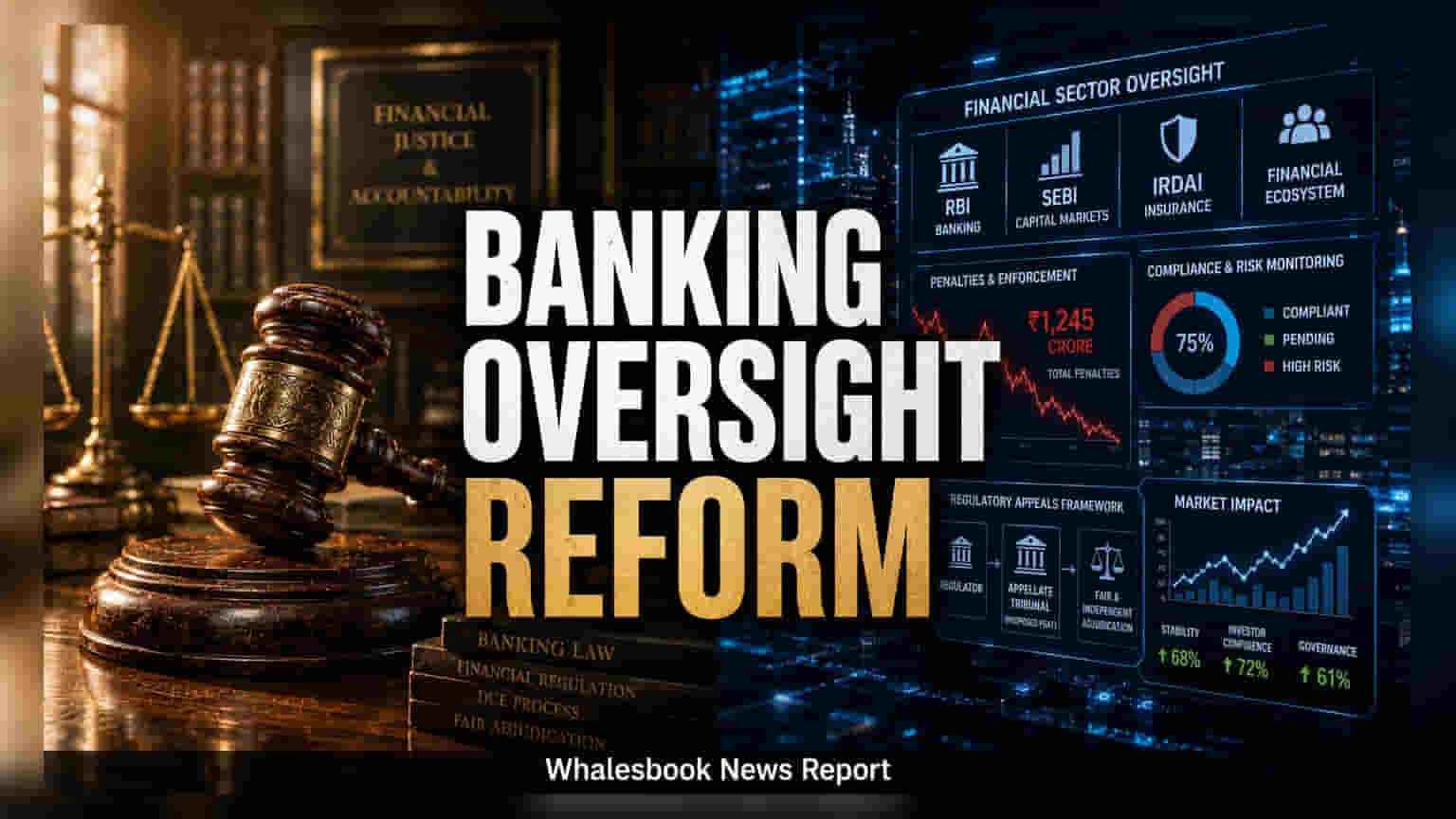
Discussions regarding the creation of a unified Financial Sector Appellate Tribunal (FSAT) have gained traction among industry experts. The discourse focuses on whether an independent appellate body could improve regulatory dispute resolution, balancing the Reserve Bank of India's current enforcement framework with the need for more objective oversight for financial institutions.
Financial sector experts are actively discussing the potential revival of a unified Financial Sector Appellate Tribunal (FSAT), a policy proposal that dates back to the Financial Sector Legislative Reforms Commission (FSLRC) recommendations made over a decade ago. While there is no official government legislative action at this stage, the discourse has resurfaced within financial circles as market participants analyze the current regulatory enforcement framework and the mechanism for handling penalties.
The central point of the discussion involves the Reserve Bank of India’s (RBI) current role in issuing and adjudicating penalties. Under the existing system, financial institutions sanctioned by the central bank often have limited options for external recourse, as appeals are frequently managed through internal channels or the court system. Critics of the current structure argue that an independent appellate body would provide a more objective resolution process, separating the roles of the regulator from the adjudicator. This debate is largely driven by institutional concerns regarding the perceived deterrent effect of current penalty structures compared to the scale of operations of large financial conglomerates.
However, the concept of a centralized tribunal is not without significant debate. A primary concern cited by industry analysts is the risk of jurisdictional overlap. The Indian financial landscape is governed by multiple entities, including the Reserve Bank of India, the Securities and Exchange Board of India (SEBI), and the Insurance Regulatory and Development Authority of India (IRDAI). Past experiences, such as the debate over the classification of certain insurance products, serve as a reminder of the complexities involved when trying to unify oversight for diverse sectors like banking, capital markets, and insurance.
For investors and market participants, the significance of this debate lies in the long-term impact on operational risk and compliance. As financial institutions increasingly evolve into complex entities spanning multiple service lines, the burden of managing overlapping compliance mandates has grown. Proponents of the FSAT model argue that it could streamline these requirements and offer more predictable regulatory outcomes. Conversely, opponents emphasize that the existing rule-based enforcement processes are necessary to maintain the integrity of each regulator’s specific domain.
As of August 2026, there are no formal government announcements indicating that a unified tribunal is under development. Instead, the current policy environment remains focused on maintaining stability through existing frameworks. The next phase for this debate will likely unfold within high-level banking reform committees and industry forums, where stakeholders may continue to evaluate whether a shift toward centralized appellate architecture is viable or if the current multi-regulator model provides better stability for the Indian financial ecosystem.