

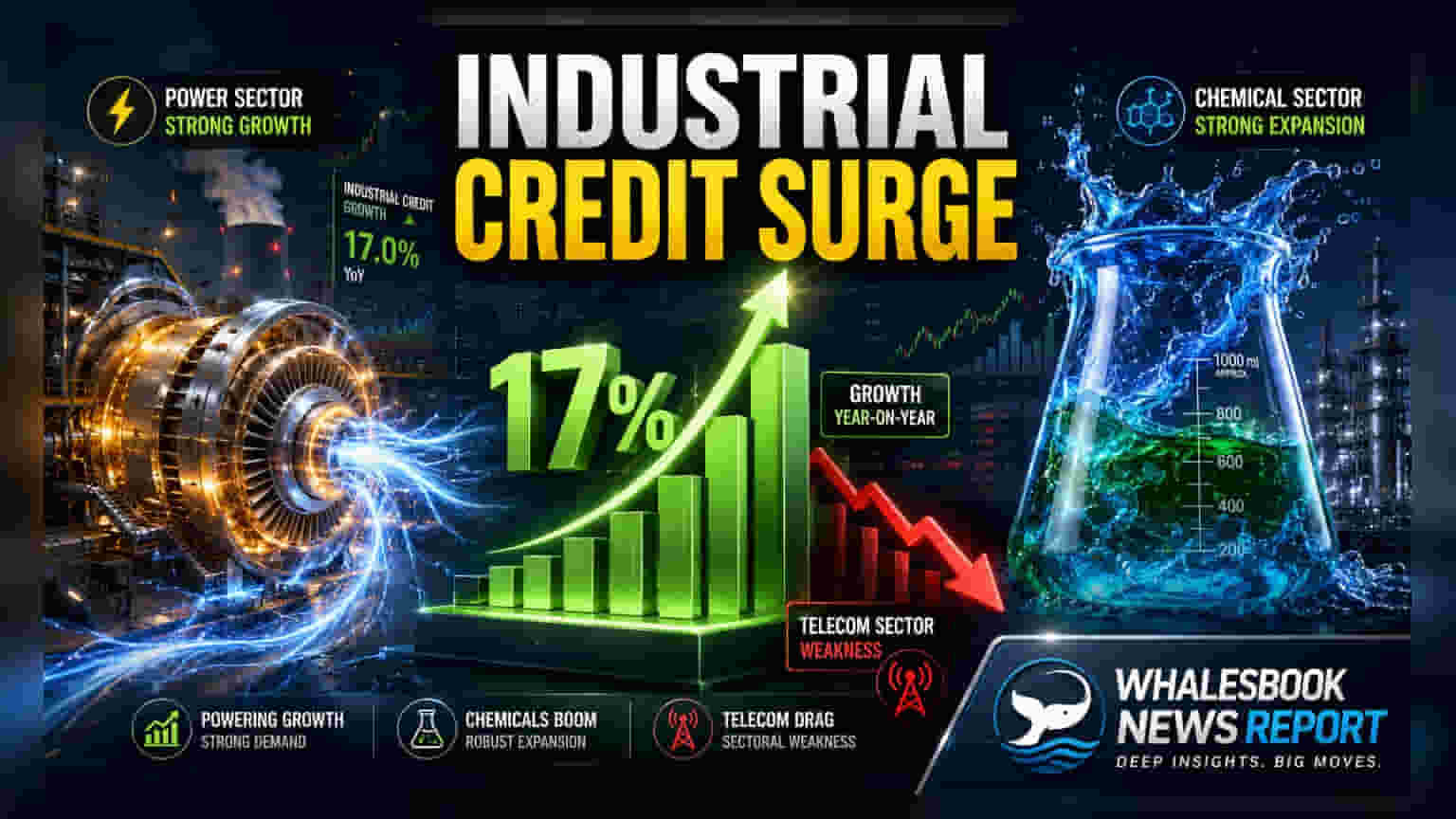
Bank lending to Indian industries rose by ₹39,599 crore in early fiscal year 2027, driven by strong demand in the power and chemical sectors. While infrastructure lending grew, the telecommunications sector saw a credit contraction of nearly ₹11,000 crore. This shift reflects a strategic reallocation of bank capital toward manufacturing and core infrastructure projects with stable execution records.
Indian industrial credit growth accelerated by 17% in the first two months of the current fiscal year, highlighting a clear trend in how banks are deploying capital. Between March and May 2026, gross bank credit to the industrial sector increased by ₹39,599.2 crore, bringing the total outstanding credit to ₹46.2 lakh crore. This growth indicates that lenders are prioritizing sectors with proven execution track records and sustained demand.
Power Sector Remains Key Driver
The power sector saw the most significant growth, with outstanding credit rising by ₹15,399.9 crore to reach a total of ₹8.6 lakh crore. Private and public sector banks appear to be focusing their lending on established power utilities, including major players like NTPC and PowerGrid, while largely avoiding exposure to state electricity boards. The expansion is supported by increased activity in renewable energy projects and the need for better transmission capacity. The rise in power demand, fueled by rising temperatures, the growth of data centers, and a broader transition toward electric infrastructure, has created a steady demand for capital among power producers.
Diverging Trends in Infrastructure
While the infrastructure segment as a whole recorded a 1% increase to reach ₹15 lakh crore, the data reveals stark differences between sub-sectors. The telecommunications industry saw a notable credit contraction of ₹10,949.6 crore. This decline contrasts sharply with sub-sectors like airport development, which saw a 20.7% rise in credit, and road projects, which added ₹1,851.3 crore. The reduction in telecom credit suggests that banks may be adopting a more cautious approach toward highly leveraged sectors, choosing instead to support segments that demonstrate stronger cash flow stability.
Investor Implications
The reallocation of bank credit toward power and chemicals suggests that lenders view these areas as lower-risk compared to other capital-intensive segments. For investors, the reliance on established PSU and private sector power entities as primary beneficiaries of this liquidity is an important development. While the total share of industrial credit relative to overall bank lending has seen a slight decline over the past two years, the current surge in specific industrial segments points to a focused growth strategy. Future updates will likely center on whether the power sector can maintain this level of execution as interest rates fluctuate and how the telecommunications sector manages its ongoing capital requirements without the same level of banking support.