 Whalesbook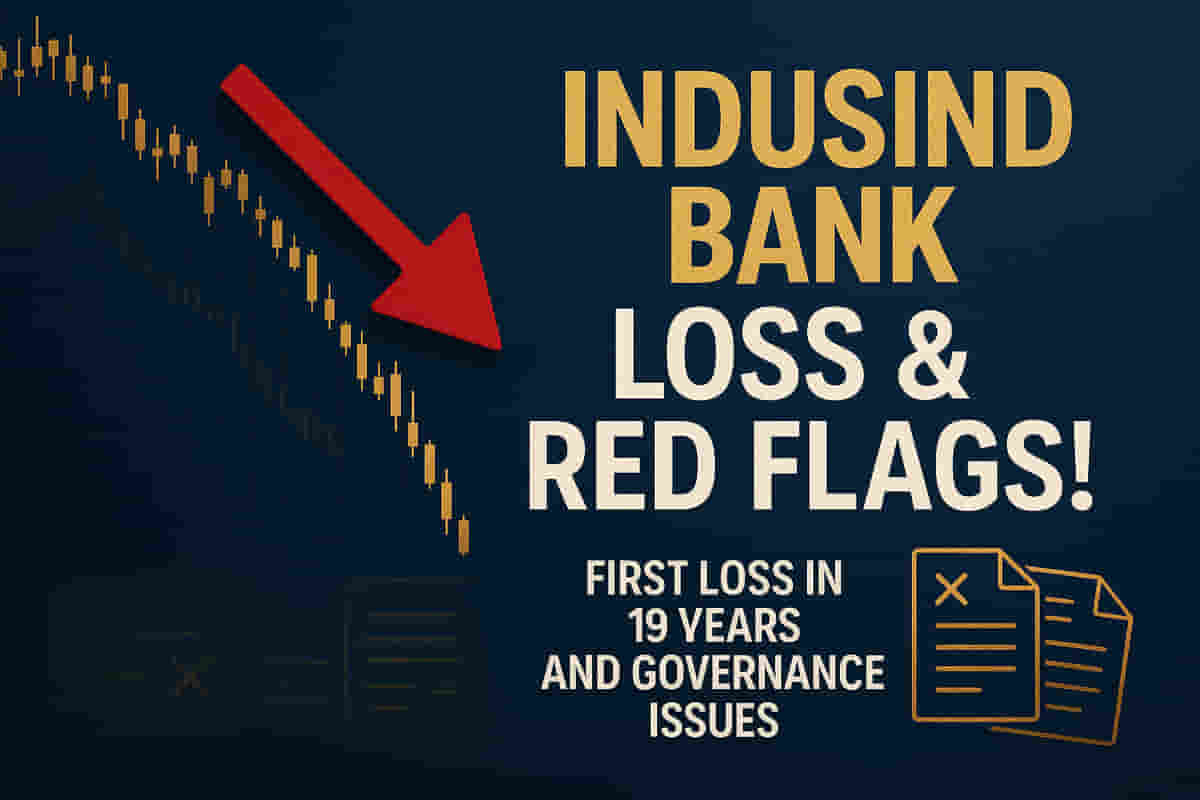


IndusInd Bank is navigating a challenging period, evident in its stock performance. Year-to-date, the share price has dropped 14%, sharply lagging the Nifty Bank index's 16% gain. The bank's weightage in the index has also decreased from the top five to eighth place. A key turning point was its Q4FY25 results, which marked the first loss in 19 years.
Historically, IndusInd Bank pursued aggressive growth by lending to segments like microfinance, commercial vehicle financing, and lower-rated corporate credit. While these segments comprised a significant portion of its loan book, increased caution after earlier slippages has led to a contraction. For instance, microfinance loans reduced from ₹32,723 crore (10% of the total loan book) in Q2FY25 to ₹21,321 crore (7%) in Q2FY26. Similarly, corporate loan exposure, particularly to mid- and lower-rated companies, fell 21% year-on-year.
This strategic shift resulted in a 9% year-on-year decline in total advances in Q2FY26, making IndusInd Bank the only major bank by market capitalization to report loan shrinkage.
On the asset quality front, the gross non-performing asset (GNPA) ratio saw a marginal sequential improvement to 3.60% in Q2FY26, but on a year-on-year basis, it significantly increased from 2.11% in Q2FY25. Despite the shrinking risky loan portfolio, visible asset quality improvement is yet to materialize. Higher provisioning, up 45% year-on-year, further impacted profitability, contributing to the ₹437 crore loss in Q2FY26.
Beyond financial performance, corporate governance issues have surfaced. The Q4FY25 loss was partly due to accounting lapses, operational oversights, and irregularities. An internal review indicated a 2.35% hit to net worth (approx. ₹1,530 crore) from derivative accounting discrepancies, with an external agency quantifying the negative impact at ₹1,979 crore as of June 2024. Additionally, the bank wrongly recognized ₹684 crore in interest income from the microfinance segment.
These governance concerns cast doubt on future underwriting improvements, even as the bank implements corrective measures. A JP Morgan Global Markets Strategy report highlighted that the bank has undergone significant management and strategy shifts post-discovery of these issues. While the bank has adequate capital, recovery of its liability, fee, and asset franchises is expected to be lengthy, potentially limiting its ability to grow without consistent capital injections and keeping return ratios muted.
Impact:
This news significantly impacts IndusInd Bank's stock price, investor confidence, and its ability to raise capital or lend at competitive rates. It also creates cautionary sentiment within the broader Indian banking sector, especially regarding lending to riskier segments and corporate governance standards. The potential for prolonged periods of muted return ratios and the need for capital injections could affect its market standing and profitability for an extended period. Rating: 8/10.
Difficult Terms:
• Nifty Bank index: A stock market index that represents the banking sector of the Indian stock market.
• Loan book: The total amount of money a bank has lent out to its customers.
• Microfinance loans: Small loans provided to low-income individuals and small businesses, often in developing countries.
• Commercial vehicle financing: Loans provided for the purchase of trucks, buses, and other vehicles used for commercial purposes.
• Lower-rated corporate credit: Loans given to companies that have a lower credit rating, indicating higher risk.
• Slippages: When loans that were previously classified as performing assets become non-performing assets (NPAs).
• Advances: The total amount of money lent out by a bank to its customers.
• Gross Non-Performing Asset (GNPA) ratio: The percentage of a bank's total loans that are in default and unlikely to be repaid.
• Sequentially: Comparing a period's performance to the immediately preceding period.
• Provisioning: Setting aside funds in advance to cover potential losses from bad loans.
• Profitability: The ability of a company to generate profit.
• Corporate-governance red flags: Warning signs indicating potential issues with a company's management, ethics, or compliance.
• Accounting lapses: Errors or deliberate misrepresentations in a company's financial records.
• Operational oversights: Mistakes or failures in the day-to-day management and execution of business operations.
• Derivative accounting discrepancies: Errors related to the accounting treatment of financial instruments whose value is derived from an underlying asset.
• Net worth: The value of a company's assets minus its liabilities.
• Interest income recognition: The accounting rule that determines when and how a company records interest earned on its assets as income.
• Underwriting: The process of assessing and assuming risk, especially when approving loans or insurance.
• PPoP (Pre-Provision Operating Profit): A bank's operating profit before accounting for loan-loss provisions and taxes.
• Return on Asset (ROA): A financial ratio that measures how profitable a company is relative to its total assets.