 Whalesbook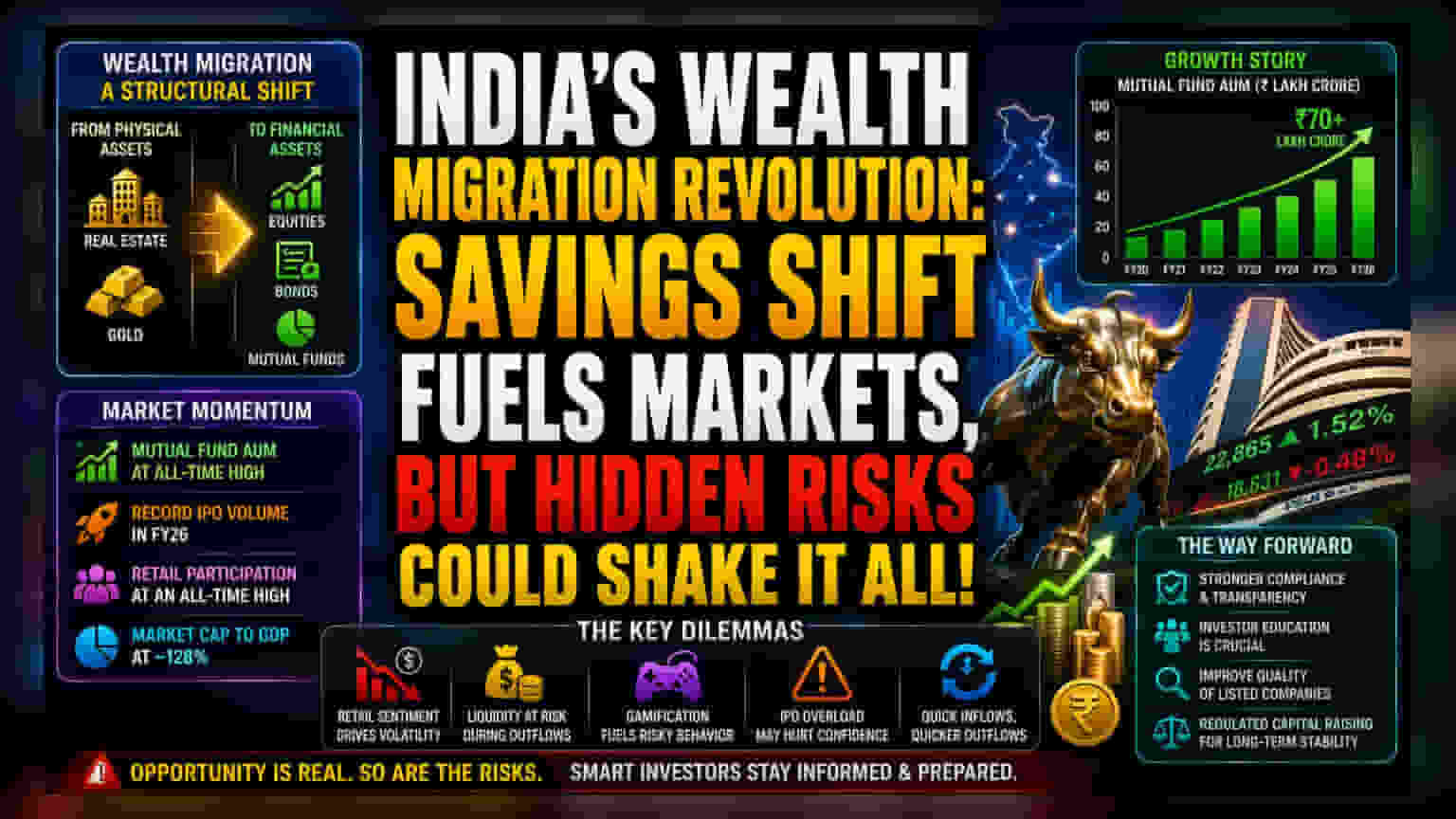


The Structural Shift in Household Allocation
The migration of domestic wealth from physical assets—traditionally real estate and gold—into the formal financial ecosystem has hit a velocity rarely seen in emerging markets. While the headline growth in mutual fund assets under management reflects deep-seated optimism, this transition creates a complex feedback loop. By channeling household savings directly into equity and bond markets, the Indian economy has effectively reduced its historical reliance on banking sector credit. However, this shift mandates a higher threshold for market stability, as the retail investor base is historically more prone to sentiment-driven liquidation during global macro headwinds.
The Valuation and Liquidity Paradox
With market capitalization now tracking at approximately 128% of GDP, the reliance on continuous capital formation is unprecedented. The record-breaking volume of IPOs throughout FY26 suggests a market that is aggressively absorbing supply. Yet, institutional data suggests that while retail participation has broadened, the concentration of liquidity remains sensitive to foreign portfolio flow reversals. When domestic investors become the primary source of market depth, any significant correction can lead to a liquidity crunch, as the speed at which retail capital entered these instruments may be eclipsed by the speed at which they exit if inflationary pressures persist.
The Forensic Bear Case: Vulnerabilities in Growth
The current regulatory environment, spearheaded by SEBI’s push for transparency, faces the immense challenge of policing an increasingly fragmented and high-frequency market. A critical risk factor lies in the 'gamification' of trading, which has accelerated alongside the growth in the investor base. Critics argue that while the formalization of savings is a long-term positive, the rapid onboarding of inexperienced participants creates a structural fragility. Furthermore, the reliance on high IPO volume to sustain market sentiment is a double-edged sword; if secondary market performance fails to match the primary market premiums, the resulting 'IPO hangover' could severely damage retail confidence, causing a sustained withdrawal of capital from systemic mutual fund vehicles.
Future Trajectory and Regulatory Oversight
Looking ahead, the longevity of this equity-heavy savings model will depend on the efficacy of recent compliance reforms. The focus must shift from merely increasing account volume to improving the quality of underlying assets. As India approaches a potential maturity phase in its capital cycle, market participants are watching for increased friction in capital-raising processes, which, while potentially slowing the pace of IPOs, would serve as a necessary brake on speculative overheating. The ability of the regulatory framework to maintain orderly exits for capital during periods of sector-specific rotation will be the ultimate litmus test for the sustainability of this domestic wealth engine.