

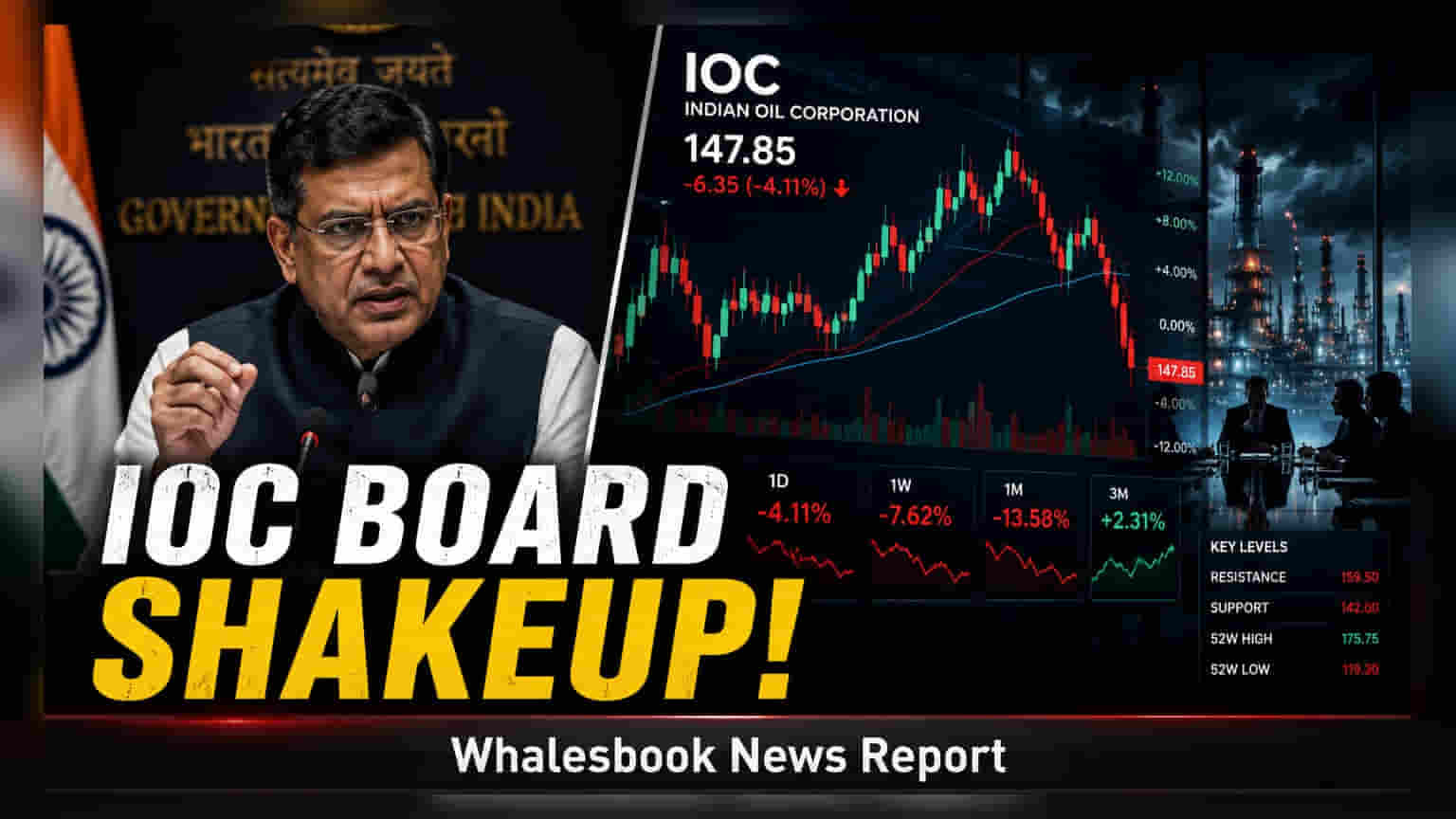
The government has proposed a major board overhaul for Indian Oil Corporation, aiming to introduce four Managing Director positions and reduce the count of functional directors. This restructuring intends to streamline operations and speed up R&D commercialization. The proposal is currently pending final approval from the Appointments Committee of the Cabinet.
The Ministry of Petroleum and Natural Gas has proposed a structural change to the board of Indian Oil Corporation (IOC), the country's largest oil refiner and fuel retailer. The plan seeks to transition from the current board model to one led by an executive chairman supported by four Managing Directors. This change requires final clearance from the Appointments Committee of the Cabinet before it can be implemented.
Currently, IOC functions with an executive chairman and eight functional directors, with no specific Managing Director roles within the board composition. Under the new proposal, the government aims to reduce the number of functional directors from eight to five. This consolidation involves merging key departments such as human resources, pipelines, and research and development into a more centralized framework.
The proposed structure assigns the four new Managing Director positions to cover specific operational domains: finance, subsidiaries, and alliances; refineries and pipelines; marketing; and a consolidated role overseeing strategy, planning, business development, HR, and R&D. By grouping these departments, the government aims to improve administrative efficiency and ensure that technological research developed by the company is brought to market more quickly.
For investors, the core interest lies in whether this leadership change influences the company’s capital spending efficiency or its response time to market shifts in the energy sector. As India’s largest state-owned refiner, IOC operates in a capital-intensive sector where administrative speed and strategic agility are essential for maintaining margins amid volatile global crude oil prices.
Historically, board-level changes in large state-owned enterprises are closely watched by the market as they can indicate shifts in corporate strategy or government focus regarding long-term business development. Investors should track the official notification from the government regarding the cabinet approval and subsequent changes to the management hierarchy. The company’s ability to maintain stable operations during this transition period and the impact of the new structure on decision-making speed will be key factors to monitor in the coming quarters.