

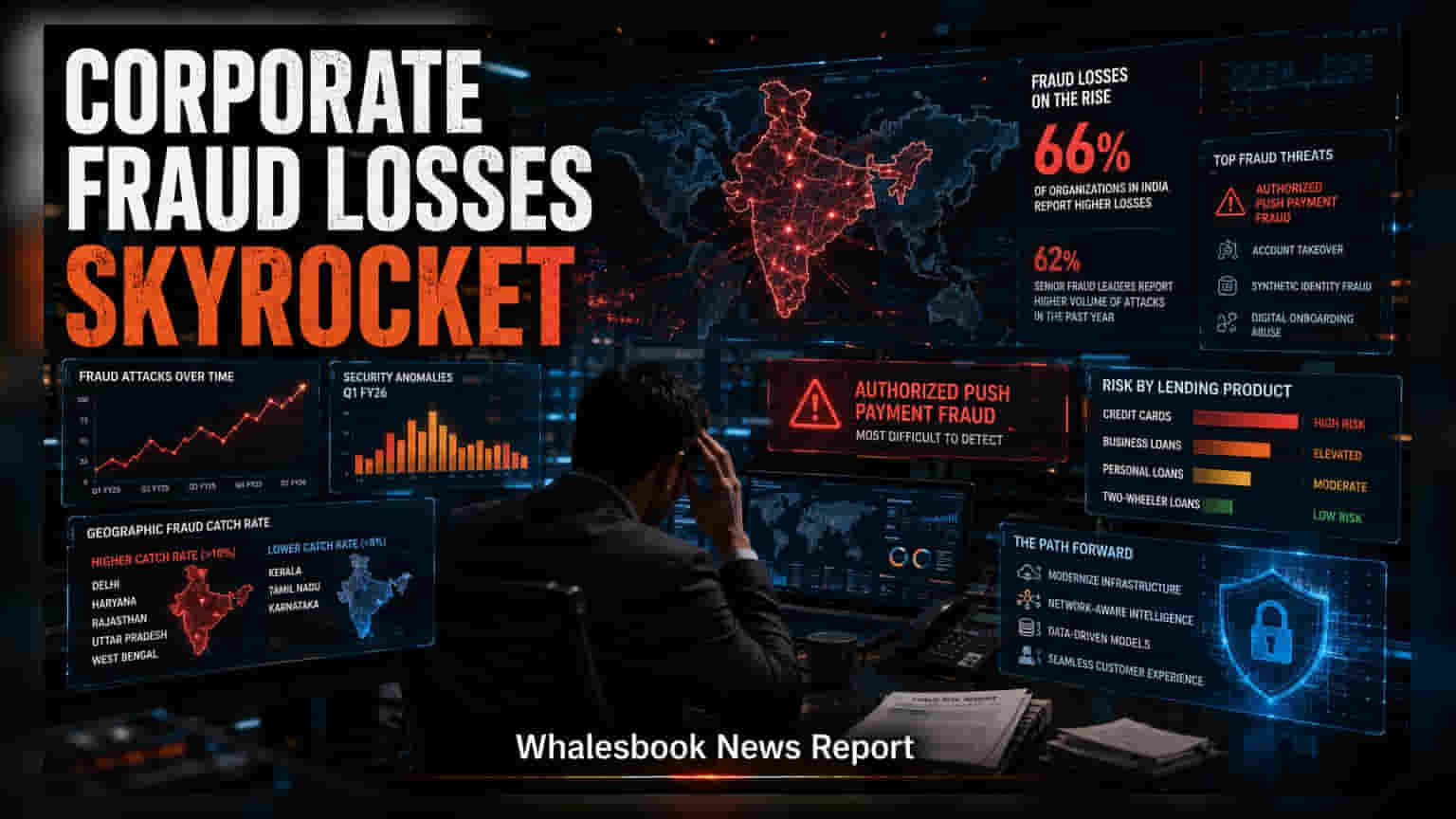
A study by Experian and Forrester reveals that 66% of Indian organizations have reported an increase in financial fraud losses. As digital-first financial services expand, sophisticated threats like account takeovers and identity theft are forcing banks and lenders to re-evaluate their security strategies and technology spending.
Indian financial institutions and companies are facing a significant increase in financial fraud, as sophisticated digital attacks outpace existing security defenses. According to a new study by Experian and Forrester, 66 percent of organizations in India have reported rising losses due to fraud. This trend is being driven by an uptick in complex criminal activities, with 62 percent of senior fraud decision-makers noting that they have dealt with a higher volume of attacks over the past year.
The shift toward digital-first financial services has created a larger target for criminals. Among the most difficult threats to identify is Authorized Push Payment fraud, where attackers manipulate victims into transferring funds. Many organizations are struggling to defend against these tactics because they still rely on older, static security systems. These legacy frameworks often lack the ability to flag modern, adaptive patterns of fraud, leaving businesses vulnerable despite their attempts to automate security.
From an investor perspective, this environment may force financial services companies to increase their spending on cybersecurity and advanced fraud detection systems. While necessary to protect customer assets and maintain regulatory compliance, such investments represent an added operational cost that could influence profit margins in the near term. The ability of banks and non-banking financial companies (NBFCs) to effectively integrate new, data-driven security models will likely determine how well they manage these rising risks.
Risk levels vary significantly across different lending products, which is a key factor for market participants monitoring the stability of financial portfolios. Credit cards remain the highest-risk segment, showing high anomaly rates. In contrast, two-wheeler loans have maintained the most robust security performance in the market. Business loans also experienced a period of increased security anomalies during the first quarter of fiscal year 2026, pointing to the ongoing volatility in commercial lending.
The study also highlights that fraud detection is not uniform across the country, showing a clear geographic divide. Northern and eastern states, including Delhi, Haryana, Rajasthan, Uttar Pradesh, and West Bengal, report higher catch rates for fraud, exceeding 10 percent. Southern states like Kerala, Tamil Nadu, and Karnataka show lower detection rates below 8 percent. This regional disparity suggests that financial institutions may need to tailor their security and verification models to account for different digital usage patterns across India.
Moving forward, the primary focus for stakeholders will be how companies modernize their infrastructure. Investors may track whether firms can transition from static, rule-based defenses to network-aware, data-driven strategies to secure digital onboarding and prevent unauthorized access without slowing down the customer experience.