

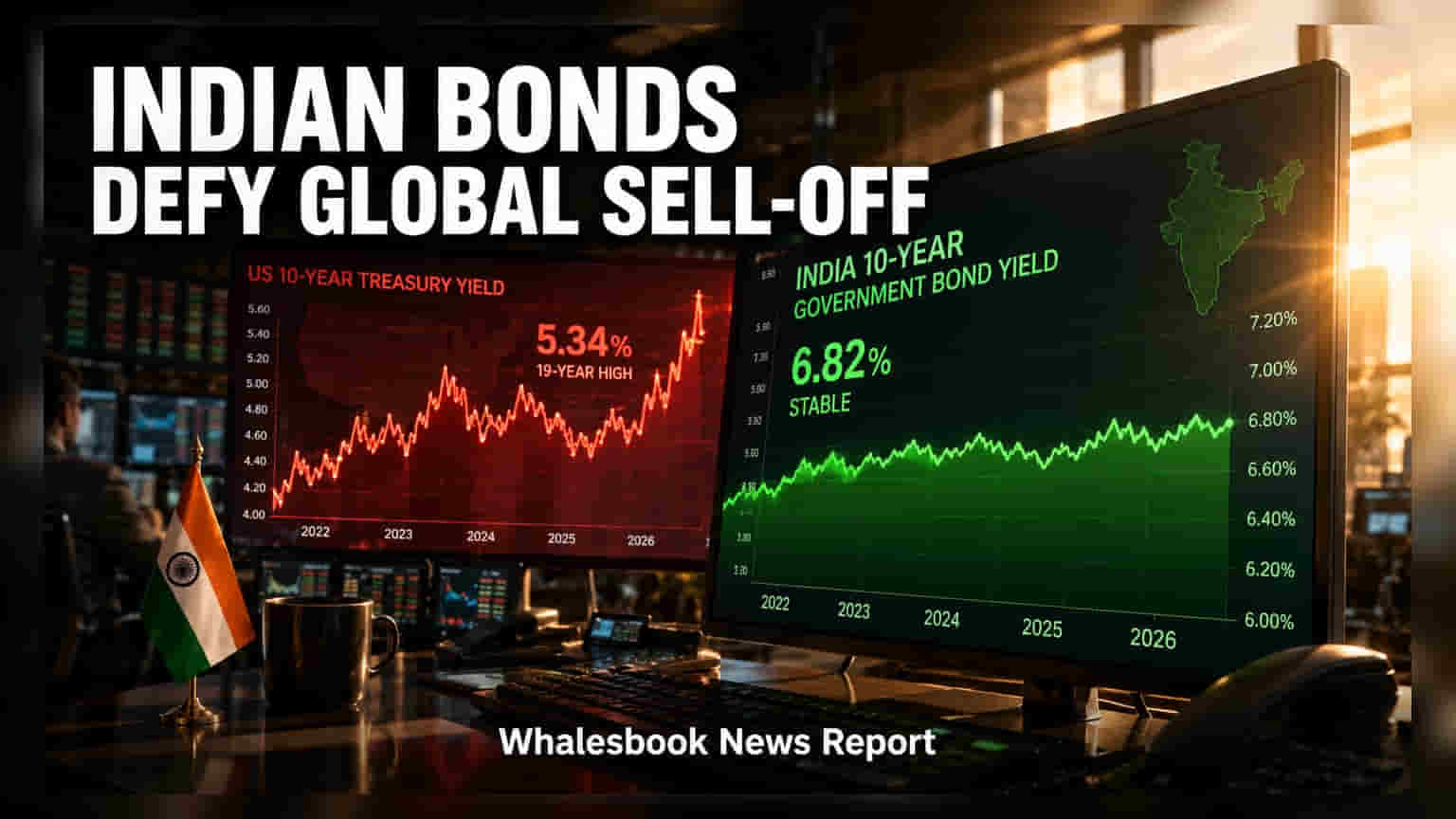
Indian government bond yields are holding steady at approximately 6.85% despite a sharp sell-off in US Treasuries. While the domestic market remains resilient due to strong local demand, investors are turning cautious as recent RBI minutes signal a potential rate hike cycle later this year. Fund managers are currently favoring short-duration assets to mitigate interest rate risks in the coming months.
Indian debt markets have shown notable resilience this week, maintaining a clear separation from the intense volatility seen in global markets. While US Treasury yields have surged to 19-year highs—crossing the 5.3% mark for 30-year bonds due to concerns over US national debt—the 10-year Indian benchmark government bond has remained relatively stable, hovering in the 6.80% to 6.85% range. This decoupling highlights the influence of strong domestic liquidity and proactive management by the Reserve Bank of India (RBI), which has helped insulate local yields from global shocks.
Domestic Focus vs. Global Volatility
The ability of Indian bonds to remain stable while global markets experience a sell-off is largely credited to local economic factors. Domestic investor interest remains robust, and foreign currency inflows, supported by past measures like the FCNR(B) deposit facility, have provided a buffer for the external position. Unlike global bond markets that are heavily reacting to US fiscal deficit concerns, the Indian market is primarily driven by local inflation trajectories and the central bank's liquidity stance.
However, this stability is not without challenges. The environment is becoming more cautious as the market digests the minutes from the Reserve Bank of India’s August 2026 Monetary Policy Committee (MPC) meeting. The central bank kept the repo rate unchanged at 5.25% during its early August meeting, but the tone of the meeting minutes has turned more hawkish. Several members expressed concerns about the generalization of inflation risks, leading many market participants to price in the possibility of a policy rate hike by the end of 2026.
Shifting Strategy Toward Short-Term Assets
In response to this potential shift in monetary policy, many fund managers are adjusting their investment strategies. There is a clear trend toward moving into short-duration bonds—assets that mature within a year. This move is designed to reduce sensitivity to changes in interest rates. By holding shorter-term debt, investors aim to protect their portfolios from the volatility that often accompanies a shift toward a tighter monetary policy cycle.
Investors should note that while the Indian market is currently insulated, it remains exposed to several macro risks. Rising global crude oil prices, which directly impact India's import bill and inflation, remain a significant monitorable. Additionally, the recent depreciation of the rupee and the broader geopolitical tensions in West Asia continue to pose risks to the external balance. As the market looks toward the final months of 2026, the key monitorables will be the actual inflation trajectory, crude oil price movements, and any further commentary from the RBI regarding its interest rate path.