 Whalesbook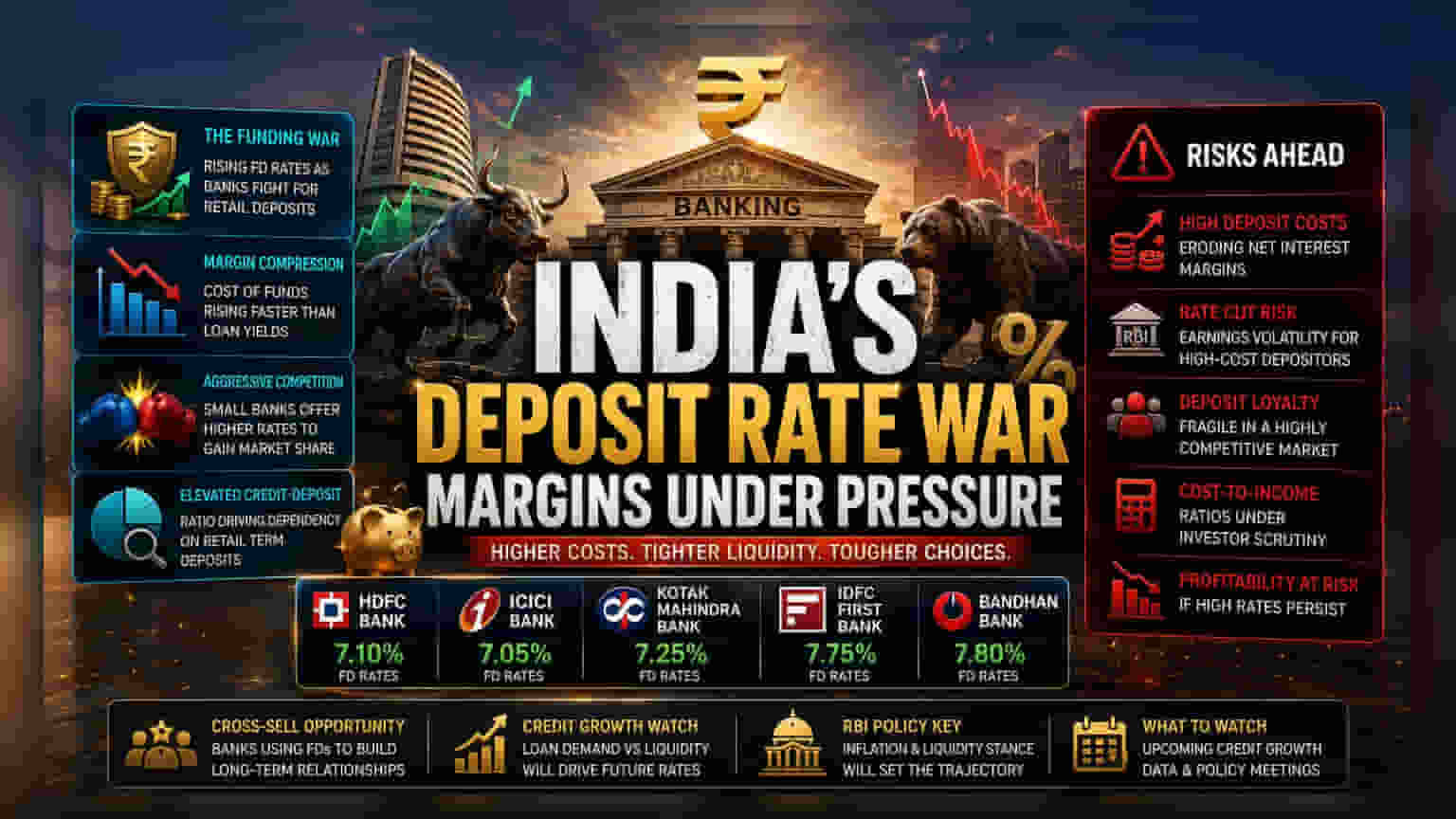


The Funding War
The recent adjustments in deposit pricing reflect a structural struggle within the Indian banking sector to balance credit demand with manageable funding costs. While headline rates for fixed deposits have crept upward across both public and private lenders, this trend is less about rewarding savers and more about a defensive posture against tightening liquidity. As the credit-deposit ratio remains elevated, banks are increasingly reliant on retail term deposits to fuel loan growth without breaching regulatory liquidity requirements.
The Margin Compression Narrative
Historically, rising deposit costs act as a precursor to margin pressure. While banks like HDFC, ICICI, and Kotak Mahindra maintain robust capital buffers, the necessity of offering yields exceeding 7% in the private sector suggests that the cost of funds is escalating faster than the yields on retail loan books. Investors should monitor whether these institutions can pass these costs onto borrowers in a slowing consumption environment. Unlike periods of easy credit, the current environment forces banks to choose between sacrificing net interest margins or losing market share to smaller, more aggressive challengers like IDFC FIRST and Bandhan Bank, which are utilizing higher rates to aggressively capture deposit base growth.
The Forensic Bear Case
From a risk-averse perspective, this rate hike cycle exposes a hidden fragility in balance sheet management. Aggressive deposit acquisition through high interest rates often signals that internal liquidity generation is insufficient to meet projected loan growth. Furthermore, private lenders that lean heavily on high-cost retail deposits face significant earnings volatility if the central bank pivots toward a lower interest rate environment prematurely. Additionally, the competitive nature of these hikes suggests a commoditization of the deposit base, where loyalty is increasingly fragile and sensitive to marginal basis point differences. Institutional investors are watching the cost-to-income ratios of these lenders closely, as sustained elevated deposit rates will likely erode the profitability gains seen over the previous fiscal quarters.
Future Trajectory
Market expectations suggest that if inflation metrics remain sticky, banks will struggle to lower these rates in the near term. Analysts anticipate that large-cap banks will focus on cross-selling other financial products to deposit holders to offset the interest expense, essentially treating the high-yield FD as a customer acquisition tool rather than a profit-center. The persistence of these rates will largely depend on the Reserve Bank of India’s stance on systemic liquidity and the quarterly credit growth data due in the coming months.