 Whalesbook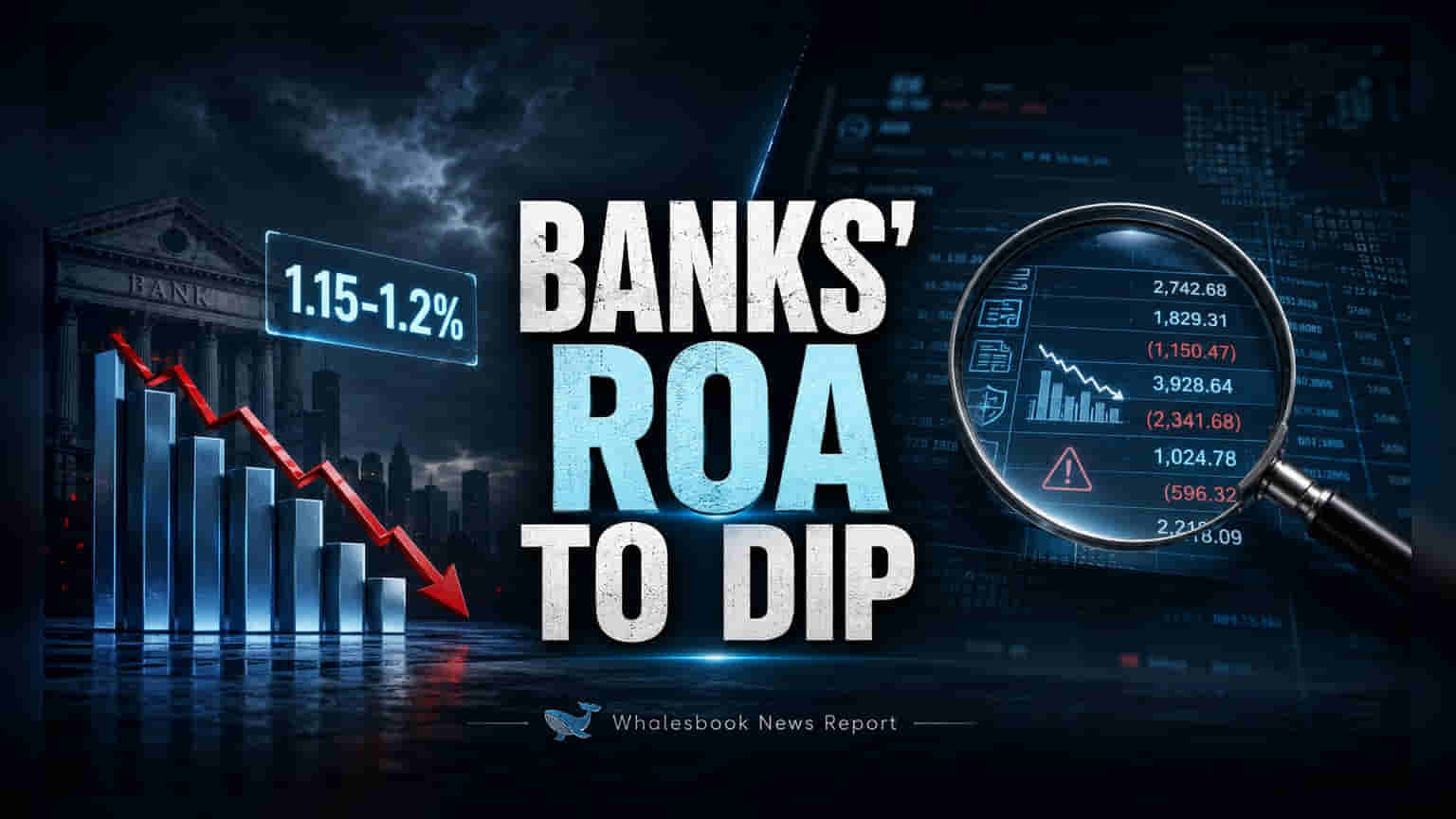


The Regulatory Provisioning Burden
The anticipation surrounding the Expected Credit Loss (ECL) framework is forcing a structural shift in how Indian lenders manage their balance sheets. Unlike the current incurred loss model, the impending transition to a forward-looking provision structure is driving institutions to front-load capital allocations. This proactive buffer-building is the primary catalyst for the projected RoA compression to the 1.15%-1.20% range. While the sector displays resilience compared to long-term performance norms, the immediate impact is a reduced capacity for margin expansion through traditional credit growth alone.
Yield Volatility and Treasury Contraction
Beyond regulatory requirements, the macro environment has shifted against the banking sector's treasury operations. The ascent of the 10-year G-sec yield past the 7% threshold has effectively ended the period of easy mark-to-market gains that defined the previous fiscal year. Banks heavily exposed to long-duration government securities are seeing their 'other income' line items suffer as portfolio valuations fluctuate with rising rates. This normalization of treasury income, coupled with a 5-10 basis point uptick in provisioning costs, suggests that the days of elevated, non-interest income are rapidly waning.
The Bear Case: Deposit Costs and Structural Risks
The narrative of stable Net Interest Margins (NIMs) around 2.9% masks a brewing conflict between retail deposit growth and credit demand. As banks scramble to secure core liquidity, the competitive intensity for deposits is forcing institutions to pay higher rates, effectively creating a ceiling on potential NIM expansion. The vulnerability here lies with mid-sized private lenders and public sector entities that lack the granular, low-cost current and savings account (CASA) franchises of their larger peers. Should deposit growth fail to keep pace with credit off-take, these banks will face a binary choice: sacrifice further NIMs or throttle loan growth to maintain capital adequacy.
Future Outlook and Sector Resilience
Despite the headwinds, the sector's ability to maintain an RoA significantly above the 0.6%-0.8% decadal average suggests a structural improvement in underwriting quality. The focus for the remainder of the fiscal year will remain on asset quality maintenance and deposit mobilization efficiency. Market participants should monitor upcoming quarterly filings for evidence of accelerated ECL transition provisions, as banks that have already cleared their provisioning decks will be better positioned to navigate the 2027 regulatory implementation without significant earnings volatility.