

A recent Goldman Sachs report indicates that Indian banks are maintaining stable asset quality, supported by a deliberate slowdown in risky unsecured lending. While microfinance and consumer loan stress has eased, investors are now focusing on the MSME segment and ongoing margin pressures due to high deposit costs.
The outlook for Indian banks appears stable as the sector undergoes a significant transition in its lending approach. According to a report by Goldman Sachs, the aggressive lending in unsecured retail segments, which had previously raised concerns about bad loans, has cooled down significantly. This shift toward more cautious lending is helping banks keep their asset quality in check, even as they navigate a complex economic environment.
Unsecured Lending Trends
The most notable change in the banking sector over the past 12 to 18 months has been the reduction in risky lending. The microfinance (MFI) loan book has contracted by 25% from its peak, signaling a more conservative stance by lenders. Similarly, growth in consumer unsecured loans has slowed considerably, dropping to a range of 10% to 12% for FY25 and FY26, down from the rapid 25% to 30% growth seen in the previous two fiscal years. By tightening their criteria, banks have successfully contained potential stress in these granular retail segments.
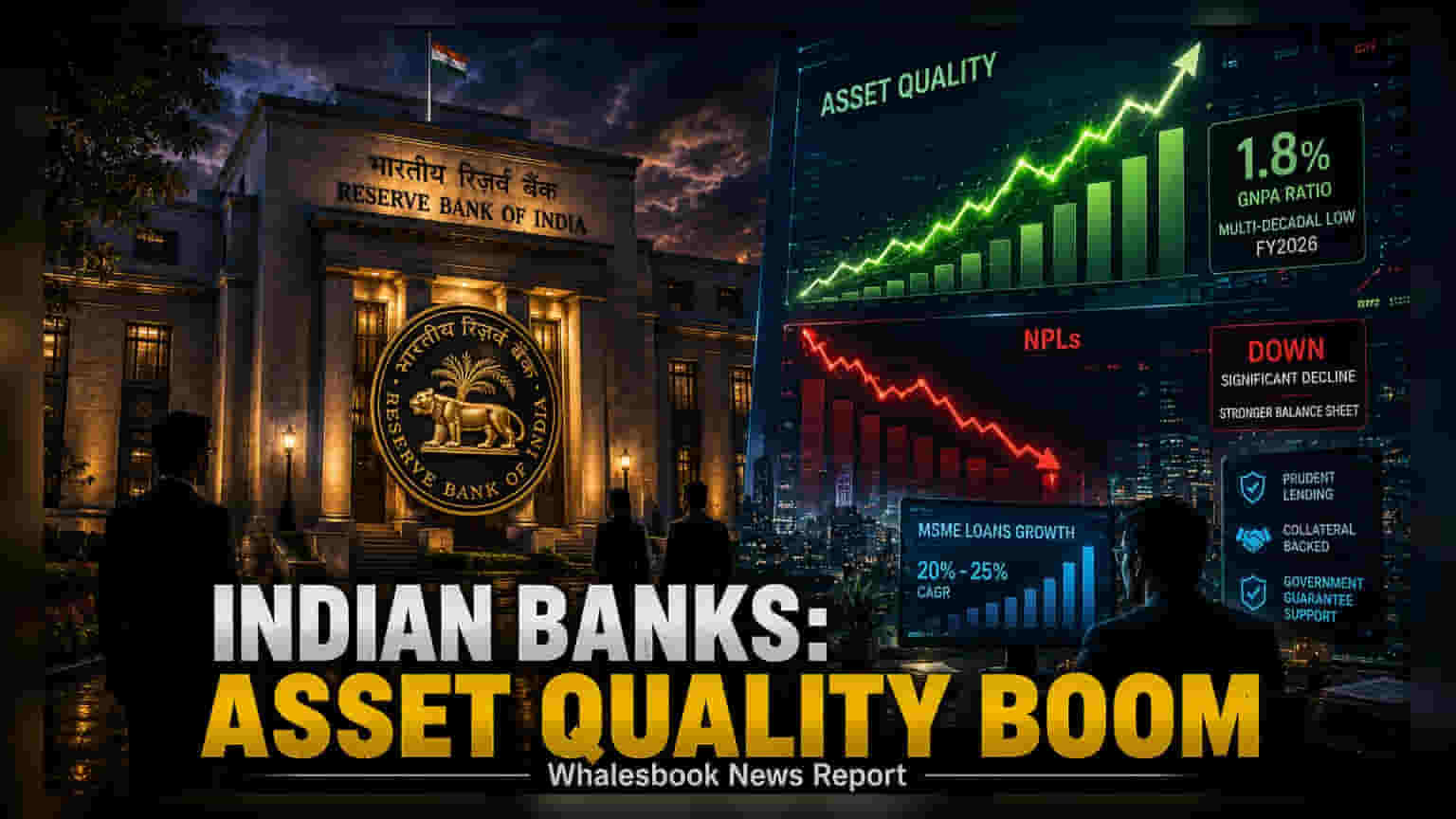
This trend has contributed to a healthier overall balance sheet for the industry. By the end of FY2026, the gross non-performing assets (GNPA) ratio for Indian banks hit a multi-decadal low of 1.8%, reflecting a clean-up in legacy bad loans and more disciplined credit expansion.
MSME Loans as a Key Focus
While unsecured retail risk has subsided, the MSME (Micro, Small, and Medium Enterprises) segment has become the primary area of debate for analysts and investors. This sector has seen rapid growth, with a compounded annual growth rate of 20% to 25% over the last few years. While banks have maintained prudent lending practices by ensuring that a large portion of these loans is backed by collateral, the sheer speed of this growth requires close monitoring.
Analysts are watching this space to see if the sector can withstand external pressures. If global conditions deteriorate, or if domestic economic activity slows, the MSME segment could face higher repayment challenges. Currently, government-backed guarantees provide a safety net for many of these loans, offering some protection against potential defaults.
Sector Challenges and Outlook
Despite the stable asset quality, banks continue to face profitability challenges. Net interest margins, which reflect the difference between the interest banks earn on loans and the interest they pay on deposits, are under pressure. Intense competition to attract deposits has kept funding costs high, limiting the scope for margin expansion. Additionally, while the impact of the ongoing West Asia crisis is currently viewed as minimal by experts, geopolitical uncertainty remains a factor that could influence interest rate trends and global liquidity.
Going forward, investors will likely track quarterly performance to gauge how banks balance loan growth with deposit mobilization. The key monitorables for the coming quarters will include the sustainability of deposit growth, the trajectory of net interest margins, and the credit performance of the MSME loan book.