

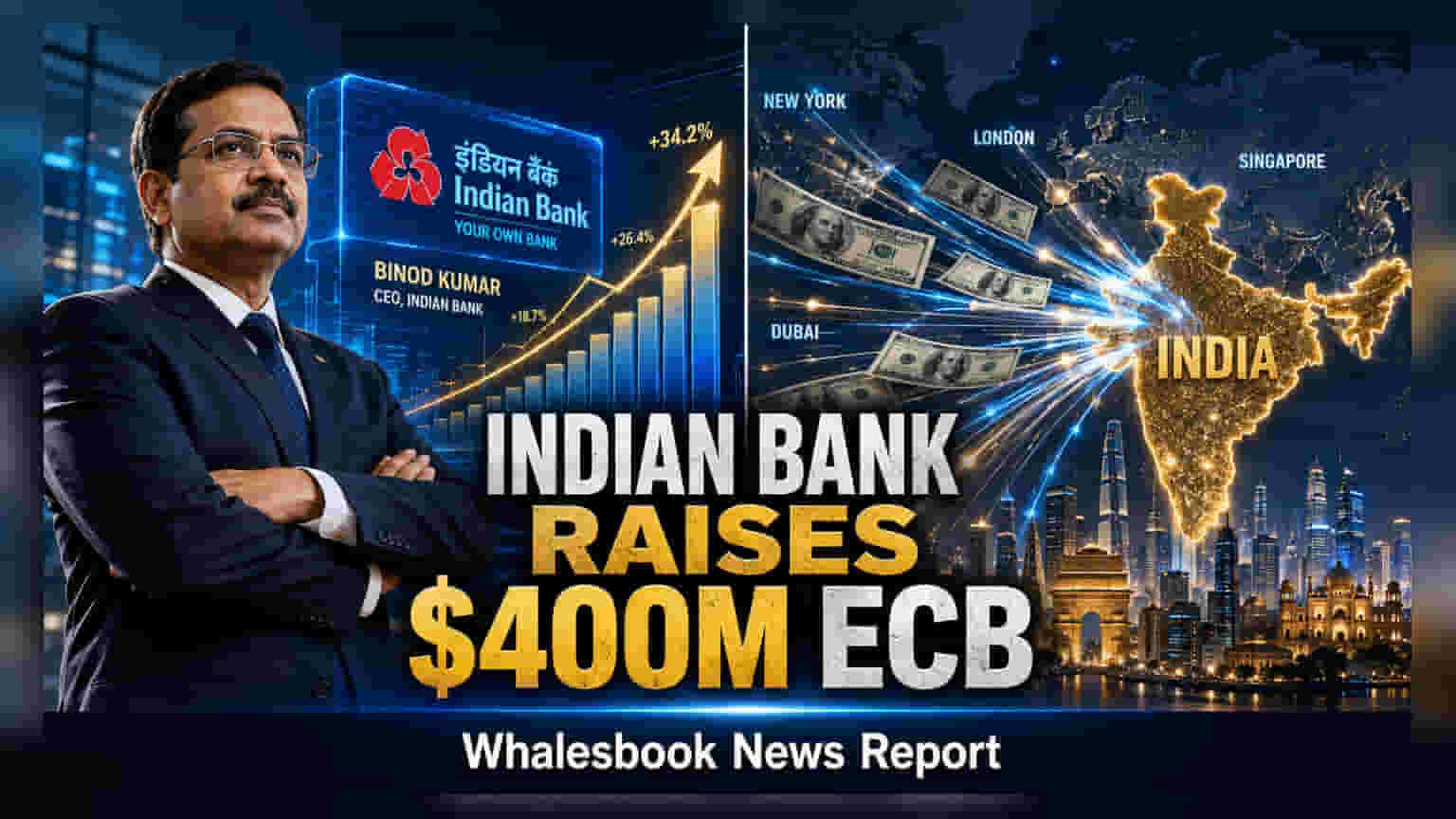
Indian Bank is set to raise $400 million through External Commercial Borrowings (ECB) this week to support business growth. By utilizing the Reserve Bank of India’s concessional swap window, the bank aims to lock in competitive funding costs. This is part of a broader $1 billion foreign currency fundraising strategy, following a successful $1.5 billion collection through FCNR(B) deposits.
Indian Bank is preparing to tap the External Commercial Borrowings (ECB) market this week, aiming to secure $400 million. This fundraising effort is strategically aligned with the Reserve Bank of India’s (RBI) concessional USD-INR forex swap window, which offers a fixed hedging cost of 1.5%. By accessing this facility, the bank intends to support its business expansion while efficiently managing the costs associated with foreign currency borrowing.
Structure of the $400 Million Funding
The $400 million loan is structured as a four-year facility. The deal has been underwritten by international financial institutions, specifically CTBC Bank from Taiwan and Commerzbank from Germany. The interest cost for this facility is priced at 119-123 basis points above the Secured Overnight Financing Rate (SOFR). This specific pricing reflects the bank's ability to secure capital at rates that support its lending operations.
Broader Fundraising and Strategic Context
This week’s move is the first step in a larger $1 billion goal for ECB funding. The bank plans to raise the remaining $600 million before the RBI’s December 31, 2026, deadline. In addition to ECBs, Indian Bank has shown progress in raising foreign currency through FCNR(B) deposits, having already secured $1.5 billion with a target to reach $2 billion. These inflows are part of a wider trend of Indian banks strengthening their balance sheets using the RBI's swap facility.
Important Considerations for Investors
While the bank’s ability to secure overseas funding supports growth, investors should monitor the inherent risks. Borrowing in foreign currency exposes the bank to global interest rate volatility and macroeconomic shifts. Although the RBI’s swap window offers protection against currency fluctuations, the availability of these windows is time-bound.
Furthermore, the banking sector faces a competitive landscape as multiple lenders are racing to utilize these concessional swap windows before the year-end deadline. The bank's performance will depend on its ability to deploy these funds effectively into profitable loan assets. The key monitorable for the coming months will be the execution of the second tranche of $600 million in ECBs and the bank's overall cost of funds relative to its lending margins.