

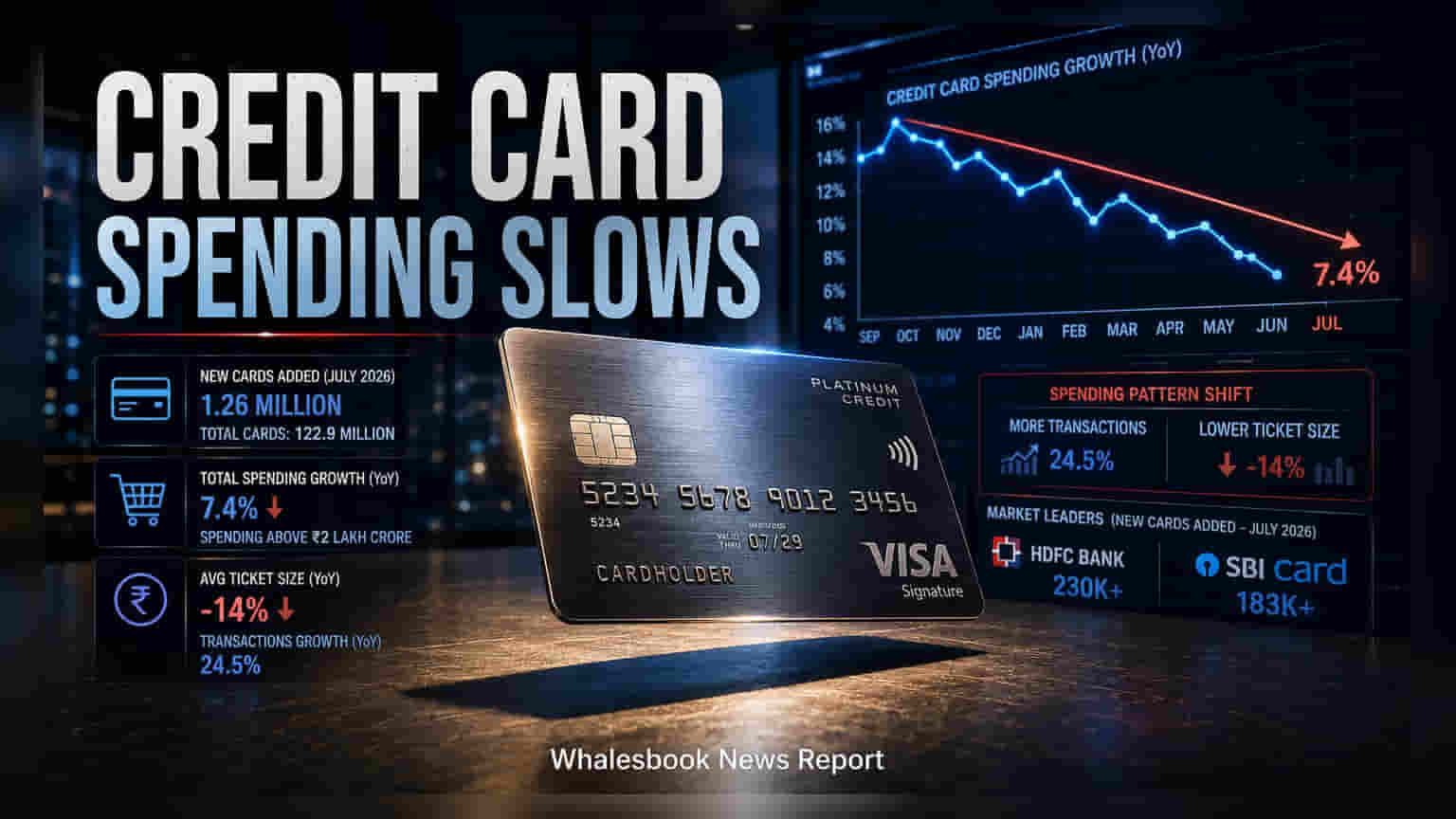
Indian banks added 1.26 million credit cards in July 2026, yet overall spending growth cooled to 7.4%. While the user base is expanding, transaction sizes are shrinking, raising questions about the long-term profitability and spending habits of new customers for major issuers like SBI Cards and HDFC Bank.
The Indian credit card market is currently seeing a significant gap between the number of new cards being issued and the actual spending habits of consumers. In July 2026, banks added 1.26 million net new credit cards, bringing the total industry base to 122.9 million cards. This is the third consecutive month of aggressive growth in card issuance, showing that lenders are still focused on acquiring new customers.
However, this rapid addition of new users is not translating into a similar rise in total spending. According to recent data, year-on-year growth in total credit card spending has moderated to roughly 7.4%. While total monthly spending remained above the ₹2 lakh crore mark, the pace of growth is slowing. This cooling trend suggests that while banks are successfully distributing more cards, the average user is becoming more cautious or shifting their spending patterns.
Why Spending Patterns Are Changing
A key trend for investors to note is the shift in how people use their cards. While the total number of transactions grew by 24.5% year-on-year in July, the average value of each transaction declined by approximately 14%. This indicates that customers are increasingly using their credit cards for smaller, more frequent, daily purchases rather than large-ticket items. For banks, this behavior means that while the volume of activity is high, the total revenue generated from interest and fees per card may come under pressure if customers pay off their dues promptly or if they limit their spending to smaller essentials.
Impact on Major Issuers
Major players like HDFC Bank and SBI Cards continue to lead the market. HDFC Bank remained the top issuer, adding over 230,000 new cards in July, while SBI Cards followed with over 183,000 additions. However, the performance of these banks is being viewed with caution. For instance, SBI Cards recently reported a 19.5% year-on-year jump in net profit for the first quarter of the current financial year. Despite this profit growth, analysts and investors have kept a close watch on the company’s market share in total spending, which saw a sequential decline of 1.4 percentage points.
This highlights the trade-off currently faced by credit card issuers. To maintain market share, banks are spending heavily on customer acquisition, which increases their costs. At the same time, they must contend with the fact that these new, smaller-ticket transactions may not be as profitable as traditional, larger expenditures. Investors will likely monitor whether banks can balance these high acquisition costs with sustainable profit margins in the coming quarters. The key monitorable will be whether the spending intensity per card begins to recover or if the trend of smaller, more frequent transactions becomes the new normal for the industry.