

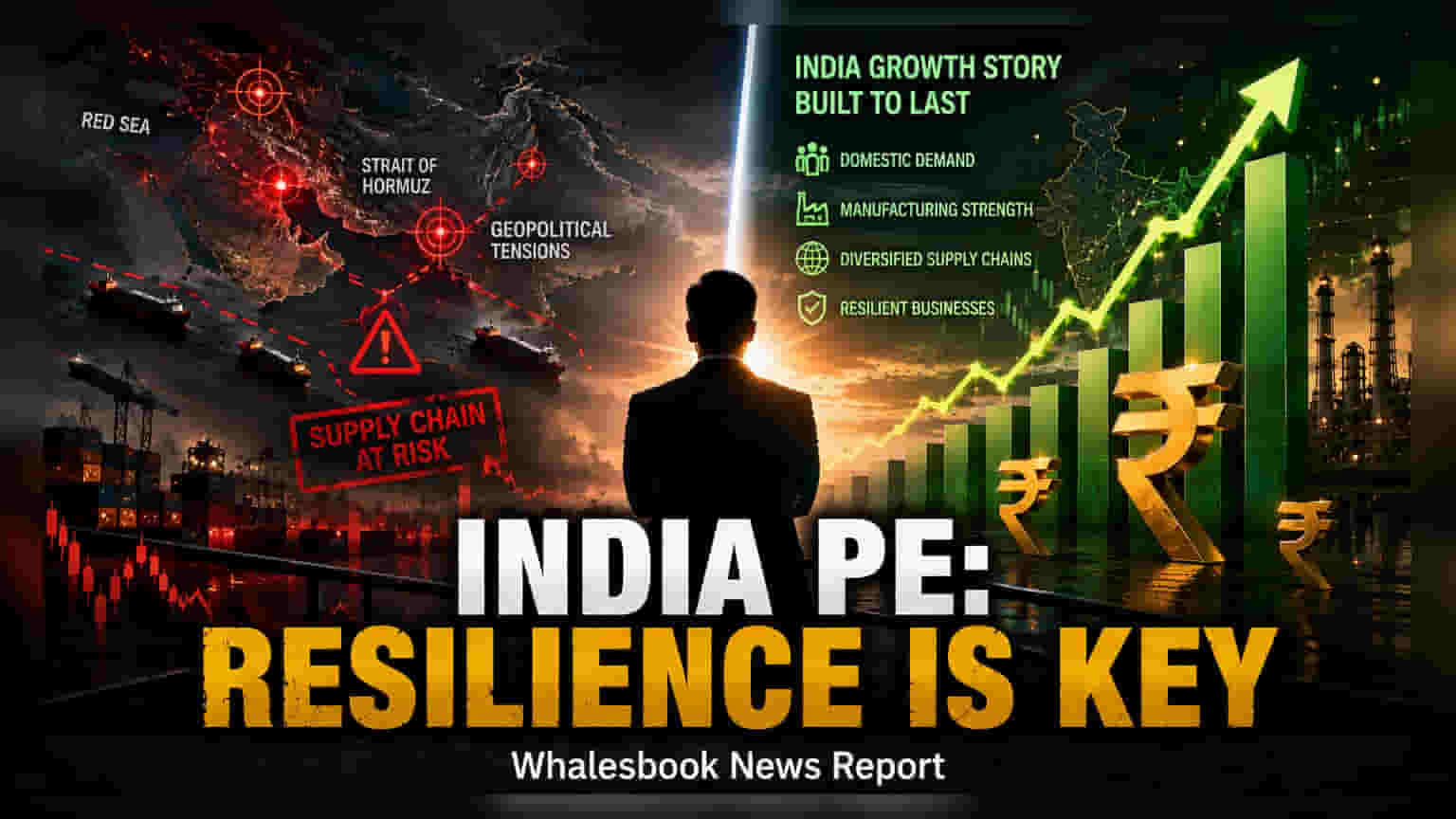
Private equity investors in India are changing their strategy, prioritizing business resilience over pure growth as global geopolitical tensions rise. With investments moderating to $36 billion in 2025, capital is now flowing into high-conviction, domestically focused sectors. This shift forces companies to prove they can survive supply-chain shocks, marking a new era for deal-making and corporate due diligence.
The investment strategy for private equity firms in India is undergoing a significant change. Where growth potential was once the only metric that mattered, a new priority has taken center stage: the 'R-factor' or resilience. Investment committees are no longer just asking if a company can grow revenue; they are now obsessively asking if a business can survive a global shock, such as supply-chain disruptions or sudden trade restrictions.
This shift comes as the investment landscape evolves. After a period of record-breaking activity, private equity and venture capital investments in India saw a moderation in 2025, dropping by approximately 17% to $36 billion. Rather than spreading capital across many companies, investors are now focusing on fewer, higher-conviction deals. This means they are backing companies that have strong, defensible positions, reliable supply chains, and the ability to maintain profit margins even when raw material costs or logistics costs jump unexpectedly.
Focus on Domestic Anchors
Capital is increasingly concentrating on sectors that are domestically aligned and less vulnerable to global chaos. Manufacturing remains a top priority, largely supported by government-backed production-linked incentive (PLI) schemes. By focusing on domestic manufacturing, companies reduce their reliance on imported parts, which lowers the risk of operational shutdowns due to geopolitical tensions.
Financial services and consumer retail are also attracting significant interest. These sectors benefit from steady domestic demand, which acts as a buffer when global markets become volatile. Similarly, export-oriented sectors like pharmaceuticals and contract manufacturing for medical drugs are drawing interest, provided the companies can demonstrate a diversified supply chain that is not overly dependent on a single country or region.
New Standards for Due Diligence
Investors have updated their due diligence checklists to include factors that were previously considered peripheral. It is now standard to require detailed contingency plans for supply chain failures, assessments of sanction risks, and proof of origin for critical inputs. Legal and financial reviews now go deeper, scrutinizing everything from payment flows to the impact of potential tariff hikes on the company’s bottom line.
Risks to Watch
While the long-term outlook for India’s role in global supply chains remains strong, several risks persist. Global energy price volatility, particularly due to tensions in West Asia, poses a significant threat. Because India imports a large portion of its oil, a spike in global energy prices directly increases operating costs for manufacturers and risks stoking domestic inflation. Additionally, trade barrier volatility and shifting tariff policies continue to create uncertainty for companies that rely on exports. Investors are particularly cautious of businesses operating on thin margins, as these companies have little room to absorb these external shocks.
For investors monitoring these trends, the key takeaway is that the 'growth-at-any-cost' phase has been replaced by a focus on structural stability. The most resilient companies—those with local supply chains, pricing power, and manageable debt—are likely to attract the most capital in the coming quarters. Monitoring how companies manage their operational costs and diversify their suppliers will be essential for assessing their long-term health in this new, cautious environment.