 Whalesbook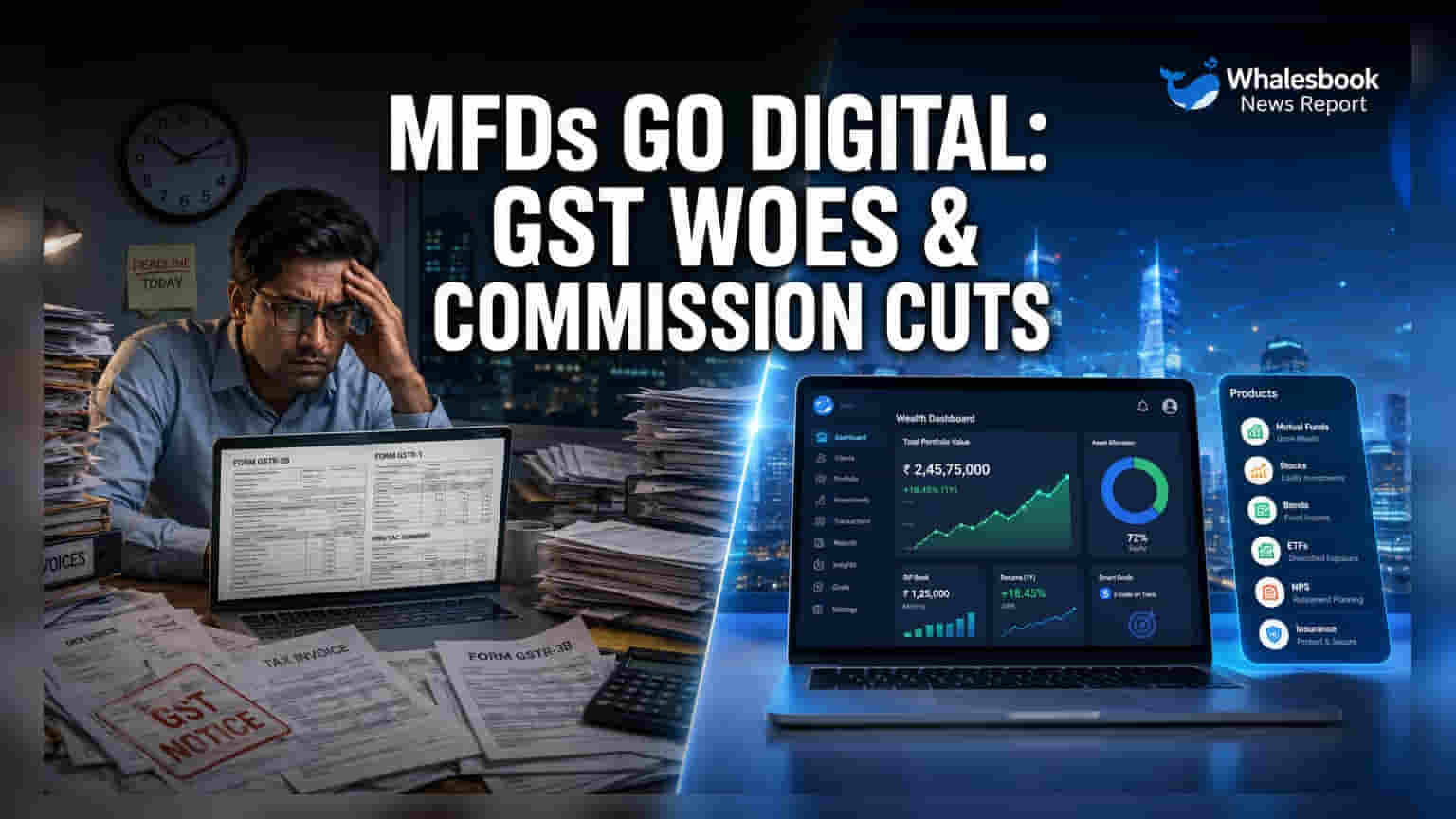


Digital Shift Driven by Tax and Fee Pressures
Mutual fund distributors across India are rapidly moving to online platforms. This change is a direct reaction to the combined impact of an 18% Goods and Services Tax (GST) on their commissions and lower trail commissions from reduced Base Expense Ratios (BER) on older funds. These challenges have led to significant income drops and increased compliance work, forcing many smaller distributors to rethink how they operate.
Tackling GST Compliance Hurdles
The GST has created considerable administrative work for distributors. Since April, they must register for GST and carefully track expenses to claim tax credits. This involves uploading proof for costs like rent, software, and travel, which has become a major operational challenge. Following AMFI guidelines, invoices must be submitted between the 7th and 15th of each month to ensure timely payments. Missing these deadlines can delay payments and affect cash flow.
One distributor from Surat noted a monthly income drop from ₹1,00,000 to ₹80,000. They found that a technology platform could consolidate software, operations, marketing, and client engagement more practically. To make up for lost earnings, distributors now need to manage more clients, which is difficult without efficient, tech-driven systems.
Shrinking Trail Fees and Rising Client Demands
Further complicating matters, the total expense ratio (TER) for equity schemes has decreased, squeezing distributor earnings. For instance, the TER for equity schemes with ₹500 crore in assets under management (AUM) dropped from 2.25% to 2.10% under BER. For schemes with over ₹50,000 crore in AUM, the TER fell from 1.05% to 0.95%. This reduction, averaging 5-7 basis points on older assets, directly impacts the trail commissions distributors earn.
This drop in trail income, estimated at 15-20% for some, raises questions about the sustainability of the independent distribution model. Additionally, clients are increasingly asking for broader financial advice beyond just mutual funds, pushing distributors to adopt more organized and technology-focused methods to stay competitive.
Integrated Platforms Offer a Solution
Wealth management platforms are seeing higher demand from distributors looking for easier operations. These platforms help ease the burden of GST compliance, which can take distributors several days. By handling GST compliance directly with Asset Management Companies (AMCs), these platforms allow distributors to skip the complex process of dealing with each fund house separately, providing significant value.